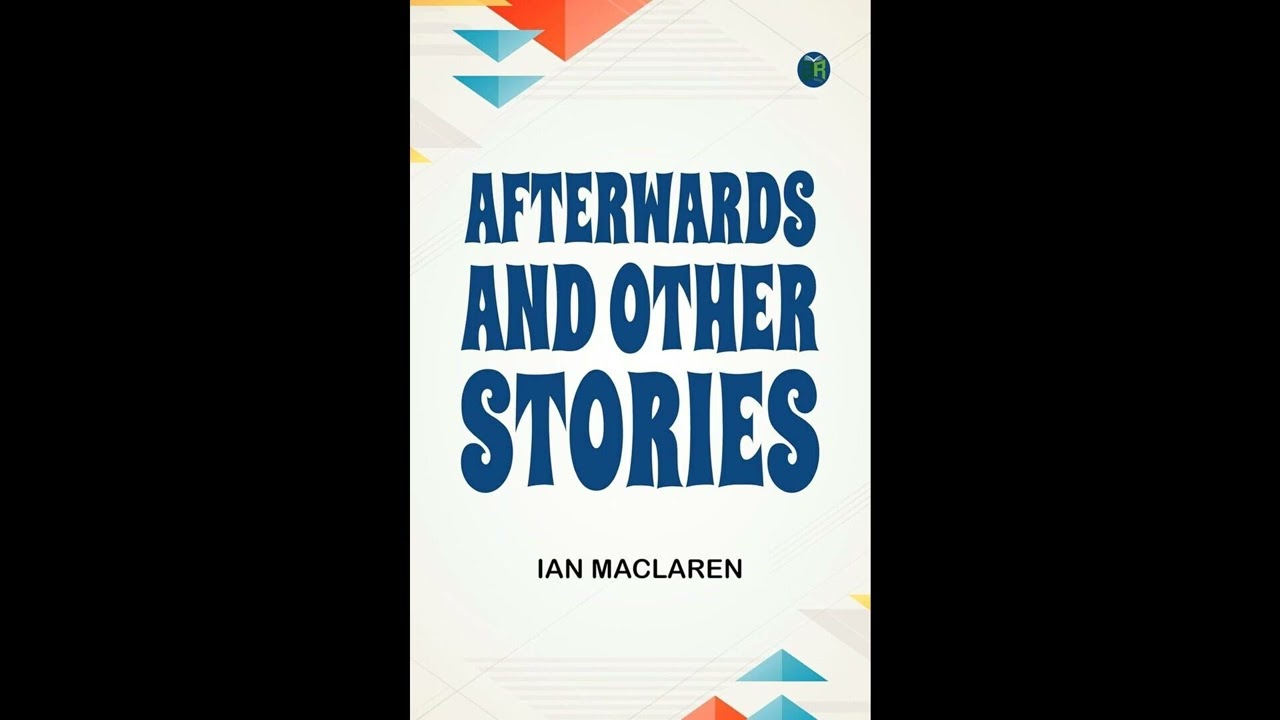
Afterwards and Other Stories
Step into a world woven with the warmth of human kindness and the gentle rhythms of a bygone era with "Afterwards and Other Stories" by Ian Maclaren. This cherished collection transports listeners to the heart of rural Scotland, offering not just a series of narratives, but a compassionate exploration of human nature itself. Within these pages, or rather, within these hours of listening, one finds profound reflections on faith, community, and the quiet dignity of everyday lives. It is a work that resonates deeply today, reminding us that while the landscape of our lives may change, the fundamental experiences of love, loss, hope, and resilience remain universal, offering both solace and thoughtful contemplation for modern ears. The collection unfolds primarily in the fictional Scottish village of Drumtochty, a place where time seems to slow, allowing for a meticulous observation of character and custom. We encounter a varied cast of individuals: the wise and often stern minister, the gossipy but ultimately caring elders, the hardworking farmers, and the resilient women who hold the fabric of the community together. Each story presents a vignette, a slice of life, focusing on the subtle dramas and profound emotions that animate the seemingly ordinary. There are no grand adventures or sweeping historical events; instead, the narratives spotlight the everyday trials and triumphs, the moral quandaries, and the enduring bonds of kinship and neighborliness. A central theme throughout many of these tales is the quiet struggle of individuals grappling with personal conviction, community expectations, and the often-unseen sacrifices made for love or duty. The arc of each story tends to be more internal than external, often culminating in a moment of poignant understanding, a revelation about the human heart, or a gentle, yet powerful, shift in perspective for a character or the listener. We might witness a young man torn between following his heart and upholding his family’s legacy, or a village woman facing a difficult choice that challenges her standing in the community. Perhaps we see the minister grappling with a parishioner’s stubbornness, learning lessons in compassion and patience himself. The central conflict in these narratives is rarely a battle against an external foe, but rather the quiet, internal wrestling with pride, prejudice, forgiveness, or the search for grace amidst life’s inevitable hardships. These stories are like finely detailed portraits, each brushstroke adding depth to characters who, despite their rustic setting, embody universal human traits, allowing us to connect with their joys and sorrows on a profoundly personal level without revealing their ultimate fates. The man behind the pen name Ian Maclaren was John Watson, a prominent Scottish minister born in Auchterarder, Perthshire, in 1850. The son of a Free Church of Scotland minister, Watson followed in his father's footsteps, receiving his education at the University of Edinburgh and New College, Edinburgh, where he studied theology. Ordained in 1874, he served in various Scottish parishes before accepting a charge at Sefton Park Presbyterian Church in Liverpool in 1880, a position he held with distinction until his retirement in 1905. It was during his time in Liverpool that he began to write, adopting the pseudonym Ian Maclaren for his contributions to The British Weekly newspaper. Watson quickly gained immense popularity, particularly with his first major collection, Beside the Bonnie Brier Bush, published in 1894. This book, like "Afterwards and Other Stories," resonated deeply with readers across Britain and America, selling hundreds of thousands of copies and cementing Maclaren's reputation as a master of Scottish regional fiction. Other notable works include The Days of Auld Lang Syne (1895) and Kate Carnegie and Those Ministers (1896). His work is often associated with the "Kailyard School" of Scottish literature, a movement characterized by its sentimental, often nostalgic, portrayal of rural Scottish life, its strong moral undertones, and its use of Scottish dialect. Watson passed away in 1907 in Mount Pleasant, Iowa, while on a successful lecture tour of the United States, leaving behind a legacy of stories that captured the hearts and imaginations of a generation. The stories in this collection beautifully enact several enduring themes, providing a window into the human spirit. Foremost among these is the profound importance of community and kinship. Maclaren vividly portrays villages where everyone knows everyone else’s business, but where this familiarity also breeds an undeniable network of support. We see this in scenes where neighbors rally to help a family in distress, offering practical aid alongside comforting words, or in the shared solemnity of a funeral procession that unites the entire village in collective grief. Another recurring theme is faith and doubt, deeply intertwined with the Presbyterian culture of the time. Characters frequently wrestle with their spiritual convictions, testing the boundaries of their belief against personal hardship or the perceived injustices of life. For instance, a character might silently question divine providence after a tragedy, only to find solace in the quiet strength of their inherited faith, or through the unwavering example of a fellow villager. A third significant theme is the depiction of humanity and its flaws, often presented with a gentle but knowing humor. Maclaren does not paint his characters as saints; they possess their share of stubbornness, pride, and occasional narrow-mindedness. Yet, these imperfections often serve to highlight their ultimate goodness and capacity for compassion. A cantankerous elder, for example, might be revealed to possess a heart of gold beneath his gruff exterior, showing unexpected tenderness in a moment of crisis. Finally, there is an overarching sense of nostalgia and the passing of a way of life. The stories often reflect a longing for simpler times, for the close-knit, agrarian communities that were, even in Maclaren’s time, beginning to yield to the forces of industrialization and urbanization. This lends a bittersweet quality to many of the narratives, a quiet elegy for a disappearing world. "Afterwards and Other Stories" emerged into the literary landscape during the late nineteenth century, a period of significant social and cultural transformation across Britain. The Victorian era, with its emphasis on morality, religious observance, and a burgeoning middle class, provided a receptive audience for stories that offered both entertainment and edification. This was a time when rapid industrialization was drawing people away from rural areas into expanding cities, leading to a profound sense of cultural displacement for many. Consequently, there was a widespread nostalgia for an idealized past, for the perceived purity and simplicity of country life, which Maclaren's narratives expertly tapped into. Literarily, Maclaren's work stood alongside and, in some ways, against the rise of naturalism and more gritty forms of realism that were also gaining traction. While authors like Thomas Hardy were exploring the often harsh realities of rural life, Maclaren offered a gentler, more sentimental vision. His stories provided comfort and a moral compass in an age grappling with rapid scientific advancements, social inequalities, and a questioning of traditional values. They served as a literary balm, reflecting a desire to preserve the essence of Scottish identity and character in a changing world, offering readers an escape into a charming, morally upright community that felt both familiar and reassuring. Listening to "Afterwards and Other Stories" as an audiobook offers a truly immersive experience, perfectly suited to the nuanced storytelling and rich characterizations. The stories, spread across several hours, provide ample opportunity to settle in and let the narratives unfold at a measured pace. A skilled narrator can breathe life into the distinctive voices of Drumtochty, subtly conveying the regional inflections and the unique cadences of the dialogue, enhancing both the humor and the pathos. The warmth and thoughtfulness required to deliver these tales will allow the listener to fully appreciate the quiet wisdom embedded in Maclaren’s prose. The atmosphere of a Scottish village, with its close-knit bonds and underlying moral framework, comes alive through spoken word, inviting a deeper connection to the characters and their struggles, making it an ideal companion for a quiet afternoon or a contemplative evening.
Enjoyed Afterwards and Other Stories? A few ways to support us
Audible & Amazon links are affiliate; we may earn a small commission at no extra cost.
About this production
Human narration by a volunteer reader from LibriVox.org, the public-domain audiobook project. LibriVox volunteers record literary works whose copyright has expired in the United States, releasing the resulting recordings into the public domain.
Afterwards and Other Stories by Ian Maclaren. The underlying text is in the U.S. public domain. We do not republish any modern copyrighted edition, translation, or commentary.
The 4K cinematic visuals accompanying this audiobook are generated by an AI image model from prompts derived from the source text. No copyrighted photos, paintings, or stock footage are used. AI generation is disclosed on every video on our YouTube channel as required by YouTube's altered/synthetic content policy.
English subtitles are transcribed from the LibriVox recording with OpenAI Whisper. Translations into the 11 other supported languages are produced by Meta's NLLB-200 neural translation model. No human translator's copyrighted translation is used.
Questions about sourcing or rights? See our DMCA & Sourcing policy or contact us.
Enjoyed this audiobook?
If you'd like to own a copy of Afterwards and Other Stories or hear a professionally produced edition, the links below help support free audiobook production at no extra cost to you.
As an Amazon Associate we earn from qualifying purchases. Audible / print links are affiliate.