Ixion In Heaven
Imagine a world where the gods of Olympus behave not like divine, omnipotent beings, but rather like the most entitled, squabbling aristocrats of human society. This is the brilliantly irreverent premise of Benjamin Disraeli’s novella, Ixion In Heaven. First published in 1832, this satirical gem invites listeners to Mount Olympus for a celestial dinner party where human vanity, political maneuvering, and social aspirations are mirrored and magnified among the deities. Why care about ancient myths and divine follies today? Because Disraeli uses the gods to hold a funhouse mirror to power, ambition, and the eternal absurdity of the elite, making this compact yet potent work feel remarkably current. It is a sharp, witty commentary on status, privilege, and the foolishness of those who believe themselves above mortal critique, offering laughter and insight in equal measure. The story begins with Ixion, a mortal king from Thessaly, who finds himself granted the unprecedented honor of a dinner invitation to Mount Olympus. He has been pardoned by Jupiter himself for a past transgression—murdering his father-in-law—an act of divine clemency that immediately raises eyebrows among the other gods. Arriving in this ethereal realm, Ixion is less awestruck and more self-impressed, observing the gods with an almost anthropological detachment. He sees Jupiter, the king of the gods, as a somewhat boorish, albeit powerful, host, prone to bluster and jealousy. Juno, Jupiter’s perpetually aggrieved wife, catches Ixion’s eye, and he, with characteristic human audacity, decides to test the boundaries of his welcome. Ixion's time on Olympus becomes a comical clash between mortal desires and divine decorum. He engages in witty, often sarcastic, conversations with the gods, subtly mocking their pretensions and perceived superiority. His ultimate act of hubris comes when he attempts to seduce Juno, mistaking a cloud created by Jupiter in her likeness for the goddess herself. This audacious challenge to Jupiter’s authority and the sacred sanctity of divine marriage sets the stage for Ixion’s inevitable downfall. The arc of the story follows his bold ascent into the heavens, his interactions with the petty, human-like deities, and the profound consequences of his mortal ambition and irreverence that will forever seal his place in mythological lore. The author of this cutting satire, Benjamin Disraeli (1804-1881), led a life as extraordinary and audacious as any character he might have penned. Born in London to a family of Italian-Jewish descent, Disraeli initially pursued a literary career, cultivating a distinctive persona as a dandy and a man of letters. His early novels, including Vivian Grey (1826), were often characterized by their flamboyant style, social observation, and veiled political commentary. However, his ambitions soon turned towards the more demanding arena of British politics. Disraeli entered Parliament in 1837, eventually rising through the ranks of the Conservative Party. His political career was marked by strategic brilliance, rhetorical flair, and a keen understanding of public opinion, culminating in two terms as Prime Minister of the United Kingdom (1868 and 1874-1880). Throughout his political life, he continued to write, producing significant novels such as Coningsby (1844), Sybil (1845), and Lothair (1870), which are now considered cornerstones of Victorian literature. These works often explored social conditions, political ideologies, and the challenges facing England during an era of immense change. Disraeli stands as a singular figure in the canon, a statesman whose literary output was deeply intertwined with his public life, offering unique insights into the ruling classes and the political machinery of his time. Ixion In Heaven enacts several key themes with striking clarity. One prominent idea is the hubris of ambition, both mortal and divine. Ixion’s presumption to challenge the gods, his belief that his wit and charm can circumvent divine power, is a clear example. When he attempts to seduce a figure he believes to be Juno, he oversteps boundaries that mortals are forbidden to cross, showcasing the dangerous allure of overconfidence. Another theme is the critique of power and privilege. Disraeli portrays the gods not as majestic or morally superior beings, but as vain, self-serving, and often ridiculous aristocrats. Jupiter’s bluster, Juno’s jealousy, and the Olympian council’s gossipy nature reveal the superficiality and arbitrary nature of power, suggesting that those at the top, whether divine or human, are often driven by petty concerns. The novella also functions as a sharp social satire, using the mythological setting to mock contemporary British society, particularly its upper echelons. The gods' preoccupations with trivialities, their elaborate banquets, and their thinly veiled rivalries mirror the foibles of the English aristocracy and political class Disraeli observed in his own lifetime. Through these interactions, the story exposes the illusion of exceptionalism, showing how even gods are susceptible to human flaws, pride, and folly. Ixion's sarcastic observations about the gods' habits and pronouncements serve as a direct attack on the unquestioned authority and self-importance of the ruling class. This satirical work emerged at a pivotal moment in British history, just as Disraeli was beginning his public life and the nation was undergoing significant social and political upheaval. Published in 1832, the same year as the landmark Great Reform Act, the novella reflects a period of intense scrutiny on inherited power, aristocratic privilege, and the nature of governance. Disraeli, himself an outsider seeking to ascend the political ladder, keenly understood the dynamics of social climbing and the often-absurd posturing of the establishment. The literary landscape of the early 19th century still valued classical allusions and wit, making a mythological satire a fitting vehicle for Disraeli’s observations. It allowed him to comment indirectly but forcefully on the British ruling class without directly criticizing specific political figures, a strategy he would perfect in his later political novels. Ixion In Heaven stands as an early testament to Disraeli's distinctive voice, blending classical erudition with mordant social commentary and an unmistakably modern sensibility. Listening to Ixion In Heaven as an audiobook offers a unique advantage for appreciating Disraeli’s precise language and comedic timing. The novella, several hours in length, is perfectly suited for engaged listening, allowing the listener to fully absorb the nuances of the dialogue and the author’s sardonic tone. A skilled narrator can truly bring to life the contrasting personalities: Ixion’s audacious wit, Jupiter’s booming authority, and Juno’s simmering resentment. The interplay of voices can highlight the satirical elements, making the divine squabbles and human impertinence particularly resonant. The pacing, often brisk during witty exchanges and more expansive during descriptions of the Olympian setting, can be skillfully rendered through vocal performance, enhancing the atmosphere of both celestial grandeur and earthly absurdity. This spoken rendition allows the listener to become fully immersed in Disraeli’s imaginative and critical vision, experiencing the humor and keen observations directly as they unfold.
Enjoyed Ixion In Heaven? A few ways to support us
Audible & Amazon links are affiliate; we may earn a small commission at no extra cost.
About this production
Human narration by a volunteer reader from LibriVox.org, the public-domain audiobook project. LibriVox volunteers record literary works whose copyright has expired in the United States, releasing the resulting recordings into the public domain.
Ixion In Heaven by Earl of Beaconsfield Benjamin Disraeli. The underlying text is in the U.S. public domain. We do not republish any modern copyrighted edition, translation, or commentary.
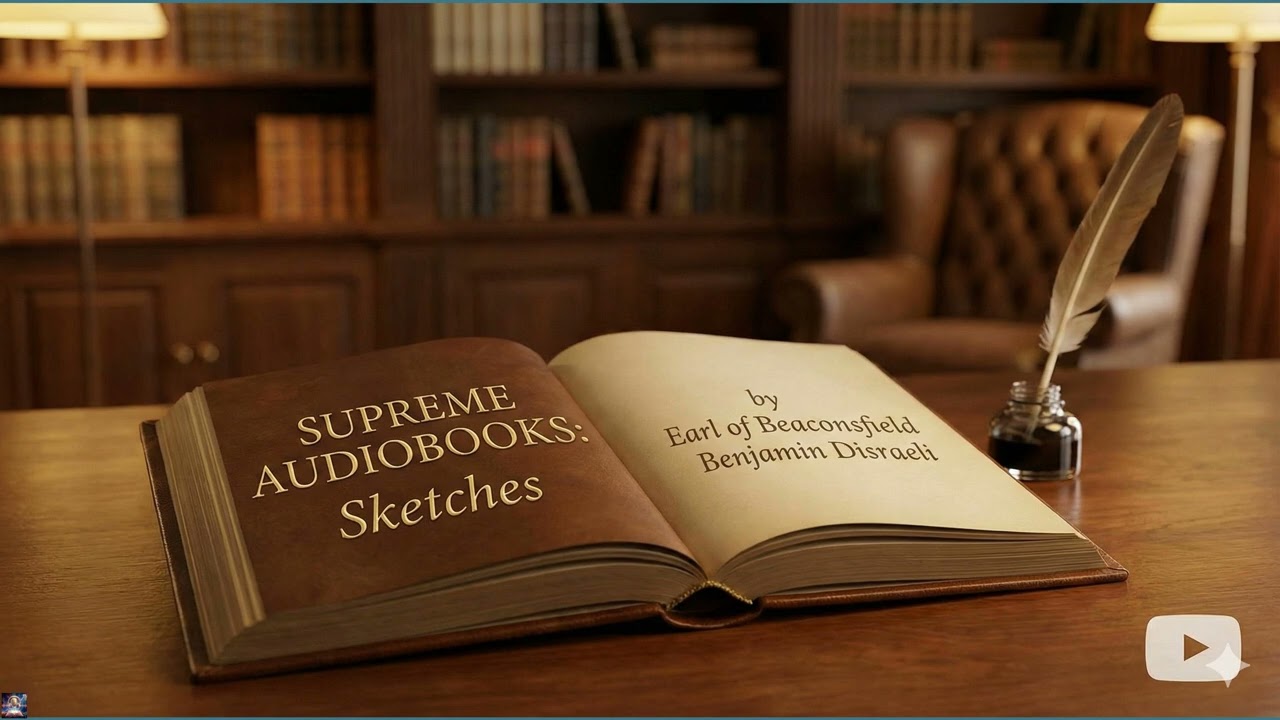
The 4K cinematic visuals accompanying this audiobook are generated by an AI image model from prompts derived from the source text. No copyrighted photos, paintings, or stock footage are used. AI generation is disclosed on every video on our YouTube channel as required by YouTube's altered/synthetic content policy.
English subtitles are transcribed from the LibriVox recording with OpenAI Whisper. Translations into the 11 other supported languages are produced by Meta's NLLB-200 neural translation model. No human translator's copyrighted translation is used.
Questions about sourcing or rights? See our DMCA & Sourcing policy or contact us.
Enjoyed this audiobook?
If you'd like to own a copy of Ixion In Heaven or hear a professionally produced edition, the links below help support free audiobook production at no extra cost to you.
As an Amazon Associate we earn from qualifying purchases. Audible / print links are affiliate.