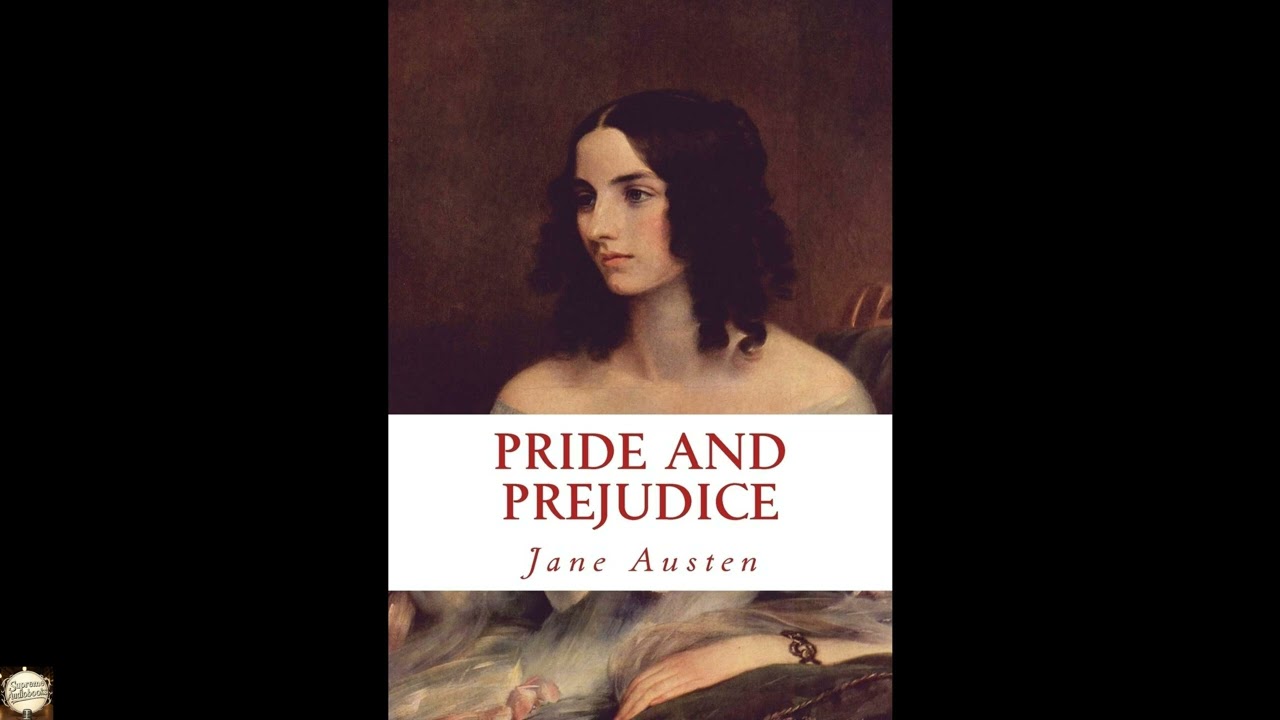
Pride and Prejudice: Large Print
Step into a world of glittering ballrooms, genteel country estates, and sharp-witted conversation, where social standing dictates destiny and true love must overcome the most formidable obstacles of pride and prejudice. Jane Austen's beloved novel has enchanted readers for over two centuries, a testament to its sparkling prose, unforgettable characters, and astute observations on human nature. It offers not merely a historical snapshot but a profound study of how first impressions can mislead, how societal pressures shape individual choices, and how, against all odds, genuine affection can triumph. This is a story that resonates just as powerfully today, inviting listeners to reflect on their own judgments and the enduring complexities of the human heart. The narrative unfolds in Regency England, primarily in the quiet Hertfordshire village of Longbourn, home to the Bennet family. Mr. Bennet, a man of wit and sarcasm, and his rather foolish wife, Mrs. Bennet, are consumed by the pressing need to marry off their five daughters, especially since their estate is entailed away from the female line. The arrival of the amiable, wealthy Mr. Bingley and his proud, reserved friend, Mr. Darcy, immediately sets the local society abuzz, especially among the marriage-minded mothers. The eldest Bennet daughter, Jane, beautiful and sweet-natured, soon develops an attachment to Mr. Bingley. However, it is the spirited, intelligent, and independent Elizabeth, the second eldest, who finds herself at odds with the formidable Mr. Darcy. From their very first encounter, Elizabeth takes a strong dislike to Mr. Darcy, perceiving him as arrogant, disdainful, and insufferably proud. Her initial judgments are further fueled by the charming, but duplicitous, Mr. Wickham, who paints Darcy in the worst possible light. Darcy, for his part, initially looks down upon Elizabeth's family connections and social standing, even while finding himself increasingly drawn to her vivacity and sharp mind. As the story progresses, misunderstandings mount, fueled by gossip, class distinctions, and the characters' own stubborn perceptions. Through social gatherings, unexpected proposals, and shocking revelations, Elizabeth is forced to re-evaluate her hasty judgments, while Darcy must confront his own deeply ingrained sense of superiority. The arc of the story follows their complex dance of attraction and repulsion, as they navigate a world where a woman's future hinges on a fortunate marriage, and personal happiness often collides with social expectation. The remarkable mind behind this literary treasure was Jane Austen, born in 1775 in Steventon, Hampshire, England, a daughter to a clergyman. Her life was relatively quiet and confined to the domestic sphere, but it was precisely this intimate observation of provincial English society that fed her keen satirical eye. She received most of her education at home, encouraged by her father and brothers, and began writing at a young age, often producing witty parodies and juvenile pieces for her family's amusement. Austen never married, a choice that gave her a unique perspective on the restricted roles and marital expectations of women in her era. She lived with her sister Cassandra and her mother for much of her adult life, relocating several times, including periods in Bath and Chawton, where she enjoyed her most productive years as a writer. Though she worked in relative obscurity, publishing her novels anonymously as "A Lady" to protect her privacy and perhaps to circumvent the prevailing prejudices against female authors, her works quickly gained recognition among a discerning readership. Her first published novel, Sense and Sensibility, appeared in 1811, followed by Pride and Prejudice in 1813. Other notable novels include Mansfield Park, Emma, Northanger Abbey, and Persuasion, the latter two published posthumously shortly after her death in 1817. Austen is renowned for her distinctive contribution to the novel of manners, a form that vividly depicts the customs, conventions, and relationships of a particular social class. Her nuanced portrayal of women's experiences and her precise, ironic style secured her lasting place among the most celebrated English authors. Pride and Prejudice enacts several enduring themes with brilliant clarity. Central, of course, are the intertwined concepts of pride and prejudice themselves. Darcy's initial haughtiness stems from his elevated social standing and wealth, while Elizabeth's prejudice against him colors every action she perceives him to take. When Darcy first proposes, he does so with an air of condescension, emphasizing the condescension he feels in stooping to her lower connections, a display of pride that only reinforces Elizabeth's preconceived negative opinion of him, leading to her indignant refusal. The entire narrative functions as a slow, painful dismantling of these initial biases, forcing both characters to acknowledge their own flaws and grow beyond them. Another vital theme is the pervasive influence of social class and status. The novel meticulously illustrates the rigid social hierarchy of Regency England, where inherited wealth and connections largely dictated one's place and opportunities. The Bingleys' sisters openly disdain the Bennet family for their comparatively modest income and less refined manners, highlighting the snobbery ingrained in the upper echelons of society. Conversely, the necessity of marriage as an economic institution is starkly contrasted with the ideal of marriage for love. Charlotte Lucas's decision to marry the ridiculously pompous Mr. Collins for the sake of financial security and a comfortable home underscores the limited choices available to women without independent means, a stark foil to Elizabeth's steadfast refusal to marry without genuine affection and respect. The delicate balance between societal expectations and individual desires forms the very heart of the novel's tension. The novel was published in 1813, firmly situated within the Regency era of British history, a period marked by significant social and cultural shifts. While the Napoleonic Wars raged across Europe, Austen's focus remained steadfastly on the domestic sphere, offering a detailed glimpse into the lives of the landed gentry and aspiring middle classes. This was a time of strict social protocols, where reputation was paramount, particularly for women, and where a family's financial security often depended entirely on advantageous marriages. The legal system of entailment, which directed inheritances exclusively through male heirs, left many families like the Bennets vulnerable, making the pursuit of a husband an urgent, almost desperate, endeavor for young women. Austen’s work emerged as a keen, often satirical, commentary on these very real societal pressures, using wit and irony to critique the conventions of her time without ever preaching. She captured the nuanced dance between tradition and burgeoning individualism, solidifying the novel's place as both a historical document and a timeless social critique. Listening to Pride and Prejudice as an audiobook offers a singular opportunity to fully immerse oneself in Austen's sparkling dialogue and subtle humor. A skilled narrator brings the distinct voices of each character to life—the bustling absurdity of Mrs. Bennet, Mr. Bennet's dry wit, Elizabeth's spirited retorts, and Darcy's initially reserved pronouncements. The spoken word allows the listener to appreciate the delicate pacing of Austen's prose, the measured revelations, and the exquisite turns of phrase that might be overlooked in a quick reading. The duration provides ample time to savor the intricate plot developments and the psychological depth of the characters, transforming the experience into an extended visit to Longbourn and Pemberley. It is a chance to truly hear the banter, the irony, and the emotional currents that flow beneath the surface of this enduring story, transporting you directly into the drawing rooms and ballrooms of Regency England.
Enjoyed Pride and Prejudice: Large Print? A few ways to support us
Audible & Amazon links are affiliate; we may earn a small commission at no extra cost.
About this production
Human narration by a volunteer reader from LibriVox.org, the public-domain audiobook project. LibriVox volunteers record literary works whose copyright has expired in the United States, releasing the resulting recordings into the public domain.
Pride and Prejudice: Large Print by Jane Austen. The underlying text is in the U.S. public domain. We do not republish any modern copyrighted edition, translation, or commentary.
The 4K cinematic visuals accompanying this audiobook are generated by an AI image model from prompts derived from the source text. No copyrighted photos, paintings, or stock footage are used. AI generation is disclosed on every video on our YouTube channel as required by YouTube's altered/synthetic content policy.
English subtitles are transcribed from the LibriVox recording with OpenAI Whisper. Translations into the 11 other supported languages are produced by Meta's NLLB-200 neural translation model. No human translator's copyrighted translation is used.
Questions about sourcing or rights? See our DMCA & Sourcing policy or contact us.
Enjoyed this audiobook?
If you'd like to own a copy of Pride and Prejudice: Large Print or hear a professionally produced edition, the links below help support free audiobook production at no extra cost to you.
As an Amazon Associate we earn from qualifying purchases. Audible / print links are affiliate.