Northanger Abbey (Version 1)
Step into the social whirl of late eighteenth-century Bath, a world where the most pressing concerns involve dances, eligible bachelors, and the latest circulating library novels. Northanger Abbey, Jane Austen's early and wonderfully spirited creation, invites you to a coming-of-age story that doubles as a clever, affectionate parody of the Gothic fiction craze of its era. This isn't just a period piece; it’s a brilliant examination of how the stories we consume shape our perception of reality, offering a funny, insightful look at the perils of an overactive imagination that resonates just as strongly with our media-saturated world today. It asks us to question whether the real world can ever live up to the dramatic narratives playing out in our heads, and it does so with Austen’s signature wit and keen observations of human nature. Our protagonist is Catherine Morland, a charmingly naïve seventeen-year-old girl from a country parsonage, whose greatest failing is not malice, but an utter lack of experience coupled with an insatiable appetite for the sensational, spooky tales found in the popular Gothic novels of her time. Invited to spend a season in the fashionable spa town of Bath by her wealthier neighbors, the Allens, Catherine quickly finds herself caught up in the city’s social currents. She forms a fast, if somewhat superficial, friendship with the boisterous John Thorpe and his flirtatious sister, Isabella, whose ambitions quickly become apparent. More importantly, she encounters the witty, intelligent, and thoroughly charming Henry Tilney, a young clergyman, and his gentle sister, Eleanor. Catherine is immediately drawn to their sophisticated manner and genuine kindness, finding in Henry a delightful conversationalist who both shares her love of books and gently mocks her more extravagant flights of fancy. As the Bath season progresses, Catherine becomes increasingly entangled with both families. The Thorpes attempt to manipulate her for their own social climbing, while the Tilneys offer her a glimpse into a more refined and principled existence. An invitation to stay at Northanger Abbey, the Tilney family’s ancient estate, fills Catherine with a thrilling sense of anticipation. Here, she imagines, she will finally live out the dramatic adventures she has only read about in her books. Surely, an old abbey must harbor dark secrets—hidden passages, a tragic past, perhaps even a murder most foul. Her innocent imagination, fueled by Gothic tropes, begins to run wild, leading her to misinterpret ordinary occurrences and even suspect the seemingly stern General Tilney of unspeakable deeds. She must learn to distinguish between the thrilling narratives of fiction and the more nuanced, often less dramatic, truths of real life and human character, a lesson that proves both humorous and, at times, painfully illuminating. The author behind this delightful tale, Jane Austen, lived a life outwardly unremarkable but inwardly rich with keen observation and profound thought. Born in 1775 in Steventon, Hampshire, England, she was one of eight children to a clergyman and his wife. Her education, though informal, was extensive, drawing upon her father's substantial library and the intellectual stimulation of her close-knit family. Austen never married, instead devoting her life to her family and, discreetly, to her writing. She spent many years in Bath, a city that features prominently in her novels, and later settled in Chawton, where she revised many of her manuscripts for publication. During her lifetime, her books were published anonymously, simply "By a Lady," garnering her modest success. It was only after her death in 1817 that her identity as the author was revealed. Her published works include Sense and Sensibility, Pride and Prejudice, Mansfield Park, Emma, and Persuasion, each a testament to her genius. Austen is celebrated for her incisive novels of manners, depicting the social customs, courtship rituals, and domestic lives of the English gentry and middle class during the late eighteenth and early nineteenth centuries. Her work falls within the broader literary period that bridges Neoclassicism and Romanticism, yet she forged a unique path. While many of her contemporaries embraced overt sentimentality or grand narratives, Austen grounded her stories in sharp social realism, employing wit, irony, and what is now known as free indirect discourse to convey the inner lives of her characters. Her place in the canon is secure as one of the most influential novelists in English literature, renowned for her intricate plots, memorable characters, and enduring commentary on society. Northanger Abbey brilliantly articulates several enduring themes, chief among them the tension between imagination and reality. Catherine Morland's misguided attempts to uncover a sinister past at the Abbey—peeking into dusty chests for forgotten manuscripts or suspecting the General of imprisoning his wife—serve as a running commentary on the way popular narratives can distort our perception of ordinary life. Her gradual disillusionment, as she learns that real people and real houses rarely conform to sensationalized plots, forms the core of her growth. Another central theme is the education of a young woman, as Catherine’s journey from wide-eyed naiveté to a more discerning understanding of human nature is meticulously charted. She learns to distinguish genuine affection from cynical calculation, particularly in her interactions with the disingenuous Isabella Thorpe, who shifts her affections based on perceived social advantage. Furthermore, Austen uses the novel as a vehicle for social satire, subtly lampooning the superficiality and pretension prevalent in Bath society. The incessant gossip, the triviality of conversations about balls and dress, and the maneuvering for advantageous marriages are all held up to gentle ridicule. The character of John Thorpe, with his boorishness and exaggerated claims of wealth, serves as a specific embodiment of the ill-mannered aspects of the social scene. Finally, the distinction between appearance and reality pervades the narrative. Northanger Abbey itself, while appearing imposing and mysterious, is ultimately a comfortable, albeit old, country house, devoid of any genuine horror. Similarly, characters often present a polished facade that conceals less admirable motives, a lesson Catherine learns firsthand about the Thorpes. This work emerged during a fascinating period in British history, shaped by the Enlightenment's emphasis on reason, but also deeply influenced by the burgeoning Romantic movement and a concurrent cultural fascination with the sublime and the macabre. The late 1700s saw a massive proliferation of the Gothic novel, pioneered by authors like Ann Radcliffe and Matthew Lewis, which often featured crumbling castles, damsels in distress, and shadowy villains. Northanger Abbey, though published posthumously in 1817, was largely written between 1798 and 1799, directly at the height of this Gothic craze. Austen was thus writing a witty, knowing response to—and gentle critique of—a very popular contemporary literary trend. Culturally, it was also a time when women's roles in society were largely confined to the domestic sphere, with marriage being the primary avenue for economic security and social advancement, a societal truth that underpins much of Austen’s commentary on courtship and class. Listening to Northanger Abbey as an audiobook offers a singular experience, perfectly suited to Austen's nuanced prose and delightful dialogue. The narrative voice, steeped in irony and understated humor, truly shines when brought to life by a skilled narrator. The pacing of the story, with its gradual unveiling of character and its subtle social commentary, lends itself wonderfully to listening, allowing the listener to fully absorb the delightful nuances of Austen’s language without rushing. A talented narrator will give distinct voices to Catherine’s earnestness, Henry Tilney’s charming wit, and John Thorpe’s bluster, enhancing the comedy and the inherent drama of their interactions. The atmosphere of Bath’s bustling assemblies and the imagined dread of the Abbey become vividly present, making this several-hours-long tale an ideal companion for moments of relaxation, daily commutes, or quiet afternoons, immersing you completely in Austen's meticulously crafted world.
Enjoyed Northanger Abbey (Version 1)? A few ways to support us
Audible & Amazon links are affiliate; we may earn a small commission at no extra cost.
About this production
Human narration by a volunteer reader from LibriVox.org, the public-domain audiobook project. LibriVox volunteers record literary works whose copyright has expired in the United States, releasing the resulting recordings into the public domain.
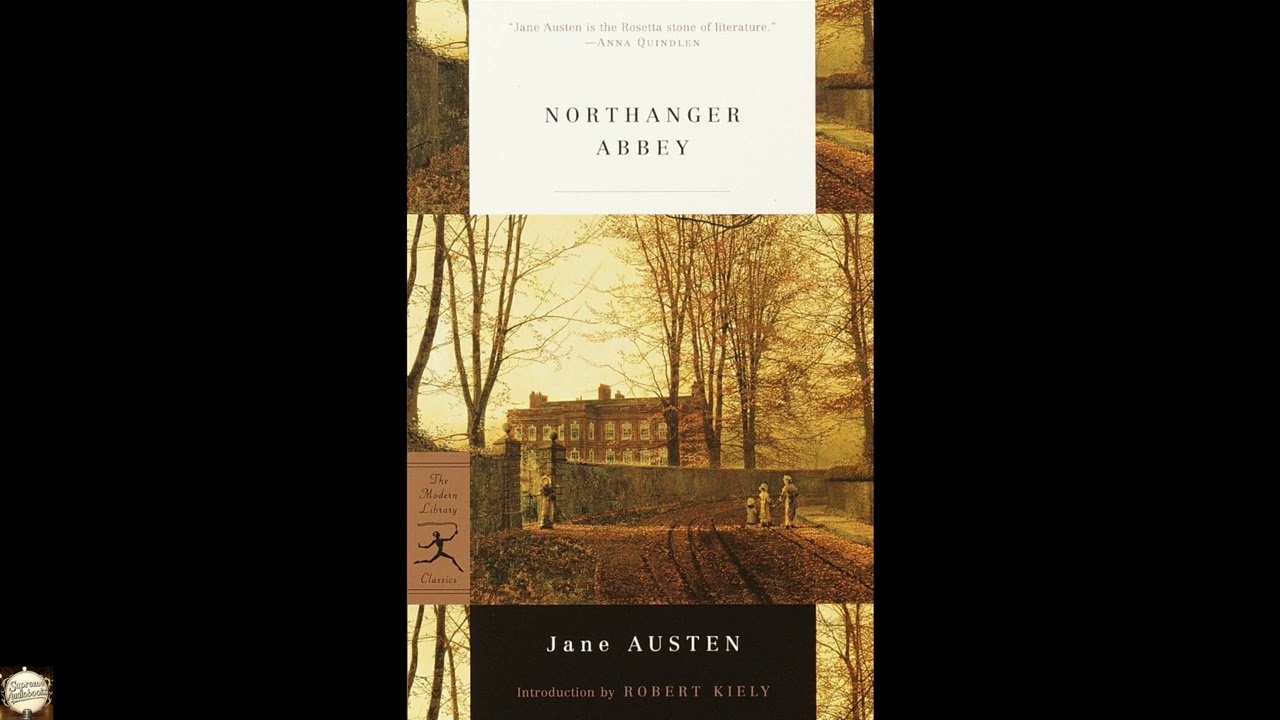
Northanger Abbey (Version 1) by Jane Austen. The underlying text is in the U.S. public domain. We do not republish any modern copyrighted edition, translation, or commentary.
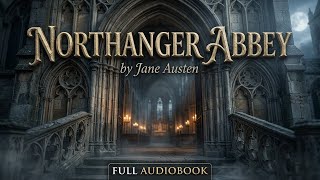
The 4K cinematic visuals accompanying this audiobook are generated by an AI image model from prompts derived from the source text. No copyrighted photos, paintings, or stock footage are used. AI generation is disclosed on every video on our YouTube channel as required by YouTube's altered/synthetic content policy.
English subtitles are transcribed from the LibriVox recording with OpenAI Whisper. Translations into the 11 other supported languages are produced by Meta's NLLB-200 neural translation model. No human translator's copyrighted translation is used.
Questions about sourcing or rights? See our DMCA & Sourcing policy or contact us.
Enjoyed this audiobook?
If you'd like to own a copy of Northanger Abbey (Version 1) or hear a professionally produced edition, the links below help support free audiobook production at no extra cost to you.
As an Amazon Associate we earn from qualifying purchases. Audible / print links are affiliate.