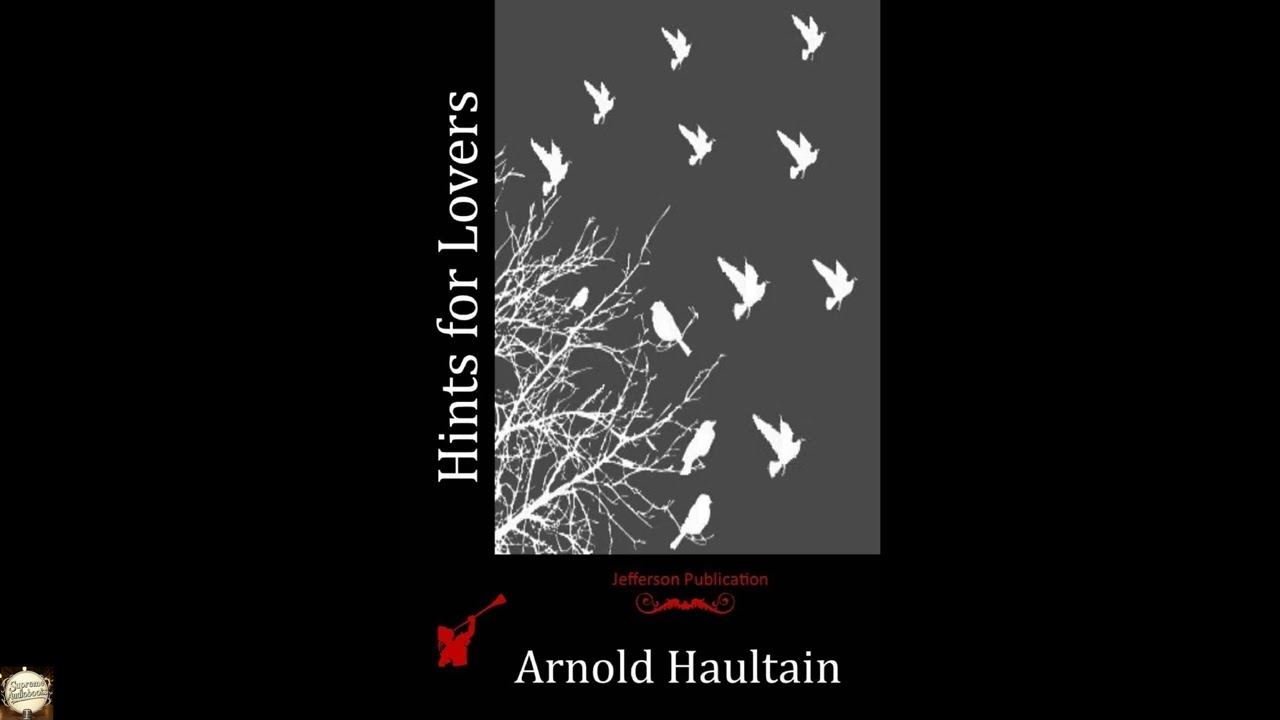
Hints for Lovers
What does it mean to truly love, and how does one cultivate that elusive state of grace? Arnold Haultain’s Hints for Lovers, first published in the opening years of the twentieth century, stands not as a forgotten relic but as a remarkably prescient and often witty guide to the perennial complexities of human affection. Far from a rigid etiquette manual or a saccharine romance, this volume offers a philosophical yet eminently practical meditation on the art of courtship, companionship, and self-awareness within a relationship. It poses timeless questions about attraction, understanding, and the delicate dance between two individuals, providing insights that, despite the passage of generations, still strike with surprising relevance in our modern world of dating apps and instant connections. It reminds us that the fundamental truths of the human heart remain largely unchanged. Instead of presenting a conventional narrative with characters and a linear story, Hints for Lovers unfolds as a series of astute observations, gentle admonitions, and profound reflections on the myriad facets of romantic engagement. Haultain begins by considering the foundational elements of attraction, delving into the subtle cues and unspoken understandings that draw people together. He offers thoughts on the importance of genuine interest, the perils of superficiality, and the quiet power of a keen mind and an attentive spirit. The initial stages of acquaintance and budding interest are dissected with an almost clinical precision, yet always imbued with a sense of the profound significance of human connection. As the text progresses, Haultain moves beyond initial encounters to the deeper currents of a sustained relationship. He examines the art of conversation, the necessity of patience, and the delicate balance between independence and interdependence. There is no rigid prescriptive formula offered; instead, the reader is invited to consider a range of scenarios and emotional responses, reflecting on their own experiences through Haultain's discerning lens. He touches upon the challenges inherent in any partnership—misunderstandings, differing expectations, the slow erosion of novelty—and suggests pathways towards greater empathy and enduring affection. The author’s guidance culminates in a thoughtful exploration of the sustained effort and conscious cultivation required to transform fleeting attraction into a lasting and meaningful bond, all without revealing the specific conclusions or advice he ultimately offers. Arnold Haultain, born in Dublin, Ireland in 1857, was a fascinating and polymathic figure whose life spanned significant cultural and historical shifts. Though his early life was spent in Europe, he immigrated to Canada, where he became a distinguished literary figure. Perhaps his most significant professional role was serving as the literary assistant and secretary to Goldwin Smith, a prominent English historian, journalist, and political commentator, during Smith’s later years in Toronto. This close association with Smith, a renowned intellectual, undoubtedly shaped Haultain’s own keen analytical abilities and his sophisticated prose style. He was not merely a chronicler of Smith's work but also a thoughtful commentator on the world around him. Haultain's literary output was remarkably diverse, reflecting a wide range of interests beyond the subject of love. He penned works such as A History of Riel’s Second Rebellion, demonstrating an engagement with Canadian historical events, and The Mystery of Golf, which revealed a playful and philosophical approach to sport. He was an essayist, a biographer, and an aphorist, capable of crafting both expansive historical narratives and concise, impactful observations on human nature. His place in the literary canon isn’t as a founder of a particular movement, but rather as an articulate and perceptive observer operating at the cusp of the Victorian and Edwardian eras, bridging the formality of the past with a burgeoning interest in psychology and social dynamics. Arnold Haultain lived until 1941, having witnessed two World Wars and immense societal change, yet his foundational observations on human character often remained remarkably consistent. A central theme woven throughout Hints for Lovers is the profound importance of self-knowledge as a prerequisite for successful partnership. Haultain repeatedly suggests that understanding one's own desires, flaws, and expectations is crucial before attempting to understand another. For instance, he offers advice that implicitly encourages introspection, asking the reader to consider why they seek certain qualities in a partner, rather than simply listing those qualities. This emphasis on internal clarity helps to temper unrealistic ideals and foster a more grounded approach to love. Another significant theme is the cultivation of genuine attentiveness and the art of true listening. Haultain dedicates significant passages to the idea that love thrives not on grand declarations, but on the subtle, often silent, cues of mutual respect and careful observation. He might illustrate this by discussing the difference between hearing words and truly comprehending the sentiment behind them, advocating for an active, empathetic engagement in conversation. Furthermore, Haultain consistently highlights the delicate balance between idealism and pragmatism in matters of the heart. He is neither cynically dismissive of romance nor naively idealistic. Instead, he presents love as a blend of aspiration and practical effort, acknowledging its transcendent qualities while grounding it in the realities of everyday interaction. He might, for example, caution against expecting perfection, suggesting that enduring affection is often built upon the acceptance of imperfections and the willingness to navigate challenges together. This pragmatic view is complemented by an appreciation for the intellectual stimulation and shared humor that can sustain a connection. Finally, the book subtly addresses the evolving social expectations of gender roles within relationships of its time, offering insights into the societal pressures and prescribed behaviors for men and women, often suggesting that mutual understanding can transcend rigid conventions. Hints for Lovers emerged from a pivotal moment in Western cultural history, published in 1909, just years before the seismic shifts of the First World War. This was the Edwardian era, a period often characterized by a lingering Victorian formality coupled with the stirrings of modernism and significant social change. Women’s suffrage movements were gaining momentum, industrialization continued to reshape daily life, and the intellectual landscape was being reconfigured by new ideas in psychology and sociology. Books offering advice on conduct, self-improvement, and social graces were highly popular, reflecting a society grappling with how to navigate evolving norms while still adhering to established decorum. Haultain’s work fits into this tradition of prescriptive literature, yet it distinguishes itself through its intellectual depth and psychological insight, transcending mere rules of etiquette to probe the deeper emotional currents that underpin human relationships. It speaks to a desire for guidance and understanding in a world rapidly transforming. Listening to Hints for Lovers as an audiobook allows Haultain's thoughtful prose and aphoristic style to truly shine. The narrative is not one of dramatic events, but of carefully considered ideas, making it ideally suited for an unhurried vocal interpretation. A skilled narrator brings out the nuance in Haultain's observations, allowing each "hint" or reflection to settle and resonate, transforming what might be read quickly on the page into a moment of deeper contemplation. The run length, several hours long, makes it a comfortably digestible listening experience, perfect for thoughtful walks, moments of quiet reflection, or as a companion during a long commute. Pay attention to the narrator’s pacing, which should invite pauses for introspection, and the subtle variations in voice that can emphasize Haultain’s gentle wit or the profound sincerity of his advice, creating an intimate, conversational atmosphere that feels both timeless and surprisingly personal.
Enjoyed Hints for Lovers? A few ways to support us
Audible & Amazon links are affiliate; we may earn a small commission at no extra cost.
About this production
Human narration by a volunteer reader from LibriVox.org, the public-domain audiobook project. LibriVox volunteers record literary works whose copyright has expired in the United States, releasing the resulting recordings into the public domain.
Hints for Lovers by Arnold Haultain. The underlying text is in the U.S. public domain. We do not republish any modern copyrighted edition, translation, or commentary.
The 4K cinematic visuals accompanying this audiobook are generated by an AI image model from prompts derived from the source text. No copyrighted photos, paintings, or stock footage are used. AI generation is disclosed on every video on our YouTube channel as required by YouTube's altered/synthetic content policy.
English subtitles are transcribed from the LibriVox recording with OpenAI Whisper. Translations into the 11 other supported languages are produced by Meta's NLLB-200 neural translation model. No human translator's copyrighted translation is used.
Questions about sourcing or rights? See our DMCA & Sourcing policy or contact us.
Enjoyed this audiobook?
If you'd like to own a copy of Hints for Lovers or hear a professionally produced edition, the links below help support free audiobook production at no extra cost to you.
As an Amazon Associate we earn from qualifying purchases. Audible / print links are affiliate.