The Reason Why
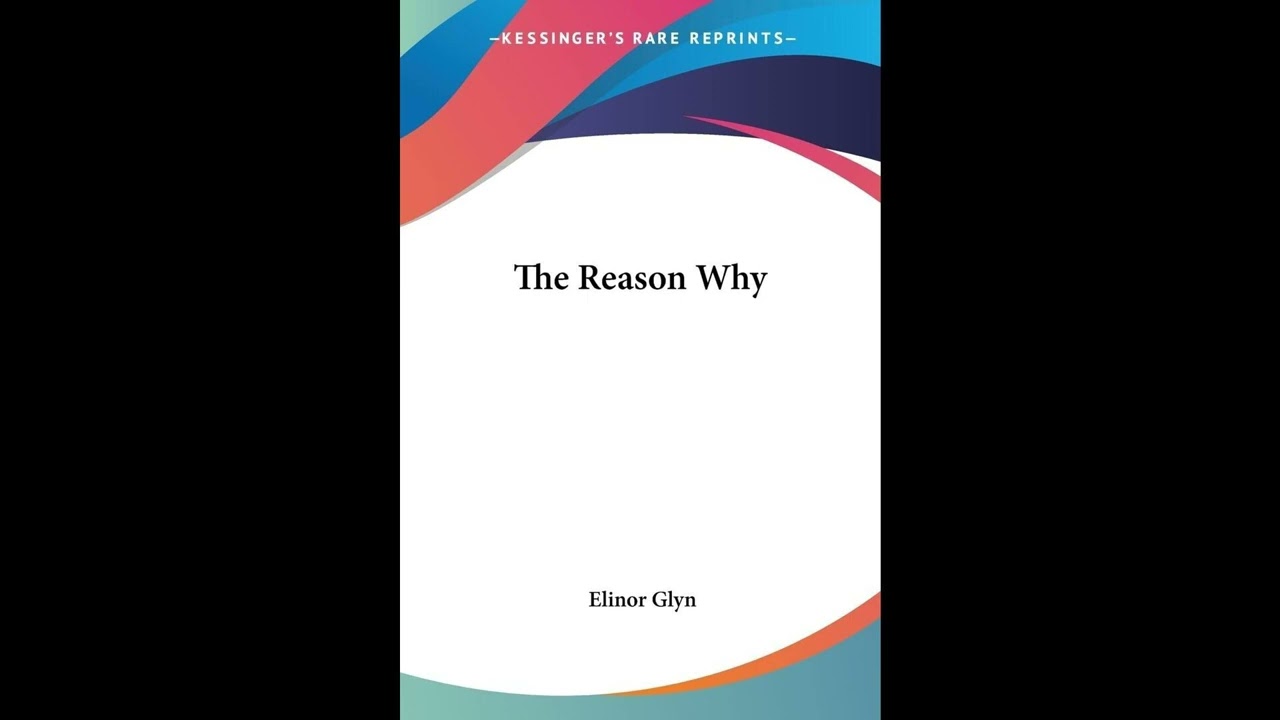
Elinor Glyn's "The Reason Why" sweeps listeners into a world where outward propriety masks a turbulent current of emotion, unspoken secrets, and the powerful, sometimes destructive, force of societal expectation. This classic of early twentieth-century romance, penned by an author who herself became a symbol of modern allure, invites us to observe the intricate dance between pride and passion, duty and desire. It is a story that, despite its period setting, speaks to the enduring human struggle to understand one another, to bridge the chasm of misunderstanding, and to find authenticity amidst a sea of conventions. For anyone who has ever grappled with the mysteries of the human heart or the weight of a hidden truth, this narrative offers both a compelling drama and a fascinating look into the social fabric that once bound — and often broke — individual lives. The story unfolds within the polished, yet often unforgiving, drawing-rooms and country estates of Edwardian England. At its heart are Lady Diana, a woman of striking beauty and an enigmatic demeanor, and Lord Tredennis, a man of rigid principles and deep, if often unexpressed, feeling. Their marriage is one born of complex circumstances, perhaps more convenience or social maneuvering than fervent affection. Almost immediately, a profound disconnect begins to poison their union. Diana, burdened by a past event she feels she cannot reveal, maintains a stoic reserve that Tredennis misinterprets as coldness or indifference. She fears that divulging her secret would lead to ruin, not only for herself but for others involved. Lord Tredennis, meanwhile, cannot comprehend his wife's aloofness. His pride is wounded by her perceived lack of trust, and his love, though nascent, struggles against a wall of silence. As the narrative progresses, their relationship becomes a battleground of unspoken accusations, wounded pride, and a growing emotional distance. Gossip and social pressures further complicate their lives, threatening to expose Diana's secret and shatter the delicate facade they both maintain. The tension builds as each character grapples with their internal demons and the external forces that conspire to keep them apart, all while the titular "reason why" looms as the pivotal, unresolved question guiding every interaction and decision. Elinor Glyn, born Elinor Sutherland in 1864 on the island of Jersey, became one of the most celebrated and controversial authors of her time. Raised within a prominent Anglo-Irish family, she married Clayton Glyn, a wealthy landowner, in 1892, gaining entry into the upper echelons of British society. Her vivacious personality, striking red hair, and unconventional views quickly made her a notable figure. It was not until her late thirties that she began to write, publishing her first novel, The Visits of Elizabeth, in 1900. Her writing quickly garnered attention for its frank depictions of romance and social mores. Glyn truly achieved international fame — and notoriety — with her 1907 novel, Three Weeks, which scandalized polite society with its story of a passionate affair between an English nobleman and an older, mysterious queen. This book cemented her reputation as a daring voice, one who dared to speak about female desire and the complexities of human relationships outside the strictures of Victorian morality. Later, in the 1920s, she moved to Hollywood, where she became a successful screenwriter and producer, famously coining the term "It" to describe an indefinable personal magnetism in her novel It (1926). Glyn was not merely a writer; she was a cultural phenomenon who influenced fashion, film, and the perception of modern womanhood until her death in 1943. "The Reason Why" keenly examines several enduring themes. One significant thread is the nature of love and marriage in a society dictated by class and expectation. Glyn frequently portrays marriage not as a simple union of hearts, but as a complex social contract often fraught with hidden motives and unfulfilled desires. Diana and Tredennis’s relationship serves as a prime example, showing how genuine affection can struggle to emerge from beneath layers of societal pressure and personal reticence. Their inability to communicate openly reveals how superficial agreements, rather than deep understanding, can doom a partnership. Another powerful theme is the crushing weight of social convention and reputation. In Edwardian England, a woman's standing was fragile, and a single perceived transgression, whether real or imagined, could lead to complete ostracism. Diana's secret, though its specifics remain veiled for the listener, forces her into a life of careful pretense, demonstrating the immense personal cost of maintaining appearances. The narrative also highlights the pervasive issue of miscommunication and emotional restraint. Much of the book's tension stems from what characters don't say, the assumptions they make, and the pride that prevents them from seeking or offering clarification. The chasm between Diana and Tredennis grows wider not necessarily from malice, but from a profound inability to voice their true feelings and fears. The novel was released in the early twentieth century, a period often referred to as the Edwardian era in Britain, immediately following the long reign of Queen Victoria. This was a time of significant cultural shifts: while Victorian prudishness still held sway in many circles, new ideas about gender roles, individual freedom, and social class were beginning to surface. The women's suffrage movement was gaining momentum, and technological advancements were rapidly changing daily life. Glyn's works, including "The Reason Why," were part of a popular literary trend that catered to a growing readership eager for stories that touched upon passion and personal drama, often challenging the strict moral codes of the time. Her books were deemed "racy" by some, but they resonated with a public fascinated by the private lives of the upper classes and the simmering emotional undercurrents beneath a veneer of decorum. They helped pave the way for a more open discussion of relationships and women's agency in the decades to come. Listening to "The Reason Why" as an audiobook allows the elegant prose and the simmering emotional drama to truly unfold with a compelling immediacy. A skilled narrator can bring out the nuanced personalities of Lady Diana and Lord Tredennis, giving distinct voice to Diana's controlled exterior and Tredennis's internal conflict. The pacing of the story, with its gradual unveiling of secrets and its slow, often painful, emotional development, is particularly well-suited to the spoken word. The "several hours" length makes it an ideal companion for moments of quiet reflection, long drives, or simply as an escape into a bygone era of elaborate social rituals and profound human feeling. Listen for the subtle shifts in tone during dialogue, the atmospheric descriptions of the English countryside, and the way the narrator builds suspense around the central mystery, drawing you deeper into this tale of love, pride, and the reasons we keep our most important truths hidden.
Enjoyed The Reason Why? A few ways to support us
Audible & Amazon links are affiliate; we may earn a small commission at no extra cost.
About this production
Human narration by a volunteer reader from LibriVox.org, the public-domain audiobook project. LibriVox volunteers record literary works whose copyright has expired in the United States, releasing the resulting recordings into the public domain.
The Reason Why by Elinor Glyn. The underlying text is in the U.S. public domain. We do not republish any modern copyrighted edition, translation, or commentary.
The 4K cinematic visuals accompanying this audiobook are generated by an AI image model from prompts derived from the source text. No copyrighted photos, paintings, or stock footage are used. AI generation is disclosed on every video on our YouTube channel as required by YouTube's altered/synthetic content policy.
English subtitles are transcribed from the LibriVox recording with OpenAI Whisper. Translations into the 11 other supported languages are produced by Meta's NLLB-200 neural translation model. No human translator's copyrighted translation is used.
Questions about sourcing or rights? See our DMCA & Sourcing policy or contact us.
Enjoyed this audiobook?
If you'd like to own a copy of The Reason Why or hear a professionally produced edition, the links below help support free audiobook production at no extra cost to you.
As an Amazon Associate we earn from qualifying purchases. Audible / print links are affiliate.