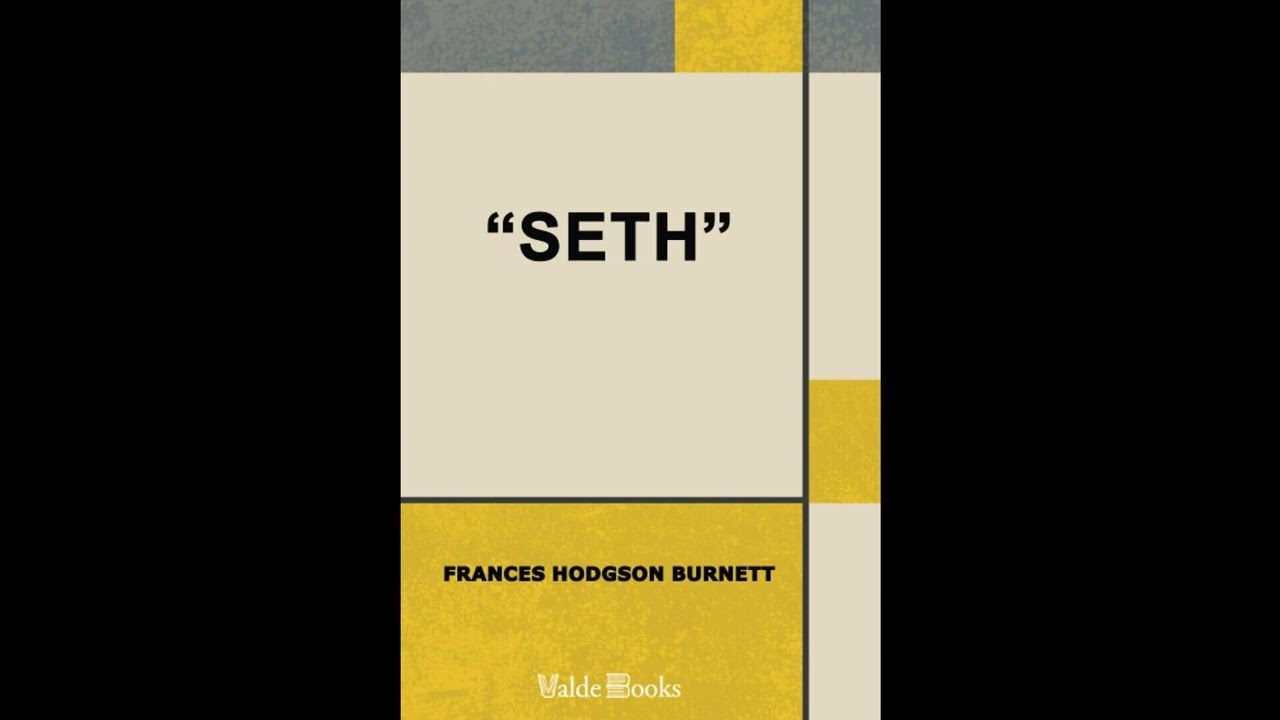
"Seth"
Among the vast and beloved library of Frances Hodgson Burnett, celebrated for her indelible stories of resilience and the transformative power of the human spirit, lies a quieter yet equally resonant narrative: Seth. This often-overlooked novel offers listeners a singular opportunity to rediscover the profound grace and keen social observation that mark Burnett’s finest writing. Far from the sun-drenched gardens and grand estates that might first come to mind, Seth presents a deeply affecting character study, a tale that holds up a mirror to the timeless struggles of identity, ambition, and the enduring search for meaning in a world often indifferent to individual hopes. It is a story whose gentle wisdom and authentic emotional landscape continue to speak to contemporary audiences, reminding us that even in the most unassuming corners of life, extraordinary truths can be found. The story centers on Seth, a young man who finds himself adrift in the bustling, soot-stained landscape of an industrial town in England. Orphaned and bearing the weight of a lineage that feels both grand and tragically fallen, Seth is taken in by a distant relative, a pragmatic, careworn woman who sees little room for dreams amidst the ceaseless demands of daily survival. His days are marked by the rhythmic clang of the local mill, the oppressive presence of poverty, and the quiet yearning for a life beyond the grim realities he inherits. Yet, Seth possesses an uncommon spirit, a deep well of observation, and an innate sense of justice that sets him apart from the cynicism around him. His struggle begins not with a grand adventure, but with the quiet, internal battle to reconcile his inner world of aspiration with the harsh external environment. As Seth navigates his formative years, he encounters a spectrum of characters who shape his understanding of the world. There is the kindly, if somewhat eccentric, scholar who opens Seth's eyes to the power of books and ideas; the vivacious daughter of the mill owner, whose world of privilege both fascinates and frustrates him; and the hard-bitten factory workers, whose resilience and occasional despair teach him lessons about community and hardship. A central conflict emerges as Seth grapples with a moral dilemma involving a secret that could either secure his future at the expense of others or demand a sacrifice that upholds his integrity. His journey becomes one of self-discovery, testing the boundaries of his idealism against the pragmatism of survival, all while he seeks to forge a path that honors both his past and his fervent hopes for the future. Frances Hodgson Burnett was a prolific and beloved author whose life story reads much like one of her own novels—a testament to resilience and transformation. Born in Manchester, England, in 1849, she experienced a childhood that began in relative comfort but was plunged into hardship after her father's death. This personal upheaval led her family to emigrate to Knoxville, Tennessee, in 1865, just as the American Civil War concluded. Faced with poverty, young Frances began writing stories to earn money, publishing her first piece at the age of eighteen. This early success propelled a career that spanned decades and produced a remarkable body of work for both adults and children. Burnett's literary reputation was cemented with novels like Little Lord Fauntleroy, published in 1886, which captured the hearts of readers on both sides of the Atlantic and inspired a fashion trend for velvet suits. Later, she would achieve even greater acclaim with A Little Princess (1905) and her enduring classic, The Secret Garden (1911). Her works are characterized by their deep understanding of childhood psychology, their celebration of nature's restorative power, and their unwavering belief in the capacity for human growth and happiness, often against considerable odds. Though she spent much of her adult life moving between England and America, her stories often evoked a sense of rootedness and the profound impact of environment on character. She passed away in 1924, leaving behind a legacy as one of the most cherished storytellers of her era. Within Seth, Burnett thoughtfully explores several enduring themes. One prominent idea is the dignity of labor and the challenges of social mobility. Through Seth’s experiences in the factory and his interactions across different classes, the narrative vividly illustrates the grinding realities faced by the working poor and the immense effort required to transcend one’s inherited circumstances. We see this in the detailed descriptions of the mill's interior, the exhaustion etched on the faces of the workers, and Seth's internal conflict about accepting a lower-class existence versus aspiring to something more, a tension that is palpable in his every decision. Another central theme is the power of education and the life of the mind as a means of escape and self-improvement. Seth's quiet hours spent with books and his discussions with the reclusive scholar illuminate how intellectual pursuits can offer solace, perspective, and a pathway to personal liberation, even when material conditions remain grim. This is beautifully enacted when Seth, despite his meager earnings, saves to buy a book, finding in its pages a world far richer than his immediate surroundings. Additionally, Seth thoughtfully considers the theme of moral integrity versus expediency. Seth is consistently presented with choices that pit his inherent goodness and sense of right against opportunities for easier advancement or personal gain that would compromise his values. His struggle to make these difficult decisions forms the backbone of the story, demonstrating Burnett’s belief in the importance of character in shaping destiny. We see this clearly in a scene where Seth uncovers a scheme that benefits his family at the cost of the wider community, forcing him to choose between loyalty and justice. Finally, the story subtly highlights the transformative potential of genuine human connection. Despite the harshness of his environment, Seth finds unexpected solace and guidance in friendships and mentorships, showing how compassion and understanding can bridge social divides and foster personal growth, allowing him to see beyond his immediate struggles toward a broader sense of belonging and purpose. The period in which Frances Hodgson Burnett was writing—the late nineteenth and early twentieth centuries—was a time of immense social and economic upheaval. England, still the heart of a vast empire, was grappling with the legacy of the Industrial Revolution: rapid urbanization, stark class divisions, and the harsh living conditions for the working class. The United States, too, was undergoing rapid transformation, from post-Civil War reconstruction to the Gilded Age, characterized by both immense wealth and widespread poverty. It was an era when calls for social reform were growing, alongside burgeoning interest in child welfare and education. Burnett's unique position, having lived and written extensively in both countries, gave her a dual perspective on these global shifts. This historical context directly influenced her work. While many authors of the time were gravitating towards realism and naturalism to depict the grittier aspects of life, Burnett often blended these observations with a strain of romanticism and idealism. Her stories, including Seth, often presented characters, particularly young ones, striving for moral fortitude and personal betterment despite challenging circumstances. They offered readers a blend of social commentary and hope, reflecting a widespread desire for tales that acknowledged the difficulties of the age but also affirmed the power of human goodness and the possibility of a brighter future. Seth clearly emerged from this cultural moment, a quiet response to the clamor of industrial society, asserting the enduring value of the individual spirit. To experience Seth as an audiobook is to immerse oneself fully in Frances Hodgson Burnett's distinctive voice and the subtle emotional currents of her storytelling. The several hours of narration provide ample time for the listener to settle into Seth's world, allowing the narrative to unfold at a deliberate, thoughtful pace. A skilled narrator brings Burnett's keen observations to life, giving distinct voices to the varied cast of characters—from the weary mill workers to the hopeful scholar, and of course, Seth himself. Listen for the nuances in the dialogue, which Burnett crafted with a fine ear for both plainspoken realism and moments of poetic reflection. The spoken word enhances the novel's evocative atmosphere, allowing the listener to visualize the sooty streets and glimpse the interior life of a young man striving for something more, creating a deeply personal and reflective experience.
Enjoyed "Seth"? A few ways to support us
Audible & Amazon links are affiliate; we may earn a small commission at no extra cost.
About this production
Human narration by a volunteer reader from LibriVox.org, the public-domain audiobook project. LibriVox volunteers record literary works whose copyright has expired in the United States, releasing the resulting recordings into the public domain.
"Seth" by Frances Hodgson Burnett. The underlying text is in the U.S. public domain. We do not republish any modern copyrighted edition, translation, or commentary.
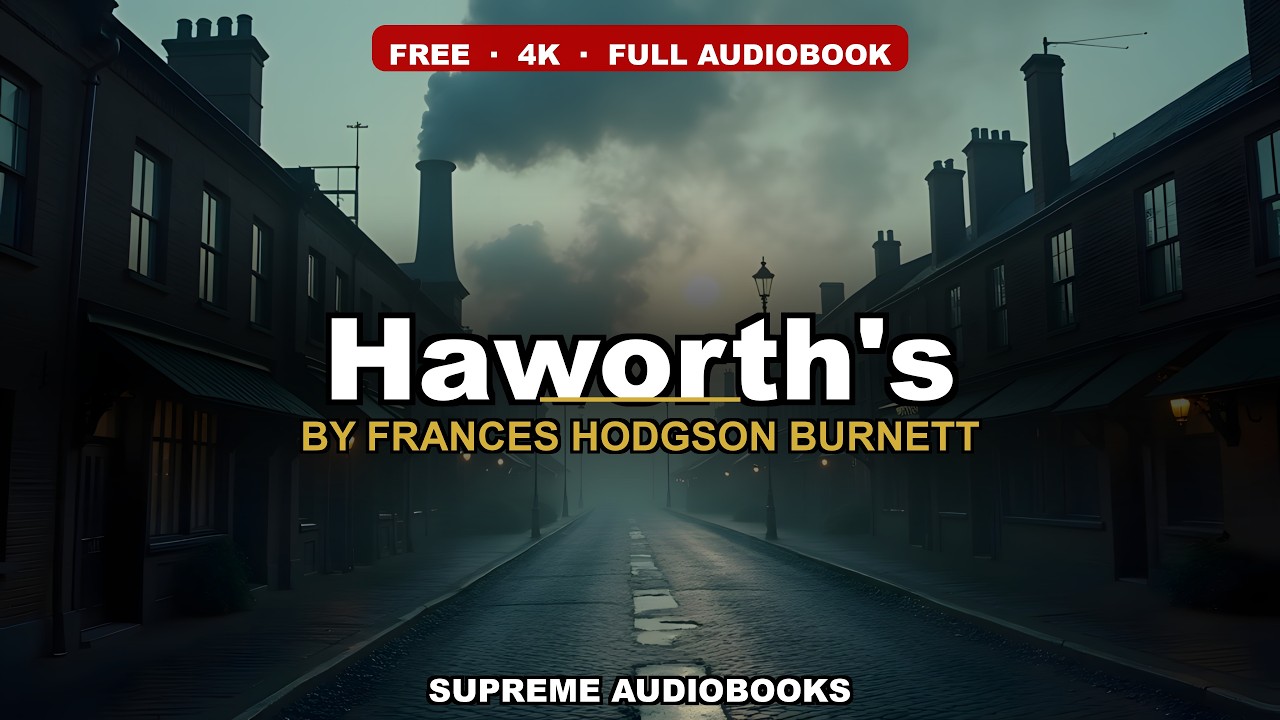
The 4K cinematic visuals accompanying this audiobook are generated by an AI image model from prompts derived from the source text. No copyrighted photos, paintings, or stock footage are used. AI generation is disclosed on every video on our YouTube channel as required by YouTube's altered/synthetic content policy.
English subtitles are transcribed from the LibriVox recording with OpenAI Whisper. Translations into the 11 other supported languages are produced by Meta's NLLB-200 neural translation model. No human translator's copyrighted translation is used.
Questions about sourcing or rights? See our DMCA & Sourcing policy or contact us.
Enjoyed this audiobook?
If you'd like to own a copy of "Seth" or hear a professionally produced edition, the links below help support free audiobook production at no extra cost to you.
As an Amazon Associate we earn from qualifying purchases. Audible / print links are affiliate.