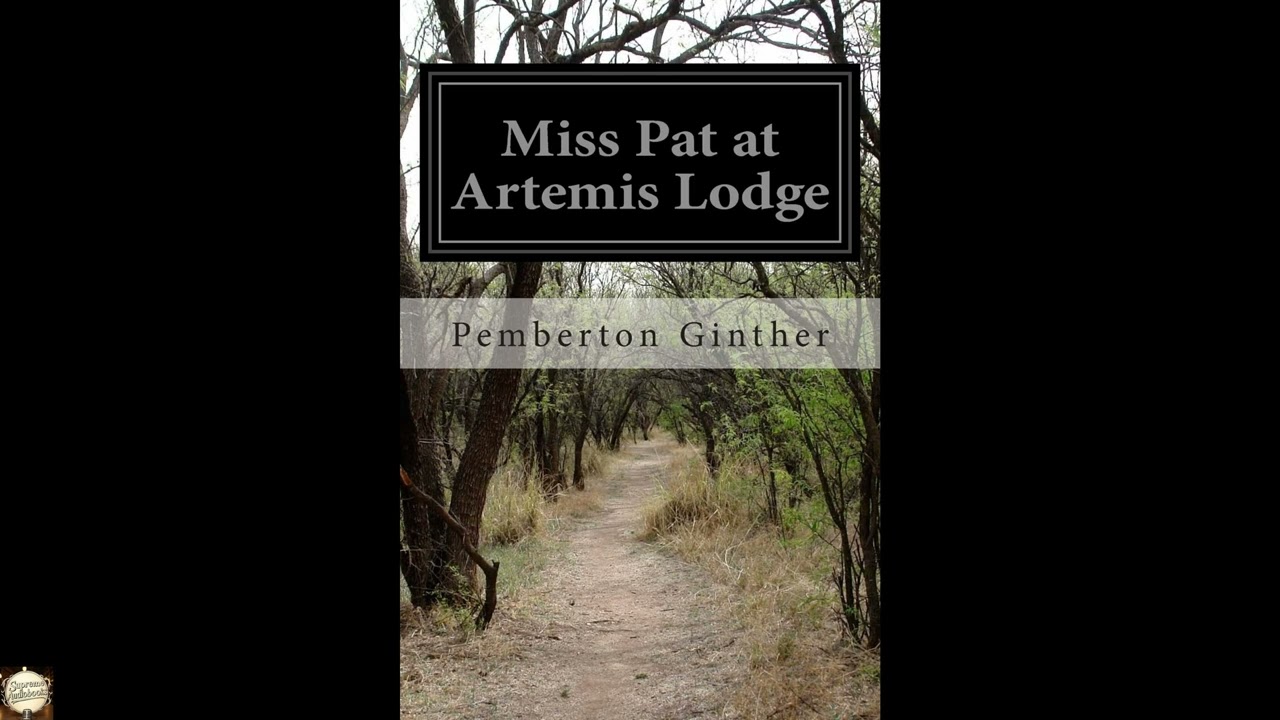
Miss Pat at Artemis Lodge
Step into a quiet revolution with Pemberton Ginther’s "Miss Pat at Artemis Lodge," a novel that, while appearing gentle on its surface, offers a shrewd commentary on the confines of societal expectations and the burgeoning desires for female independence at the dawn of the twentieth century. This remarkable story introduces us to a young woman grappling with the preordained path laid out for her, finding an unexpected sanctuary and a profound awakening within the walls of a peculiar establishment. It is a testament to the enduring human need for authentic self-expression and belonging, resonating with anyone who has ever questioned the status quo or sought a life beyond convention. Ginther’s keen eye for character and setting makes this a deeply felt narrative, as relevant to our search for identity today as it was to its original readers. The story opens with Patricia Thorne, known to all as Miss Pat, a young woman of gentle breeding from a respectable, if somewhat stifling, East Coast family. Feeling an unspoken discontent, a vague sense of unease with the predictable trajectory of her life – debutante balls, suitable marriage proposals, and the quiet domesticity expected of her – Miss Pat is sent, ostensibly for a "rest cure" for her "nerves," to the secluded Artemis Lodge. Nestled deep within a picturesque mountain range, the Lodge is no ordinary convalescent home. It is a haven for a motley collection of women, each seeking refuge or renewal from the demands of the world outside. From the eccentric Miss Hawthorne, an amateur botanist with revolutionary ideas, to the quietly intellectual Mrs. Vandergelder, a widow with a hidden past, the residents challenge Miss Pat’s sheltered worldview from her very arrival. The central conflict arises from Miss Pat’s initial struggle to reconcile the Lodge’s unconventional atmosphere and its independent-minded inhabitants with the rigid social decorum she has been taught to uphold. Under the benevolent but firm guidance of its enigmatic proprietress, Madame Varley, Artemis Lodge operates on its own set of rules, encouraging intellectual pursuits, physical activity, and frank discussions on topics considered scandalous in polite society. As Pat observes the lives and philosophies of these women, she slowly begins to question her own assumptions about femininity, duty, and happiness. She finds herself drawn into their debates, participates in their outdoor excursions, and starts to experience a freedom of thought and action previously unknown to her. The narrative carefully builds towards Pat’s growing self-awareness, showing her transformation from a compliant young lady into an individual beginning to formulate her own understanding of what a fulfilling life might entail, all while teasing out the subtle mysteries that shroud Artemis Lodge itself. Pemberton Ginther, an author of understated genius, was born in 1878 in a small, academically inclined town in upstate New York. From an early age, Ginther displayed an unusual independence of mind, eschewing the traditional path of a society woman for a life dedicated to observation and writing. Her early years were marked by extensive travel across Europe and the American West, experiences that deeply informed her acute understanding of diverse human experiences and the varying strictures of different societies. While not a prolific writer, Ginther’s relatively few works were lauded by a discerning circle for their psychological depth and their incisive, if often subtle, social commentary. "Miss Pat at Artemis Lodge," published in 1905, remains her most widely recognized contribution to the literary canon, though her short story collection, "Shadows in the Garden," published posthumously, also garners considerable critical attention for its stark realism. Ginther’s contribution places her firmly among those early twentieth-century authors who gently pushed against Victorian conventions, laying groundwork for later feminist literature without overtly aligning herself with any specific movement. She was a quiet precursor, a keen analyst of the human spirit grappling with a changing world. Among the prominent themes enacted in "Miss Pat at Artemis Lodge" is the fundamental tension between societal expectation and individual freedom. Through Pat’s internal monologues and her interactions with the Lodge’s residents, Ginther illustrates the invisible chains that bound women of a certain class. Pat’s discomfort, for example, when first asked to voice her own opinion on a philosophical point during a Lodge dinner, exemplifies her conditioned deference to male-dominated discourse, a habit she slowly sheds. Another central theme is the search for authentic community and belonging. The Lodge, with its unconventional inhabitants, offers Pat a form of kinship she never experienced in her socially prescribed circles. A scene where the women collaborate on a gardening project, sharing laughter and practical wisdom, stands in stark contrast to the competitive, often superficial interactions Pat faced in her former life, highlighting the nourishing power of a chosen family. The novel also carefully examines the theme of self-discovery, as Pat sheds her preconceived notions and begins to understand her own desires and capabilities, often sparked by quiet moments of introspection while hiking the Lodge’s mountain trails. "Miss Pat at Artemis Lodge" emerged during a period of profound social and cultural transformation in America, specifically the Progressive Era of the early 1900s. This was a time when the traditional roles for women were beginning to be openly challenged, fueled by the burgeoning women’s suffrage movement and broader calls for social reform. Many women, particularly those of the middle and upper classes, found themselves increasingly educated and desirous of a life beyond the domestic sphere, yet still constrained by prevailing societal norms. The popularity of "rest cures" and health retreats, often for "nervous" women, provided a socially acceptable excuse for women to escape their conventional lives, sometimes finding within these spaces unexpected opportunities for self-reflection and personal growth. Ginther’s novel taps directly into this zeitgeist, reflecting the quiet yearning for independence that simmered beneath the surface of polite society. It mirrors the era's growing interest in psychology and individual agency, offering a literary space where these nascent desires could be explored and understood. Listening to "Miss Pat at Artemis Lodge" as an audiobook truly enhances the intimate nature of Ginther’s prose. The narrator’s skillful modulation of voice brings each distinctive character to life, from Miss Pat’s initial hesitant inquiries to Madame Varley’s measured pronouncements and the varied personalities of the Lodge residents. The run length of several hours allows for a gradual immersion into the tranquil yet intellectually stimulating atmosphere of Artemis Lodge, perfect for extended listening sessions during a quiet afternoon or a long commute. Pay attention to the subtle shifts in the narrator’s pacing, which underscore Pat’s emotional arc – from her initial apprehension to her growing confidence. The carefully chosen inflections during moments of dialogue reveal the nuanced humor and quiet intensity that might be missed in a quick read, making the experience of this unfolding story deeply personal and absorbing.
Enjoyed Miss Pat at Artemis Lodge? A few ways to support us
Audible & Amazon links are affiliate; we may earn a small commission at no extra cost.
About this production
Human narration by a volunteer reader from LibriVox.org, the public-domain audiobook project. LibriVox volunteers record literary works whose copyright has expired in the United States, releasing the resulting recordings into the public domain.
Miss Pat at Artemis Lodge by Pemberton Ginther. The underlying text is in the U.S. public domain. We do not republish any modern copyrighted edition, translation, or commentary.
The 4K cinematic visuals accompanying this audiobook are generated by an AI image model from prompts derived from the source text. No copyrighted photos, paintings, or stock footage are used. AI generation is disclosed on every video on our YouTube channel as required by YouTube's altered/synthetic content policy.
English subtitles are transcribed from the LibriVox recording with OpenAI Whisper. Translations into the 11 other supported languages are produced by Meta's NLLB-200 neural translation model. No human translator's copyrighted translation is used.
Questions about sourcing or rights? See our DMCA & Sourcing policy or contact us.
Enjoyed this audiobook?
If you'd like to own a copy of Miss Pat at Artemis Lodge or hear a professionally produced edition, the links below help support free audiobook production at no extra cost to you.
As an Amazon Associate we earn from qualifying purchases. Audible / print links are affiliate.