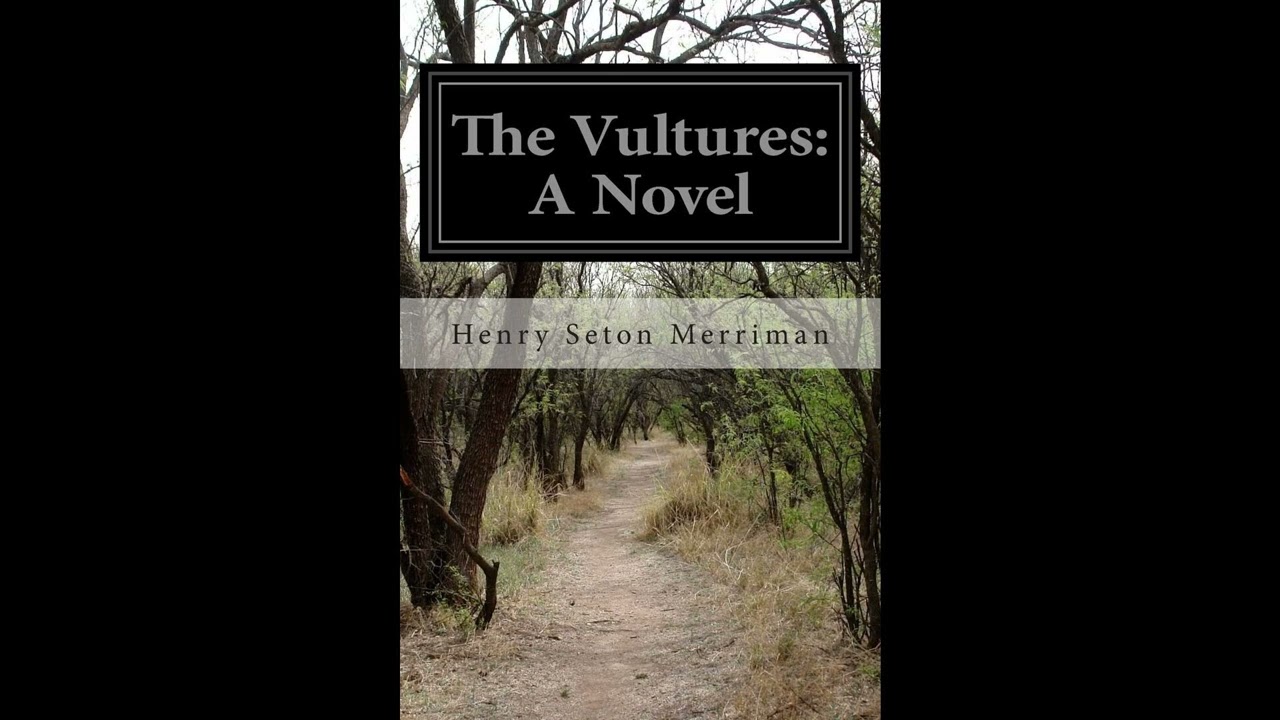
The Vultures: A Novel
In a world seemingly always teetering on the brink of geopolitical unrest, the machinations of spies, diplomats, and revolutionaries continue to shape the destinies of nations and individuals alike. Henry Seton Merriman's The Vultures: A Novel, a thrilling work from the turn of the twentieth century, drops listeners directly into this precarious dance. This book is far more than a historical curiosity; it is a gripping tale of international intrigue, moral compromise, and the relentless human desire for power and control. It offers a window into a tumultuous era that resonates with the complexities of our own, presenting a cast of characters who wrestle with loyalty, betrayal, and the harsh realities of global politics. For anyone who appreciates a story where every whisper carries consequence and every alliance is fraught with potential deception, The Vultures remains as potent and thought-provoking now as it was when first published. The story transports us to Galicia, a volatile region then caught between the powerful orbits of the Austro-Hungarian and Russian Empires. It is a land of shifting loyalties and deep-seated historical grievances, making it a perfect stage for the covert battles of influence Merriman so deftly portrays. Our central figure is Paul Keswick, a young and earnest British attaché, whose diplomatic posting plunges him into a shadowy world of spies, double-dealers, and ambitious schemers. His initial idealism is quickly tested as he encounters the ruthless "vultures" of the title – figures who prey upon the political instability of the region, seeking personal gain or national advantage at any cost. Keswick finds himself entangled with a complex network of characters, including an enigmatic woman whose allegiances are never quite clear, and a cast of powerful men each maneuvering for supremacy. The central conflict arises from a series of dangerous secrets and political conspiracies that threaten to ignite a broader European conflict. Keswick, driven by a strong sense of duty but increasingly disillusioned by the cynicism he witnesses, must navigate a labyrinth of misinformation and imminent danger. The narrative carefully builds suspense as he uncovers layers of deceit, striving to protect innocent lives and uphold a moral standard in an environment where such virtues seem increasingly rare. The story follows Keswick's perilous journey as he strives to expose the truth and prevent catastrophe, without revealing the specific twists and turns that define his ultimate challenge. The sharp eye for political machination evident in The Vultures was no accident, but a hallmark of its creator, Henry Seton Merriman. Born Hugh Stowell Scott in 1862, he was an English novelist whose relatively short life, ending in 1903, was packed with extensive travel and a prolific output of fiction. Educated at Lancing College, Merriman initially pursued a career in business, an experience that likely honed his observational skills and understanding of human ambition. However, it was his wanderlust that truly shaped his literary world. He traveled widely across Europe, to Russia, and throughout the Middle East, immersing himself in the cultures and political landscapes that would become the authentic backdrops for his novels. Merriman gained significant popularity during his lifetime, establishing himself as a master of the adventure and spy novel. His other notable works, such as The Sowers, a tale of Russian nihilism, and In Kedar's Tents, set during the Carlist Wars in Spain, showcase his consistent themes of international intrigue and character under pressure in exotic locales. Merriman’s writing style, often described as concise and direct, distinguished him in the late Victorian literary scene. He was known for his sharp insights into human nature and a subtle, often cynical wit, which lends his narratives a distinct gravity and a sense of realism that set him apart from some of his more overtly romantic contemporaries. He crafted narratives that felt both thrilling and intellectually engaging, solidifying his place as a significant, if sometimes overlooked, figure in the development of the modern spy thriller. The Vultures powerfully enacts several enduring themes that remain pertinent. One central idea is the corrosive nature of political opportunism and the moral ambiguities inherent in international relations. Merriman shows us how individuals, driven by nationalistic fervor or personal gain, can exploit instability, creating an environment where truth is obscured and innocent lives are expendable. For example, a scene early in the book depicts a seemingly innocuous diplomatic gathering where beneath the polite veneer, allegiances are being subtly tested and information is traded like currency, illustrating the constant, low-level warfare of diplomacy. Another significant theme is the struggle for personal integrity against a backdrop of widespread corruption and deceit. Paul Keswick, as a protagonist, embodies this conflict, constantly questioning his own actions and the ethics of those around him. He faces choices that demand he compromise his principles for a perceived greater good, or risk dire consequences. This internal battle is often mirrored in the conversations he has with other characters, where varying philosophies on duty, loyalty, and patriotism are voiced, providing a nuanced perspective on the burdens of conscience in a world driven by power. The book also subtly critiques the passive suffering of ordinary people caught in the crossfire of grand political games. The novel emerged from a particularly anxious period in European history. The late nineteenth century was a time of intense imperial rivalries, an arms race, and growing nationalistic fervor that would ultimately erupt into World War I. Empires like the Austro-Hungarian and Ottoman were perceived to be weakening, creating a power vacuum that other nations, particularly Russia and Germany, were keen to fill. Merriman’s choice of Galicia, a borderland between these spheres of influence, was deliberate. It represented a microcosm of these larger geopolitical tensions, a place where different ethnic groups and political factions vied for control, often manipulated by external powers. The "Eastern Question," referring to the political instability in the Balkan region and the decline of the Ottoman Empire, dominated diplomatic discourse, and The Vultures taps directly into the anxieties surrounding these unresolved conflicts and the constant threat of war. Listening to The Vultures as an audiobook offers a uniquely immersive experience, allowing the listener to truly sink into Merriman's carefully constructed world of espionage and political tension. A skilled narrator brings the distinct voices of the diverse characters to life – from the earnest Paul Keswick to the cunning diplomats and the enigmatic figures lurking in the shadows. The measured pacing of the prose, often building suspense through subtle observations and hushed conversations, translates wonderfully to the audio format, allowing the listener to absorb every clue and nuance. The narrator's ability to convey the atmospheric tension, the weight of secrets, and the occasional dry wit of Merriman’s dialogue enhances the story, making the "several hours" of listening a truly compelling journey into a pivotal moment in history and human nature.
Enjoyed The Vultures: A Novel? A few ways to support us
Audible & Amazon links are affiliate; we may earn a small commission at no extra cost.
About this production
Human narration by a volunteer reader from LibriVox.org, the public-domain audiobook project. LibriVox volunteers record literary works whose copyright has expired in the United States, releasing the resulting recordings into the public domain.
The Vultures: A Novel by Henry Seton Merriman. The underlying text is in the U.S. public domain. We do not republish any modern copyrighted edition, translation, or commentary.
The 4K cinematic visuals accompanying this audiobook are generated by an AI image model from prompts derived from the source text. No copyrighted photos, paintings, or stock footage are used. AI generation is disclosed on every video on our YouTube channel as required by YouTube's altered/synthetic content policy.
English subtitles are transcribed from the LibriVox recording with OpenAI Whisper. Translations into the 11 other supported languages are produced by Meta's NLLB-200 neural translation model. No human translator's copyrighted translation is used.
Questions about sourcing or rights? See our DMCA & Sourcing policy or contact us.
Enjoyed this audiobook?
If you'd like to own a copy of The Vultures: A Novel or hear a professionally produced edition, the links below help support free audiobook production at no extra cost to you.
As an Amazon Associate we earn from qualifying purchases. Audible / print links are affiliate.