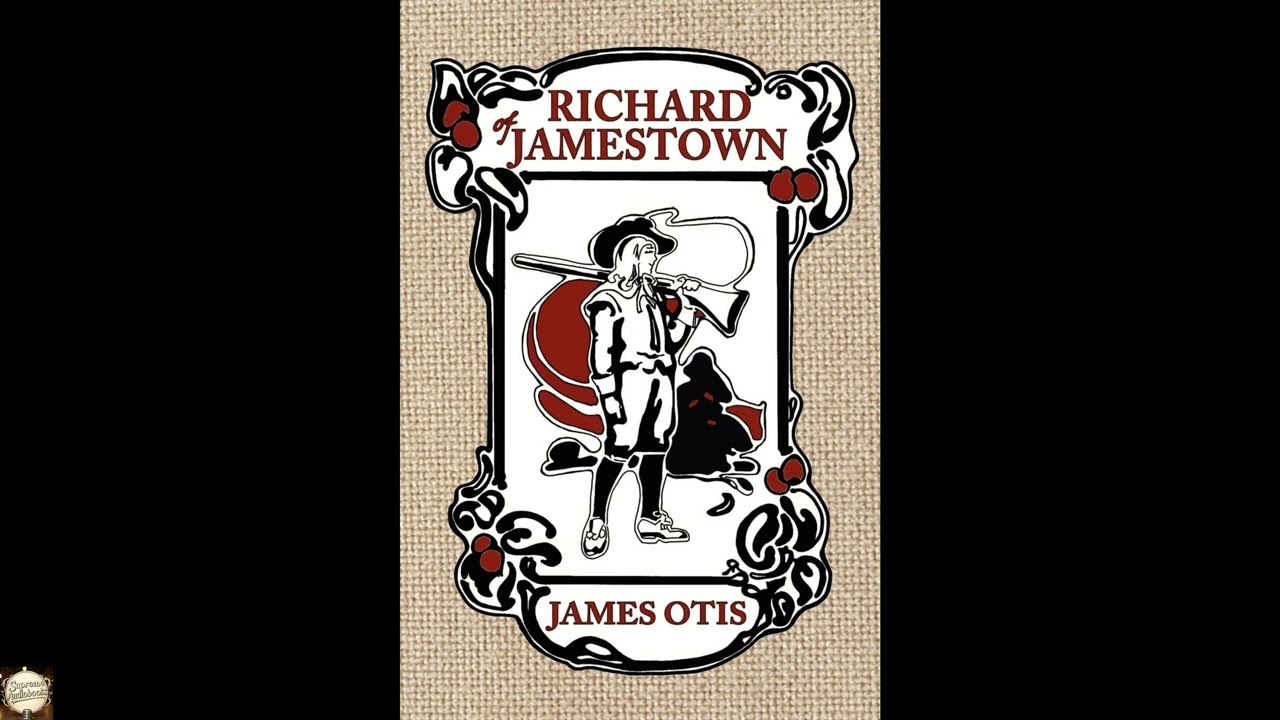
Richard of Jamestown: A Story of Virginia Colony
Step back in time to the raw, untamed landscape of early seventeenth-century Virginia, a place brimming with both perilous unknowns and the promise of a new world. Richard of Jamestown: A Story of Virginia Colony transports listeners directly into the crucible of America’s founding, offering a deeply human glimpse into the lives of those who first dared to plant a European flag on unfamiliar soil. This classic tale, steeped in historical detail and the enduring spirit of adventure, resonates today as a powerful testament to the challenges of human adaptation, cross-cultural understanding, and the sheer grit required to forge a new society from wilderness. It is a story not merely of dates and names, but of the everyday struggles and triumphs that laid the cornerstone for a nation. The narrative opens with young Richard, a fresh-faced boy brimming with hope and apprehension, as he arrives at the fledgling settlement of Jamestown. The year is 1607, and the air is thick with the scent of pine, salt, and the distant woodsmoke of indigenous communities. Richard, like so many others who made the arduous transatlantic voyage, quickly discovers that the "new world" is far from the golden paradise painted in the minds of those back home. Instead, he confronts a harsh reality of unforgiving wilderness, rampant disease, and the constant gnaw of hunger. The initial optimism of the colonists soon gives way to the grueling fight for survival, as they contend with unfamiliar flora and fauna, the struggle to cultivate crops in stubborn soil, and the ever-present threat of illness that decimates their numbers. Against this backdrop of hardship, Richard's story unfolds. He learns the invaluable lessons of cooperation, resourcefulness, and resilience alongside figures like Captain John Smith, whose pragmatic leadership and daring exploits become a crucial thread in the colony's fragile existence. The central conflict of the story revolves around the settlers' desperate attempts to establish a permanent foothold, to build a functioning community while navigating complex and often tense relations with the powerful Powhatan Confederacy, the Native American people who have inhabited this land for generations. Richard witnesses firsthand the moments of wary exchange, tentative alliances, and devastating clashes that define the early interactions between two vastly different cultures, shaping his understanding of both humanity and the challenging landscape around him. The origins of Richard of Jamestown: A Story of Virginia Colony lie in a tradition of storytelling designed to illuminate crucial periods of American history, often for younger readers or those seeking an accessible introduction to complex events. As the author is unknown, this work stands as an artifact of its likely era of creation, probably the late nineteenth or early twentieth century, when there was a significant cultural interest in recounting the nation’s foundational myths. Such narratives typically served a dual purpose: to entertain with tales of adventure and daring, and to educate about historical figures and events, imbuing readers with a sense of national identity and the virtues believed essential for its preservation. It reflects a time when literature often aimed to instill moral lessons and foster an appreciation for the pioneering spirit that shaped the American character, presenting historical events through a narrative lens that made them vivid and relatable. One prominent theme threading through the story is that of perseverance in the face of adversity. Listeners will hear it in the colonists' repeated efforts to plant crops despite crop failure, their rebuilding of structures after storms, and their sheer refusal to abandon the dream of Jamestown even as starvation looms. For example, scenes detailing the "Starving Time" vividly demonstrate the colonists' indomitable will to survive against impossible odds, drawing on ingenuity and collective resolve. Another key theme is the clash and accommodation of cultures. The text presents the early encounters between the English settlers and the Powhatan people, highlighting their vastly different worldviews regarding land, resources, and social organization. Richard's own evolving understanding of the indigenous inhabitants, moving from initial fear and mistrust to instances of mutual respect and even dependence, exemplifies this theme. The literary significance of Richard of Jamestown stems from its enduring role in shaping popular conceptions of early colonial America. It is part of a body of literature that helped define what it meant to be an "American" during the period of its creation, often by idealizing the hardiness and determination of the first settlers. Culturally, the late nineteenth and early twentieth centuries saw a surge in patriotic historical fiction, particularly following the American Civil War and during periods of significant immigration and industrial growth. There was a strong desire to unify the nation by recalling shared historical struggles and triumphs. Politically, the era was marked by discussions of national expansion and America's role on the world stage, making stories about the nation's origins particularly relevant. This work emerged within that context, serving as a narrative anchor to a past seen as heroic and formative, offering a vision of American identity rooted in courage, faith, and the will to build anew. Listening to Richard of Jamestown as an audiobook offers a uniquely immersive experience, allowing the historical landscape to truly come alive through sound. The narration carries the weight of history in its cadences, guiding you through the unfolding drama of survival and discovery across several hours. Pay close attention to the pacing, which often mirrors the slow, arduous nature of colonial life alternating with moments of sudden urgency and action – a skirmish, a discovery, a desperate plea for help. The voice acting brings distinction to the various characters, from the determined accents of the English settlers to the more measured tones attributed to the indigenous people, enhancing the vividness of their interactions. This format allows the atmospheric details – the sounds of axes felling trees, the distant cries of unknown creatures, the murmur of the river, and the crackle of a campfire – to paint a mental picture more potent than silent reading, transporting you directly to the muddy banks and dense forests of 1607 Virginia.
Enjoyed Richard of Jamestown: A Story of Virginia Colony? A few ways to support us
Audible & Amazon links are affiliate; we may earn a small commission at no extra cost.
About this production
Human narration by a volunteer reader from LibriVox.org, the public-domain audiobook project. LibriVox volunteers record literary works whose copyright has expired in the United States, releasing the resulting recordings into the public domain.
Richard of Jamestown: A Story of Virginia Colony. The underlying text is in the U.S. public domain. We do not republish any modern copyrighted edition, translation, or commentary.
The 4K cinematic visuals accompanying this audiobook are generated by an AI image model from prompts derived from the source text. No copyrighted photos, paintings, or stock footage are used. AI generation is disclosed on every video on our YouTube channel as required by YouTube's altered/synthetic content policy.
English subtitles are transcribed from the LibriVox recording with OpenAI Whisper. Translations into the 11 other supported languages are produced by Meta's NLLB-200 neural translation model. No human translator's copyrighted translation is used.
Questions about sourcing or rights? See our DMCA & Sourcing policy or contact us.
Enjoyed this audiobook?
If you'd like to own a copy of Richard of Jamestown: A Story of Virginia Colony or hear a professionally produced edition, the links below help support free audiobook production at no extra cost to you.
As an Amazon Associate we earn from qualifying purchases. Audible / print links are affiliate.