Agriculture in Virginia, 1607-1699
Before the battles and declarations, before the grand pronouncements of liberty, America was forged in the soil. Lyman Carrier’s Agriculture in Virginia, 1607-1699 invites listeners to witness the foundational struggle for survival and prosperity that defined the earliest English colony. This is not simply a dusty chronicle of farming techniques; it is the vital backstory of how a fledgling settlement transformed into a burgeoning society, how economic imperatives shaped landscapes and human destinies, and how the very ground beneath their feet dictated the future of a nation. Understanding the challenges and innovations of these first agricultural pioneers helps us grasp the deep roots of American enterprise, its complex relationship with the land, and the origins of many societal structures that resonate even today, from land ownership to labor practices and environmental impact. The story begins in the treacherous marshlands of Jamestown, 1607, where the first English settlers faced starvation and unfamiliar conditions. The initial years are a stark portrayal of desperate experimentation and a steep learning curve, as colonists attempted to cultivate European crops in unsuitable soil and climate. This foundational narrative establishes the raw, untamed landscape of the Chesapeake Bay region as a formidable challenge, a silent antagonist demanding ingenuity and resilience. We follow the arc of these early endeavors, from the tentative plantings of diverse foodstuffs, often barely sufficient for survival, to the gradual understanding of indigenous agricultural practices and the eventual, pivotal discovery of a crop that would irrevocably alter Virginia’s future: tobacco. The central conflict is the relentless battle against nature, against ignorance of the new environment, and against the crushing economic pressures from the distant English crown. As the narrative progresses through the 17th century, the transformation is dramatic. Tobacco emerges as the undisputed king, its intoxicating economic potential driving every aspect of colonial life. The "story" here traces the development of a monoculture economy, detailing how the insatiable demand for tobacco in Europe dictated land use, population growth, and the evolution of labor systems. The "characters" are less individuals and more the collective force of the colonists themselves, striving to tame the wilderness for profit, and the various systems they put in place to achieve it – the indentured servants, the gradually enslaved Africans, the land-hungry planters, and the Powhatan people whose ancient lands and knowledge were increasingly encroached upon. The narrative arc shows Virginia evolving from a desperate outpost into a booming agricultural powerhouse, laying the economic and social groundwork for centuries to come, all while grappling with the long-term consequences of its choices. Lyman Carrier, born in 1877 and passing in 1961, distinguished himself as a pioneering American agronomist and historian of agriculture. His extensive career saw him contribute significantly to the United States Department of Agriculture, where he applied scientific rigor to understanding the nation’s agricultural heritage. Later, as a professor at institutions like the Virginia Polytechnic Institute, he shared his deep knowledge and passion for the subject, influencing generations of students and scholars. Carrier wasn't a figure of the traditional literary movements, but rather a central figure in the emergence of agricultural history as a respected academic discipline. He stands within the broader academic canon as one of the foundational researchers who meticulously documented the origins and development of farming in America. His other notable works, such as The Beginnings of Agriculture in America (1923) and The Story of Grasses (1934), further underscore his lifelong commitment to illuminating the historical relationship between humanity and the land. Carrier’s approach was characterized by rigorous research, drawing upon historical records, botanical knowledge, and economic data to paint a comprehensive picture. He was among the first to systematically investigate not just what was grown, but how it was grown, why certain crops succeeded, and the profound impact of those agricultural choices on society. The text illuminates several profound themes. One prominent theme is adaptation and resilience. The initial failures of European grains and livestock, documented with meticulous detail, underscore the colonists’ difficult process of learning to survive in a wholly new environment. Their eventual adaptation involved adopting indigenous crops like corn, and, crucially, developing strategies to cultivate tobacco – a plant unfamiliar to their European farming traditions, yet perfectly suited to Virginia’s climate. A second theme is the shaping power of economic forces. The book clearly demonstrates how the burgeoning demand for tobacco in Europe became the singular engine of Virginia’s development. This wasn't merely about planting; it was about the economics that dictated land policy, the expansion of plantations, and the relentless quest for labor, including the tragic acceleration of the institution of chattel slavery to meet the demands of the lucrative tobacco market. A third significant theme is human-environment interaction, often with long-lasting consequences. Carrier shows how the intensive cultivation of tobacco rapidly depleted the soil, leading to a constant demand for new land and further expansion into indigenous territories. This cycle of exhaustion and expansion fundamentally altered the landscape of Virginia, transforming vast forests into agricultural fields. Furthermore, the early efforts at diversification – attempts to cultivate grapes for wine, silkworms for silk, or flax for linen – highlight the desire to create a more balanced economy, a desire often thwarted by the immediate, overwhelming profitability of tobacco. The challenges in establishing these alternative crops speak to the powerful, almost inescapable pull of the single, dominant cash crop. When this work and others like it emerged in the early to mid-20th century, the academic landscape was undergoing a significant shift. Following World War I, there was a growing interest in understanding the deeper, often overlooked, social and economic underpinnings of historical events, moving beyond a sole focus on political leaders or military campaigns. Carrier’s research coincided with a period of increasing professionalization in historical studies, emphasizing archival research and specialized fields. It also resonated with a burgeoning awareness of agricultural science and its vital role in national life, particularly as the nation grappled with the legacy of westward expansion and the Dust Bowl crisis, which brought environmental sustainability and the history of land use to the forefront of public consciousness. His work represented a robust scholarly effort to synthesize scientific understanding with historical documentation, providing a new lens through which to comprehend America’s origins. Listening to Agriculture in Virginia, 1607-1699 as an audiobook offers a singular experience of immersion in this foundational history. A skilled narrator transforms what might, in print, seem like a dense academic text into a compelling narrative of human endeavor and environmental transformation. The "several hours" run length provides ample opportunity for deep engagement, allowing the listener to absorb the meticulous detail and ponder the broader implications without rushing. The pacing of the narration can thoughtfully guide one through the complex interplay of economic data, botanical facts, and social development, making the material accessible and engaging. A clear, authoritative voice brings life to the statistical and descriptive passages, creating an atmosphere that evokes the arduous labor, the ambitious dreams, and the stark realities of early colonial Virginia. It allows one to visualize the cleared fields, hear the rustle of tobacco leaves, and truly appreciate the sheer grit required to establish a society from scratch, all rooted in the earth.
Enjoyed Agriculture in Virginia, 1607-1699? A few ways to support us
Audible & Amazon links are affiliate; we may earn a small commission at no extra cost.
About this production
Human narration by a volunteer reader from LibriVox.org, the public-domain audiobook project. LibriVox volunteers record literary works whose copyright has expired in the United States, releasing the resulting recordings into the public domain.
Agriculture in Virginia, 1607-1699 by Lyman Carrier. The underlying text is in the U.S. public domain. We do not republish any modern copyrighted edition, translation, or commentary.
The 4K cinematic visuals accompanying this audiobook are generated by an AI image model from prompts derived from the source text. No copyrighted photos, paintings, or stock footage are used. AI generation is disclosed on every video on our YouTube channel as required by YouTube's altered/synthetic content policy.
English subtitles are transcribed from the LibriVox recording with OpenAI Whisper. Translations into the 11 other supported languages are produced by Meta's NLLB-200 neural translation model. No human translator's copyrighted translation is used.
Questions about sourcing or rights? See our DMCA & Sourcing policy or contact us.
Enjoyed this audiobook?
If you'd like to own a copy of Agriculture in Virginia, 1607-1699 or hear a professionally produced edition, the links below help support free audiobook production at no extra cost to you.
As an Amazon Associate we earn from qualifying purchases. Audible / print links are affiliate.
More Audiobooks
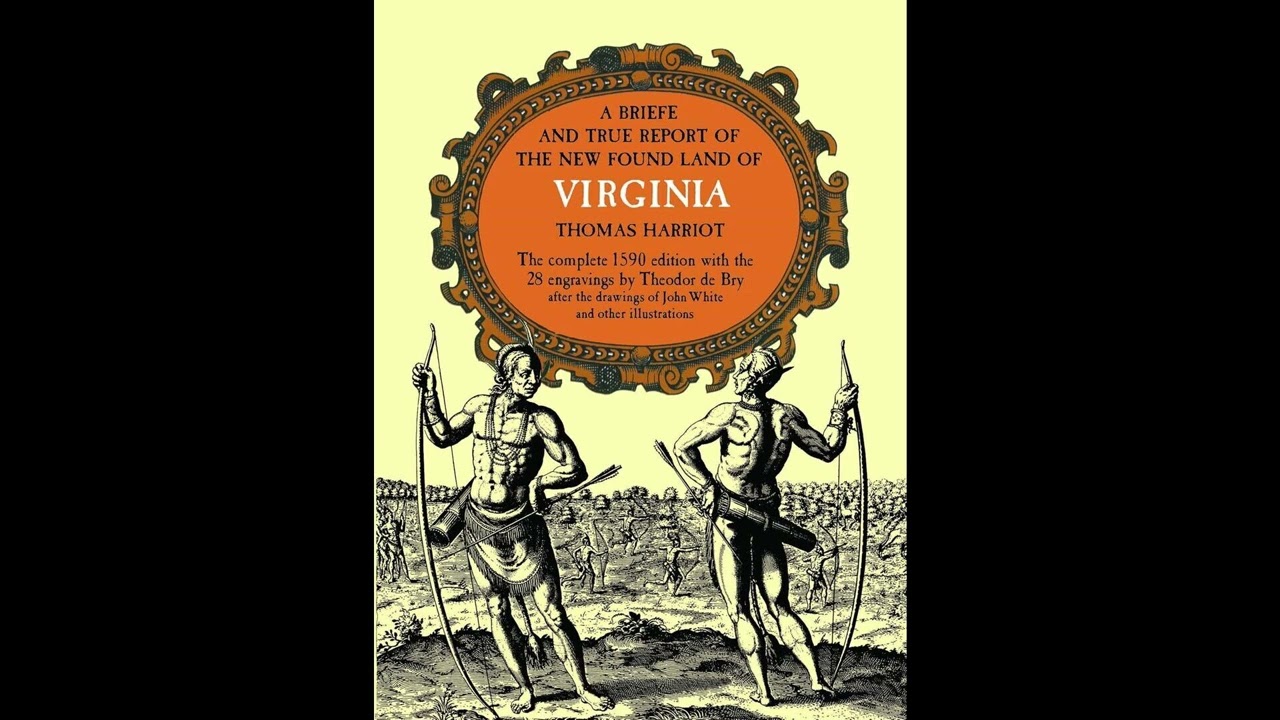
A Briefe and True Report of the New Found Land of Virginia
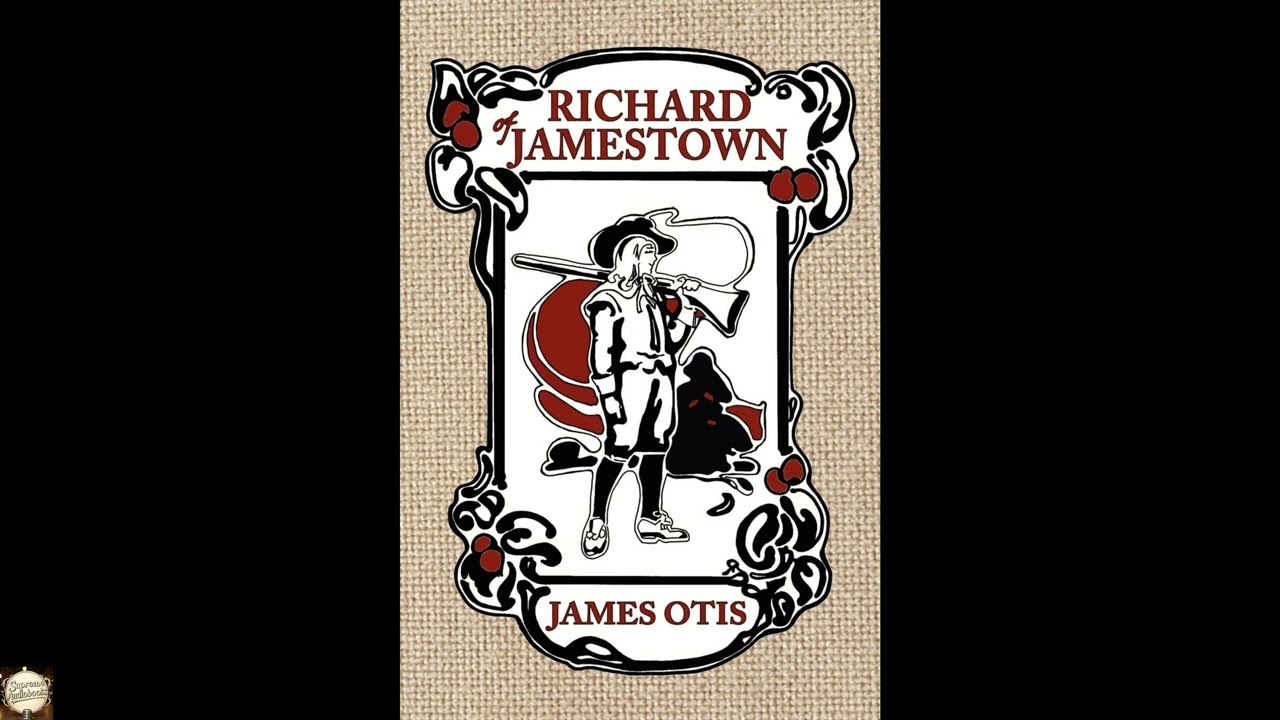
Richard of Jamestown: A Story of Virginia Colony

A Soldier of Virginia (A Tale of Colonel Washington and Braddock's Defeat)

Jefferson and His Colleagues; A Chronicle of the Virginia Dynasty