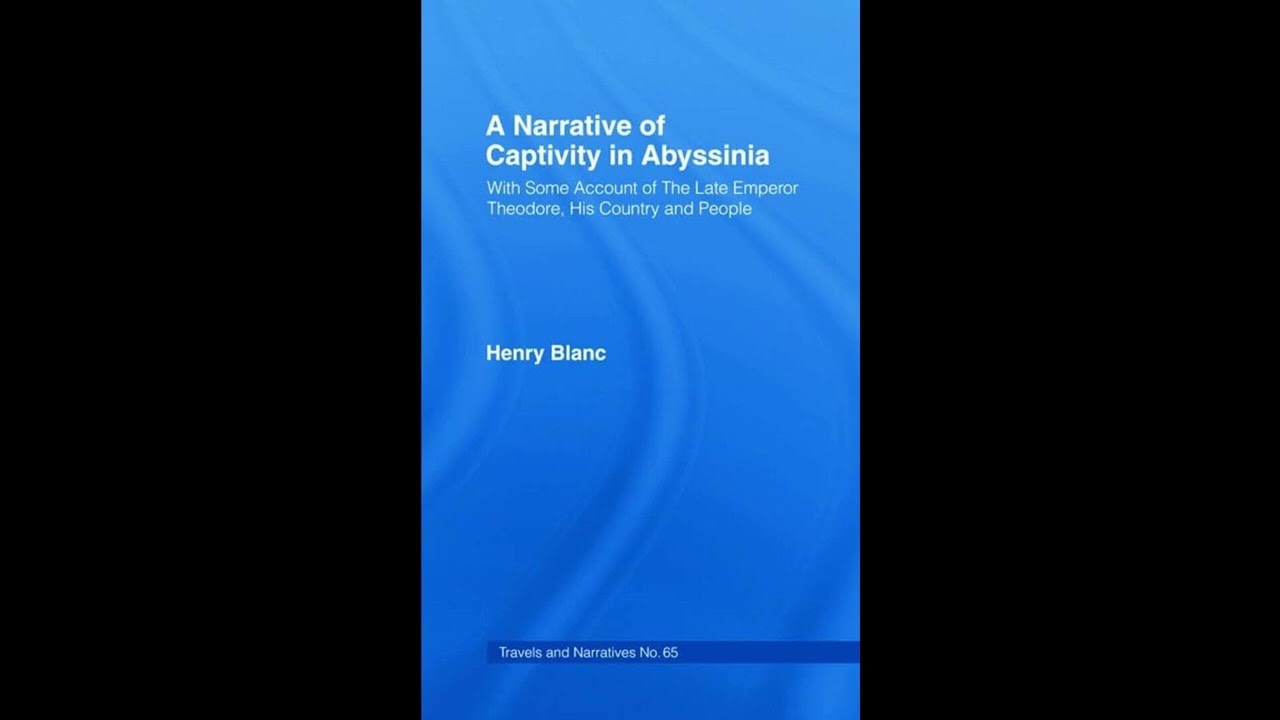
A Narrative of Captivity in Abyssinia (1868): With Some Account of the Late Emperor
Step into a lost world of peril and intrigue with A Narrative of Captivity in Abyssinia (1868): With Some Account of the Late Emperor, a gripping historical document that plunges listeners into the heart of a Victorian-era diplomatic crisis. This isn't just a record of events; it's a raw, immediate human testimony from the crucible of an unfolding international incident, offering a rare, personal glimpse into a powerful African kingdom at the precipice of change and an empire’s brutal response. Why does this 1868 account resonate today? Because it speaks to the enduring human experiences of isolation, resilience in the face of arbitrary power, and the profound challenges of cross-cultural communication—themes that remain acutely relevant in our interconnected, yet often divided, world. It's a story of survival, a window into the colonial anxieties and political machinations of the nineteenth century, and a sobering reminder of history's often cruel repetitions. The narrative transports us to mid-19th century Abyssinia, the ancient Christian kingdom in the Horn of Africa, presided over by the charismatic but increasingly erratic Emperor Tewodros II. The story begins with the detention of a group of Europeans—diplomats, missionaries, and skilled artisans—who had initially been invited to Tewodros's court. These foreigners, including our unnamed narrator, find themselves caught in a diplomatic vortex, as the Emperor, feeling slighted by Queen Victoria’s perceived lack of response to his letters and frustrated by European interference, decides to hold them hostage. What starts as a relatively tolerable confinement soon degenerates into a prolonged and harrowing imprisonment, marked by periods of arbitrary cruelty, forced marches across unforgiving landscapes, and constant uncertainty about their fate. As the months turn into years, the captives endure deteriorating conditions, their hopes for release repeatedly dashed. Their survival depends on their ingenuity, their ability to maintain morale, and their delicate negotiations with their unpredictable captor. The narrative paints a vivid portrait of Tewodros II—a man of immense will and vision, desperate to modernize his country, but consumed by paranoia and a profound sense of betrayal. His increasingly despotic rule and his escalating demands on the European powers set the stage for a dramatic international confrontation. The narrative builds with relentless tension, charting the growing awareness among the prisoners that a massive military expedition from Great Britain might be their only hope, even as they grapple with the moral implications and dangers such an intervention would entail for them and for Abyssinia itself. Though the author of this particular Narrative of Captivity in Abyssinia remains officially unknown, the very anonymity contributes to its power and authenticity. Such accounts, often published quickly after dramatic events, frequently came from individuals deeply embedded in the story—missionaries, consular officials, or members of the relief effort. The decision to publish anonymously could stem from various motivations: modesty, diplomatic discretion, a desire to present a collective rather than individual viewpoint, or simply to ensure the focus remained on the historical event itself rather than the chronicler. This particular work emerges from a tradition of travel writing and "captivity narratives" popular in the 19th century, where firsthand accounts of encounters with foreign lands and cultures, especially those involving danger or confinement, captivated the public imagination. The voice heard throughout the account is clearly that of an educated European, privy to the nuances of international diplomacy and keenly observant of both the harsh realities of their imprisonment and the complex personality of Emperor Tewodros. This firsthand perspective, unfiltered by official pronouncements, offers a unique blend of personal suffering, political analysis, and ethnographic observation. It stands as a testament not only to the individual experience of confinement but also to the larger socio-political currents of a period when European powers were expanding their influence across the globe, often clashing with established, independent kingdoms. The work therefore isn't just a personal story; it functions as a quasi-journalistic report, shaping public understanding of a distant conflict and contributing to the historical record of a pivotal moment in Anglo-Abyssinian relations. At its core, A Narrative of Captivity in Abyssinia illuminates several potent themes. One prominent thread is the clash of cultures and the challenges of communication. The book meticulously details the profound misunderstandings between the Abyssinian court and European representatives, revealing how differing diplomatic protocols, religious beliefs, and concepts of honor fueled the escalating crisis. The narrator’s observations often highlight the inability of either side to truly comprehend the other’s worldview, leading to tragic consequences. Another vital theme is power and its corrupting influence. Emperor Tewodros II, initially a strong leader attempting to unify and modernize his nation, becomes increasingly tyrannical and unpredictable under pressure, demonstrating how absolute power, especially when combined with perceived slights and isolation, can lead to cruelty and self-destruction. The narrative starkly contrasts the Emperor’s fading authority with the looming power of the British Empire, poised to intervene. Furthermore, the narrative powerfully illustrates human resilience and ingenuity in adversity. Despite their dire circumstances, the captives display remarkable fortitude, adapting to their environment, maintaining their dignity, and finding ways to cope with physical and psychological hardship. Their efforts to build a community, engage in small acts of defiance, and continue hoping for deliverance speak volumes about the enduring human spirit. Finally, the account acts as an examination of the nature of imperial intervention. It presents the complex prelude to a military expedition, forcing questions about when and why one nation might justifiably invade another, what the human cost of such an intervention truly is, and how such actions are rationalized in the name of justice or rescue. The specific scenes of dwindling supplies, forced labor, and the ever-present threat of violence vividly convey these struggles. This Narrative of Captivity appeared at a significant moment in history, 1868, as Britain was consolidating its global empire. The Abyssinian Expedition of 1867-68, triggered by Tewodros’s imprisonment of the Europeans, was one of the largest and most expensive military campaigns of its kind, requiring immense logistical effort to traverse hundreds of miles of challenging terrain. The book’s publication would have occurred in the immediate aftermath of this major international event, capitalizing on intense public interest in the fate of the captives and the outcome of the expedition. Culturally, the Victorian era held a fascination for tales of adventure, distant lands, and the perceived "civilizing mission" of the British Empire. This narrative would have fed into that appetite, confirming existing notions of European superiority while also providing a rare, unfiltered look into a powerful African state often misunderstood by the West. It emerged during a time when eyewitness accounts from "exotic" locales were devoured by a reading public eager for news from the edges of empire, blending journalism with personal memoir. Listening to A Narrative of Captivity in Abyssinia (1868) as an audiobook offers a uniquely immersive and powerful experience. The immediate, first-person style of the unknown narrator translates exceptionally well to the spoken word, lending an intimate, almost confessional quality to the account. Over several compelling hours, a skilled narrator can evoke the tense atmosphere of confinement, the weariness of the forced marches, and the subtle shifts in Emperor Tewodros’s volatile moods, bringing the historical events vividly to life. Listen for the deliberate pacing, which often mirrors the slow, grinding passage of time for the prisoners, punctuated by moments of acute danger or fleeting hope. The voice will convey the gravity of their situation, the observations of a captive eye, and the quiet dignity of individuals caught in a monumental clash of wills. It allows for a sustained engagement with a pivotal historical document, making the isolation, the fear, and the ultimate resilience of the captives palpable and deeply personal.
Enjoyed A Narrative of Captivity in Abyssinia (1868): With Some Account of the Late Emperor? A few ways to support us
Audible & Amazon links are affiliate; we may earn a small commission at no extra cost.
About this production
Human narration by a volunteer reader from LibriVox.org, the public-domain audiobook project. LibriVox volunteers record literary works whose copyright has expired in the United States, releasing the resulting recordings into the public domain.
A Narrative of Captivity in Abyssinia (1868): With Some Account of the Late Emperor. The underlying text is in the U.S. public domain. We do not republish any modern copyrighted edition, translation, or commentary.
The 4K cinematic visuals accompanying this audiobook are generated by an AI image model from prompts derived from the source text. No copyrighted photos, paintings, or stock footage are used. AI generation is disclosed on every video on our YouTube channel as required by YouTube's altered/synthetic content policy.
English subtitles are transcribed from the LibriVox recording with OpenAI Whisper. Translations into the 11 other supported languages are produced by Meta's NLLB-200 neural translation model. No human translator's copyrighted translation is used.
Questions about sourcing or rights? See our DMCA & Sourcing policy or contact us.
Enjoyed this audiobook?
If you'd like to own a copy of A Narrative of Captivity in Abyssinia (1868): With Some Account of the Late Emperor or hear a professionally produced edition, the links below help support free audiobook production at no extra cost to you.
As an Amazon Associate we earn from qualifying purchases. Audible / print links are affiliate.