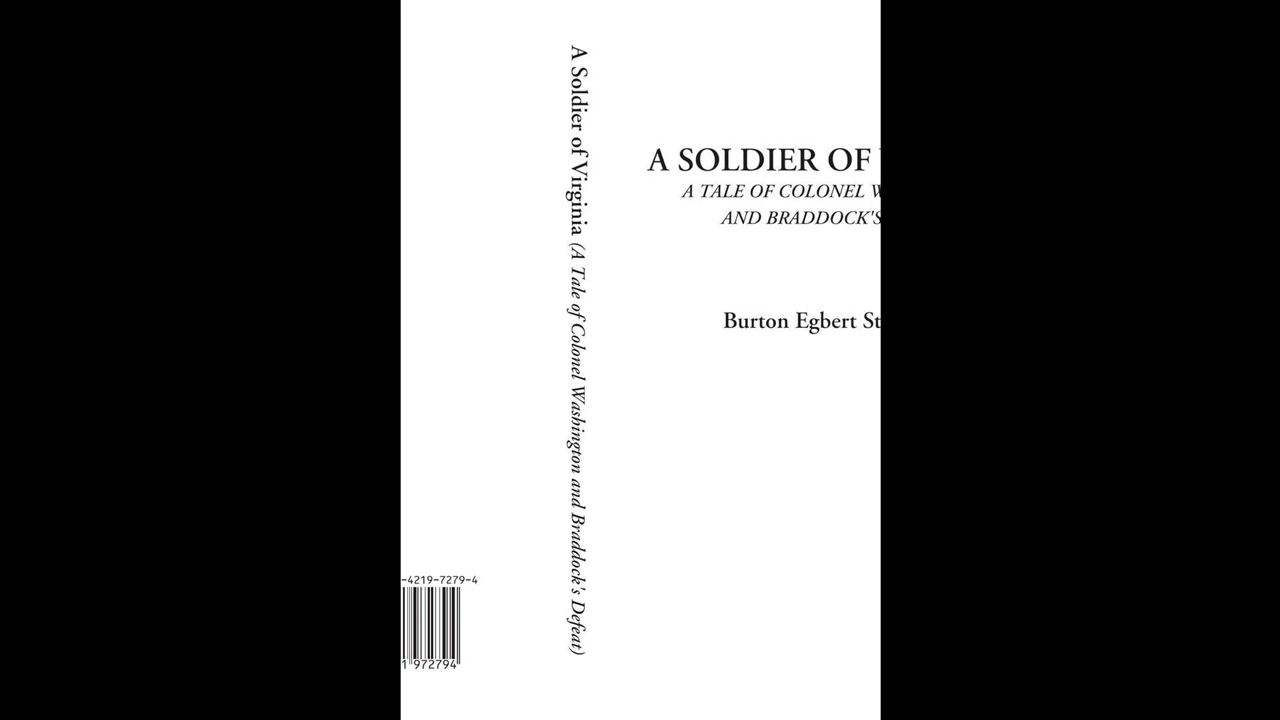
A Soldier of Virginia (A Tale of Colonel Washington and Braddock's Defeat)
Amidst the nascent stirrings of a young continent finding its voice, “A Soldier of Virginia” calls listeners back to the crucible years of American formation. This sweeping historical novel plunges into the fraught landscape of the mid-eighteenth century, where the sprawling British colonies wrestled with French expansion and the wilderness itself. It is a story of personal growth set against a backdrop of grand historical events—specifically, the early military career of George Washington and the calamitous campaign of General Braddock. Listeners will find more than just historical recounting; they will discover a profound examination of leadership under duress, the brutal realities of frontier warfare, and the forging of character that would define a nation. This is a narrative that speaks to the enduring human spirit in the face of overwhelming odds, a compelling echo from a time when the future of America hung precariously in the balance. The narrative unfolds in the rugged expanses of colonial Virginia, a land still largely untamed, its western reaches hotly contested by rival empires. Our principal figure is young Captain Robert Thornton, a seasoned frontiersman and an officer in the Virginia Regiment, whose experiences serve as our eyes and ears during this pivotal epoch. Thornton's loyalty to his home colony and his burgeoning sense of identity as an American drive his participation in the escalating conflict. He finds himself serving under the earnest, albeit sometimes untested, leadership of Colonel George Washington. Washington, still in his twenties, grapples with the immense responsibilities thrust upon him, navigating the complex political currents of colonial government and the stark realities of warfare in a wilderness far removed from European battlefields. The central conflict arises with the arrival of General Edward Braddock, a veteran British officer, dispatched with a substantial force of regulars to assert British dominion over the Ohio Valley. Braddock, accustomed to the conventional tactics of European warfare, harbors a disdain for colonial militia and the advice of those who understand the unique challenges of fighting in the North American wilderness. Thornton witnesses firsthand the friction between Braddock's rigid European approach and Washington's warnings about the unconventional methods of the French and their Native American allies. The story follows Thornton's experiences from the initial preparations and the arduous march through dense forests to the climactic encounter with the enemy near Fort Duquesne. This march itself becomes a character in the narrative, a relentless test of endurance, discipline, and the limits of human will, all building towards an inevitable and devastating confrontation that would forever alter the course of military strategy and colonial destiny. "A Soldier of Virginia" stands as a foundational example of historical fiction that seeks to illuminate critical moments through the personal lens of its characters, rather than the traditional recounting of facts. Its emergence from a period fascinated by the origins of the United States and the romanticized figures of its founding suggests its role in shaping popular understanding of American history. Though the identity of its original author remains lost to time, the work itself resonates with the stylistic flourishes and narrative concerns common to late nineteenth and early twentieth-century historical novels. These were years when American identity was being consolidated after the trauma of the Civil War, fostering a desire to revisit and solidify national myths and heroic figures like George Washington. The uncredited nature of its authorship might even lend the story a quality akin to a widely shared legend, passed down and polished through generations, embodying collective historical memory rather than a singular creative vision. It belongs to a tradition that prioritizes the spirit of an era and the dramatic retelling of events, offering a window into how an earlier age sought to understand its past. Among the potent themes woven into the fabric of "A Soldier of Virginia" is the exploration of formative leadership. We see Colonel Washington not as the marble-hewn figure of later legend, but as a young, ambitious, and often frustrated commander learning the hard lessons of command. His counsel to Braddock, cautioning against marching through the wilderness with conventional formations, serves as a poignant example of prescience born of experience, showcasing the practical wisdom that would eventually define his career. Another prominent theme is the clash between colonial identity and British imperialism. The book vividly contrasts the British regulars' European military doctrine, their colorful uniforms and rigid marching, with the fluid, adaptive, and often desperate tactics employed by the Virginian forces and their understanding of the landscape. This divergence highlights a nascent American spirit, resourceful and independent, already differing markedly from its imperial overseers. The narrative also unflinchingly portrays the brutal nature of frontier warfare. The text does not shy away from describing the suddenness of ambushes, the disorienting chaos of battle in dense woods, and the heavy toll exacted on combatants on all sides. This contrasts sharply with idealized notions of military glory, emphasizing instead the raw, often terrifying reality faced by soldiers in a conflict far from civilized comforts. Furthermore, the story foregrounds the theme of courage and duty, as characters—from Captain Thornton to Colonel Washington—are repeatedly tested in their commitment to their cause and their comrades. Scenes of individual bravery and collective endurance amid the devastating defeat resonate, illustrating how personal resolve and adherence to duty can emerge even from the depths of disaster. When "A Soldier of Virginia" was likely published, during the late 19th or early 20th century, America was undergoing significant cultural and political shifts. The closing of the Western frontier, the rise of industrialism, and the challenges of immigration led to a national introspection and a renewed interest in the country's origins. This period saw a proliferation of historical fiction that often romanticized the colonial and Revolutionary eras, serving to define American values and identity. Such narratives provided a comforting sense of continuity and heroism in a rapidly changing world, offering stories that reinforced national unity and celebrated the virtues perceived to have built the nation. "A Soldier of Virginia," with its focus on a pivotal moment in early American military history and its emphasis on emerging leadership, fit squarely into this cultural moment, providing both entertainment and a reinforcing mythos for its readership. Listening to "A Soldier of Virginia" as an audiobook brings an immediacy to this historical tale that few other formats can match. The narrator's voice becomes the conduit to the past, capable of capturing the solemn dignity of Washington's pronouncements, the gruff impatience of Braddock, and the underlying tension of men marching into an uncertain future. Pay close attention to the pacing, which will likely build with meticulous detail during the arduous march and then accelerate into the disorienting clamor of battle, reflecting the narrative's mounting suspense. The dialogue, delivered with appropriate period inflections, brings a lifelike quality to the exchanges between officers and soldiers, offering insights into the minds and manners of the time. Through skillful narration, the atmosphere of the Virginia wilderness—its quiet majesty, its lurking dangers—will envelop you, making you feel the dense undergrowth, the biting insects, and the heavy silence preceding the sound of musket fire. It's an auditory experience that elevates the written word, allowing this seminal account of courage and consequence to truly resonate.
Enjoyed A Soldier of Virginia (A Tale of Colonel Washington and Braddock's Defeat)? A few ways to support us
Audible & Amazon links are affiliate; we may earn a small commission at no extra cost.
About this production
Human narration by a volunteer reader from LibriVox.org, the public-domain audiobook project. LibriVox volunteers record literary works whose copyright has expired in the United States, releasing the resulting recordings into the public domain.
A Soldier of Virginia (A Tale of Colonel Washington and Braddock's Defeat) by Burton Egbert Stevenson. The underlying text is in the U.S. public domain. We do not republish any modern copyrighted edition, translation, or commentary.
The 4K cinematic visuals accompanying this audiobook are generated by an AI image model from prompts derived from the source text. No copyrighted photos, paintings, or stock footage are used. AI generation is disclosed on every video on our YouTube channel as required by YouTube's altered/synthetic content policy.
English subtitles are transcribed from the LibriVox recording with OpenAI Whisper. Translations into the 11 other supported languages are produced by Meta's NLLB-200 neural translation model. No human translator's copyrighted translation is used.
Questions about sourcing or rights? See our DMCA & Sourcing policy or contact us.
Enjoyed this audiobook?
If you'd like to own a copy of A Soldier of Virginia (A Tale of Colonel Washington and Braddock's Defeat) or hear a professionally produced edition, the links below help support free audiobook production at no extra cost to you.
As an Amazon Associate we earn from qualifying purchases. Audible / print links are affiliate.