A Briefe and True Report of the New Found Land of Virginia
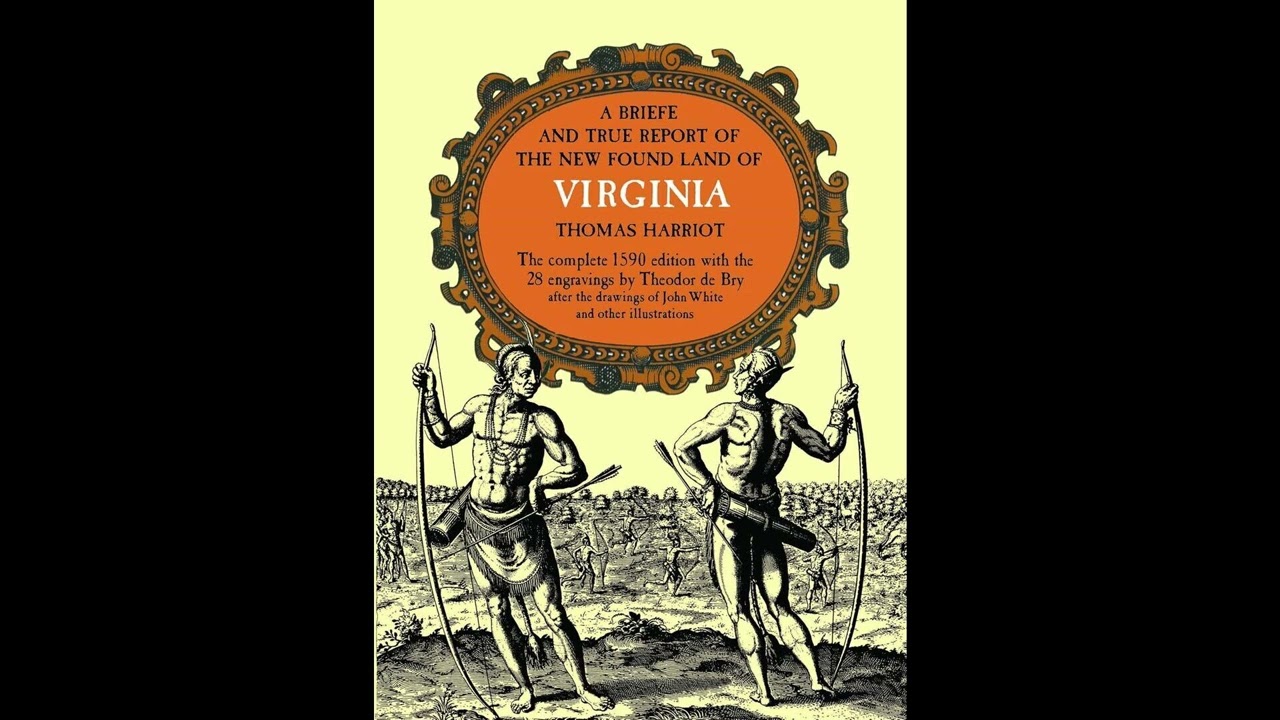
Step into the nascent moments of American history with A Briefe and True Report of the New Found Land of Virginia, a remarkable document offering a rare, firsthand account from the earliest English attempts at settlement in North America. This isn't just a historical artifact; it's an immediate, granular record of first contact, a foundational text that shaped European perceptions of the continent and its inhabitants, and a precursor to the enduring narrative of the American experiment. For listeners today, it provides an unparalleled opportunity to witness the birth of a nation's understanding of itself, viewed through the eyes of those who first sought to claim and comprehend a truly "new found land." This compelling report transports listeners to the coastal regions of what the English ambitiously termed "Virginia" in the late 16th century, specifically the Outer Banks of present-day North Carolina, between 1585 and 1586. The narrative unfolds as a methodical catalog of observations made by the English colonists, particularly their scientific representative, as they attempted to establish a foothold and assess the potential of this unfamiliar wilderness. The primary "characters" are the expedition members themselves, representing a nascent imperial ambition, and the various Algonquian-speaking Native American peoples—such as the Secotan, Croatoan, and others—who were the original stewards of the land. The story, while lacking a conventional fictional plot, follows a compelling arc of discovery and assessment. The English arrive, cautiously establish their presence on Roanoke Island, and immediately begin their systematic survey. The report details their initial encounters with the indigenous populations, their efforts to understand their customs, and their attempts to foster trade and communication, often through a mixture of wonder, apprehension, and an unwavering sense of superiority. Listeners will hear vivid descriptions of the natural environment—the flora, fauna, and geography—all meticulously documented for its potential economic benefit to the English Crown. The narrative details the agricultural practices of the Native Americans, their spiritual beliefs, and their social structures, creating an invaluable, if biased, snapshot of a world on the brink of profound change. While the author of A Briefe and True Report of the New Found Land of Virginia is often listed as "Unknown," historical scholarship overwhelmingly attributes its primary authorship to Thomas Hariot. Hariot, an accomplished English astronomer, mathematician, and geographer, was a key figure in the intellectual ferment of Elizabethan England. Educated at Oxford, he garnered the patronage of Sir Walter Raleigh, the driving force behind the Roanoke expeditions. It was Raleigh who dispatched Hariot with the 1585 expedition, specifically tasking him with surveying the land's resources and documenting the indigenous cultures. Hariot's life, spanning from around 1560 to 1621, saw him move among the scientific and courtly circles of his time. His meticulous observations in Virginia represent an early and significant contribution to empirical science and ethnography. Published in London in 1588, a pivotal year that also saw the defeat of the Spanish Armada, Hariot's report was later famously re-published with engravings by Theodor de Bry, based on the watercolor paintings of John White, another member of the Roanoke colony. This illustrated edition, widely disseminated across Europe, made the English colonial project and the "New World" itself tangible to a vast audience, cementing Hariot's place as a foundational voice in early American literature and scientific reporting. The work enacts several significant themes, offering listeners a nuanced understanding of the earliest encounters between Europeans and Native Americans. One prominent theme is the clash of cultures and the dynamics of first contact. Hariot's descriptions of Native American life, while often tinged with English ethnocentrism and a desire for conversion, nonetheless convey moments of genuine observation and even admiration for their ingenuity and societal order. For instance, he details their sophisticated agricultural methods, particularly their cultivation of maize, beans, and gourds, acknowledging their effectiveness and efficiency in ways that challenged simplistic European assumptions about "savagery." Another compelling theme is resource exploitation and economic imperialism, as the report functions as a detailed prospectus for colonial investment. Hariot meticulously catalogs the plants, animals, and potential minerals of Virginia, focusing relentlessly on their value for English profit. He lists specific timber types, dye plants, food sources, and even possibilities for finding precious metals, showcasing the era's mercantilist drive. The text presents Virginia as a land of immense, untapped wealth, ripe for English appropriation, making clear the motivations that underpinned these early ventures and foreshadowed centuries of colonial expansion. The historical context surrounding A Briefe and True Report is crucial for appreciating its emergence and impact. The late 16th century was a period of intense geopolitical rivalry between England and Spain. England, a rising maritime power under Queen Elizabeth I, sought to challenge Spain's dominance in the Americas, establish its own global empire, and find new sources of wealth to fuel its economy. The Roanoke expeditions, initiated by Sir Walter Raleigh, were direct manifestations of this ambition, aiming to secure a strategic foothold, discover resources, and establish a base from which to privateer against Spanish treasure fleets. The report's publication in 1588, the same year as the Spanish Armada's defeat, further underscored England's aspirations and growing confidence. While the Roanoke Colony itself would famously disappear, Hariot's optimistic and detailed account served as a vital piece of promotional literature, shaping perceptions of the New World for subsequent, more successful English ventures, notably the Jamestown settlement two decades later. It was part of a burgeoning genre of "New World" accounts, but distinguished itself through Hariot's relatively systematic and empirically driven observations, laying groundwork for future scientific inquiry alongside its political and economic agenda. Listening to A Briefe and True Report of the New Found Land of Virginia as an audiobook offers a uniquely immersive and illuminating experience. The archaic language of the late 16th century, though perhaps initially unfamiliar, gains clarity and rhythm when spoken aloud. A skilled narrator can render Hariot's measured, almost clinical prose accessible, allowing listeners to absorb the detailed observations of flora, fauna, and human customs without feeling overwhelmed. The pacing of the narration can highlight the precision of the scientific descriptions and underscore the inherent tension of these moments of first contact. Hearing the words read aloud transports the listener directly to the rugged shores of early colonial Virginia, allowing the resonant voice of this foundational American document to truly unfold.
Enjoyed A Briefe and True Report of the New Found Land of Virginia? A few ways to support us
Audible & Amazon links are affiliate; we may earn a small commission at no extra cost.
About this production
Human narration by a volunteer reader from LibriVox.org, the public-domain audiobook project. LibriVox volunteers record literary works whose copyright has expired in the United States, releasing the resulting recordings into the public domain.
A Briefe and True Report of the New Found Land of Virginia by Thomas Hariot. The underlying text is in the U.S. public domain. We do not republish any modern copyrighted edition, translation, or commentary.
The 4K cinematic visuals accompanying this audiobook are generated by an AI image model from prompts derived from the source text. No copyrighted photos, paintings, or stock footage are used. AI generation is disclosed on every video on our YouTube channel as required by YouTube's altered/synthetic content policy.
English subtitles are transcribed from the LibriVox recording with OpenAI Whisper. Translations into the 11 other supported languages are produced by Meta's NLLB-200 neural translation model. No human translator's copyrighted translation is used.
Questions about sourcing or rights? See our DMCA & Sourcing policy or contact us.
Enjoyed this audiobook?
If you'd like to own a copy of A Briefe and True Report of the New Found Land of Virginia or hear a professionally produced edition, the links below help support free audiobook production at no extra cost to you.
As an Amazon Associate we earn from qualifying purchases. Audible / print links are affiliate.