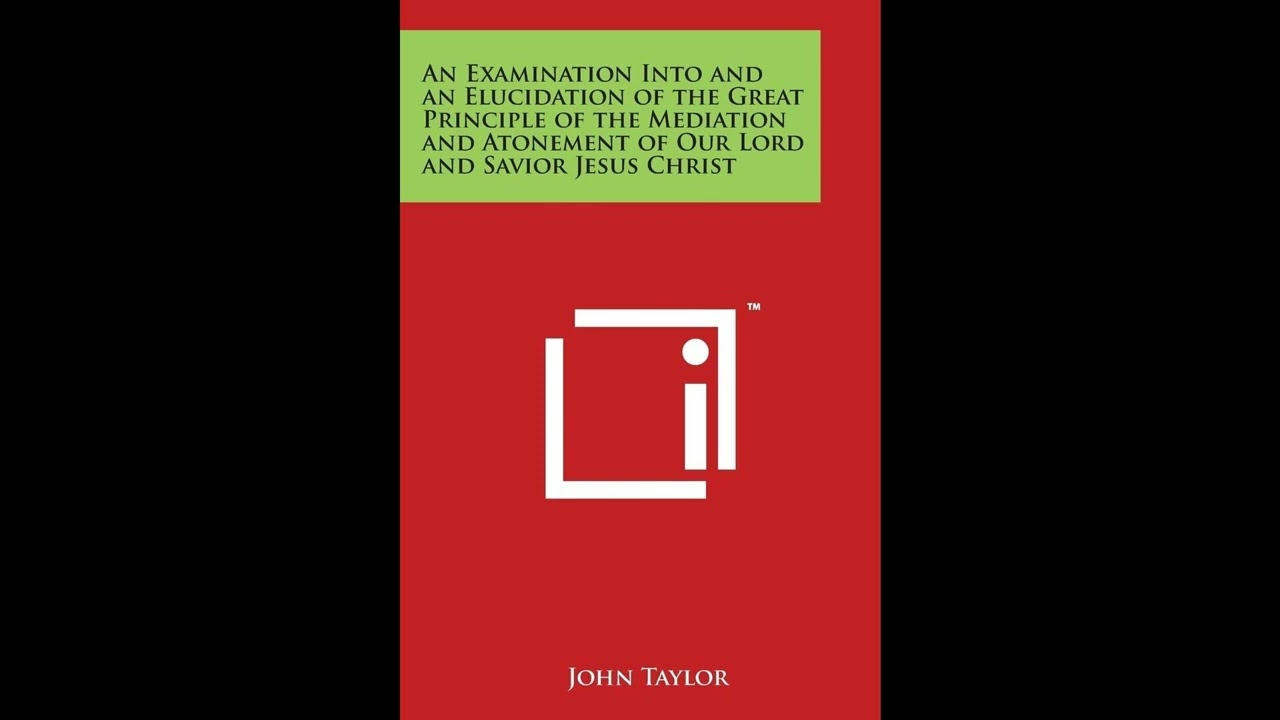
An Examination Into and an Elucidation of the Great Principle of the Mediation
What foundational principle underpins our very understanding of the world, offering a pathway through division and discord towards coherence? How might a single, unifying concept reveal the hidden connections between seemingly disparate elements of existence? An Examination Into and an Elucidation of the Great Principle of the Mediation poses these questions and, in its profound inquiry, offers not just answers, but a robust framework for thought that resonates as powerfully today as it did when first conceived. This is not merely a philosophical treatise, but a foundational text that seeks to reveal the operative force behind all reconciliation—be it in natural phenomena, human understanding, or social structures. It is a work of immense ambition, promising to unravel the very mechanism by which harmony emerges from tension, providing a lens through which to perceive unity in the midst of multiplicity, and offering a compelling reason for any thoughtful individual to engage with its enduring wisdom. The work opens by establishing the pervasive presence of opposing forces in the universe—light and shadow, order and chaos, individual and collective. It systematically outlines these inherent dichotomies, presenting them not as inherently destructive, but as conditions ripe for the intervention of a harmonizing agent. The early sections precisely define what "mediation" means within this context, differentiating it from mere compromise or simple aggregation. It is portrayed as an active, transformative process, a dynamic force that does not erase differences but rather transmutes them into a higher, more stable configuration. The author proceeds to dissect various modes of conflict, from the elemental friction of natural forces to the more abstract clashes of ideas and human wills, illustrating how an absence of mediation leads inevitably to rupture and stagnation. Following this initial diagnostic phase, the text shifts to the mechanics of the "Principle" itself. It proposes that mediation is not an external imposition but an inherent capacity, a structural necessity within any system seeking equilibrium and perpetuation. Drawing upon various conceptual fields, the examination meticulously constructs a theoretical model where seemingly intractable differences are shown to possess an underlying commonality, a neutral ground upon which a bridge can be built. This involves a rigorous analysis of how agents, concepts, or forces interact, identifying the crucial points of convergence and divergence. The arc of the exposition moves from establishing the problem and defining the solution to demonstrating its universal applicability, laying out a systematic process through which the disparate can be brought into productive alignment, thus ensuring continuation and growth rather than dissolution. The precise steps involved in enacting this principle are detailed, moving from recognition of opposing poles to the identification of the mediating element, and finally, to the resultant synthesis, all without ever fully revealing the ultimate implications or the deepest revelations of the work. While the authorship of An Examination Into and an Elucidation of the Great Principle of the Mediation remains obscured by the mists of time, its anonymity is perhaps its own unique testament to its profundity and original purpose. Works of this nature, originating from a period before the establishment of conventional historical records or the concept of individual literary proprietorship, often emerge from a collective intellectual endeavor, or from a tradition of wisdom passed down orally before being committed to text. Such foundational writings were frequently attributed to a foundational figure, a school of thought, or simply recognized for their intrinsic authority rather than the personal genius of a named individual. This work stands within a long and revered tradition of anonymous philosophical and spiritual texts—writings that have shaped human understanding for millennia without a known authorial hand. These are the texts often considered universal in their scope, transcending particular cultural boundaries precisely because their origin is not tied to a specific historical personality or moment. Their authority derives from the ideas themselves, from the cogency of their arguments, and from their demonstrable relevance across diverse human experiences. The enduring presence of such works in the intellectual heritage of humanity speaks to their inherent power and the profound truths they articulate, allowing the ideas to stand on their own merit, free from biographical interpretation or historical contingency. The text articulates several core themes, foremost among them being reconciliation. It demonstrates how seemingly intractable oppositions—such as the pull of individual desire versus the needs of the community—can be brought into a dynamic balance through the conscious application of the mediating principle. For instance, the discussion might posit that economic exchange, far from being a simple transaction, acts as a mediator between disparate needs, creating a shared value that benefits both parties, turning potential competition into cooperation. Another significant theme is unity amidst diversity. The work does not advocate for the eradication of difference but rather shows how the existence of varied elements is essential for the mediating principle to operate, ultimately forming a more robust and complex whole. Consider how the text might describe a natural ecosystem, where the distinct roles of predator and prey, or plant and soil, are not in absolute conflict but are interwoven through a constant process of interaction and mutual dependence, each mediating the existence of the other to maintain the overall health of the system. A third pervasive theme is epistemological clarity, focusing on how understanding complex realities requires a framework that acknowledges and integrates opposing viewpoints. The book is itself an exercise in this, taking a complex problem and systematically breaking it down, then reassembling it with the principle of mediation as its unifying glue. It might use the example of a debate where two seemingly contradictory arguments, when viewed through the lens of mediation, reveal an underlying shared premise or a higher-order truth that encompasses both, thus achieving a more complete grasp of the subject. Finally, the text also subtly addresses ethical responsibility, suggesting that recognizing and actively facilitating mediation in human affairs is not merely an intellectual exercise but a moral imperative, leading to more just and harmonious societies. The emergence of a text such as An Examination Into and an Elucidation of the Great Principle of the Mediation speaks to a primal human need for order and understanding, likely arising during a period of significant societal or intellectual transition. The very concept of "mediation" implies an awareness of conflict, discord, and the necessity of resolution—conditions that are characteristic of any civilization moving beyond rudimentary forms of organization. This was a time when foundational concepts regarding law, ethics, governance, and the nature of reality itself were being articulated, often through oral traditions before being transcribed into texts. Such a work would have served as a critical guide for thinkers, leaders, or spiritual practitioners seeking to establish principles that could govern complex interactions, whether between individuals, groups, or even cosmic forces. It reflects an underlying human drive to discover universal laws, to find a coherent explanation for the ebb and flow of existence, and to develop systematic methods for fostering balance and stability within the world. To experience An Examination Into and an Elucidation of the Great Principle of the Mediation as an audiobook offers a unique and invaluable opportunity to engage deeply with its challenging yet rewarding arguments. A skilled narrator, with a measured pace and a clear, resonant voice, becomes your guide through its intricate conceptual landscape. The approximately several hours of listening time allow for a sustained immersion in the author's carefully constructed reasoning, giving you space to absorb complex ideas without the immediate pressure of reading. Listen for the subtle shifts in tone as the narration moves from presenting a problem to outlining a solution, or from a general principle to a specific illustrative example. The spoken word can lend a particular gravitas and rhythm to the prose, highlighting the precision of the language and emphasizing the weight of the ideas. This auditory format transforms what might otherwise be a dense philosophical treatise into a contemplative journey, inviting listeners to reflect on each elucidation, allowing the profound insights to resonate and take root in their own understanding.
Enjoyed An Examination Into and an Elucidation of the Great Principle of the Mediation? A few ways to support us
Audible & Amazon links are affiliate; we may earn a small commission at no extra cost.
About this production
Human narration by a volunteer reader from LibriVox.org, the public-domain audiobook project. LibriVox volunteers record literary works whose copyright has expired in the United States, releasing the resulting recordings into the public domain.
An Examination Into and an Elucidation of the Great Principle of the Mediation. The underlying text is in the U.S. public domain. We do not republish any modern copyrighted edition, translation, or commentary.
The 4K cinematic visuals accompanying this audiobook are generated by an AI image model from prompts derived from the source text. No copyrighted photos, paintings, or stock footage are used. AI generation is disclosed on every video on our YouTube channel as required by YouTube's altered/synthetic content policy.
English subtitles are transcribed from the LibriVox recording with OpenAI Whisper. Translations into the 11 other supported languages are produced by Meta's NLLB-200 neural translation model. No human translator's copyrighted translation is used.
Questions about sourcing or rights? See our DMCA & Sourcing policy or contact us.
Enjoyed this audiobook?
If you'd like to own a copy of An Examination Into and an Elucidation of the Great Principle of the Mediation or hear a professionally produced edition, the links below help support free audiobook production at no extra cost to you.
As an Amazon Associate we earn from qualifying purchases. Audible / print links are affiliate.
More by Unknown

New York At The Louisiana Purchase Exposition, St. Louis, 1904: Report Of The New Y
Notes and Queries, Number 176, March 12, 1853; A Medium of Inter-communication
Mexico and Its Religion: With Incidents of Travel in That Country During Parts of th- Full Audiobook