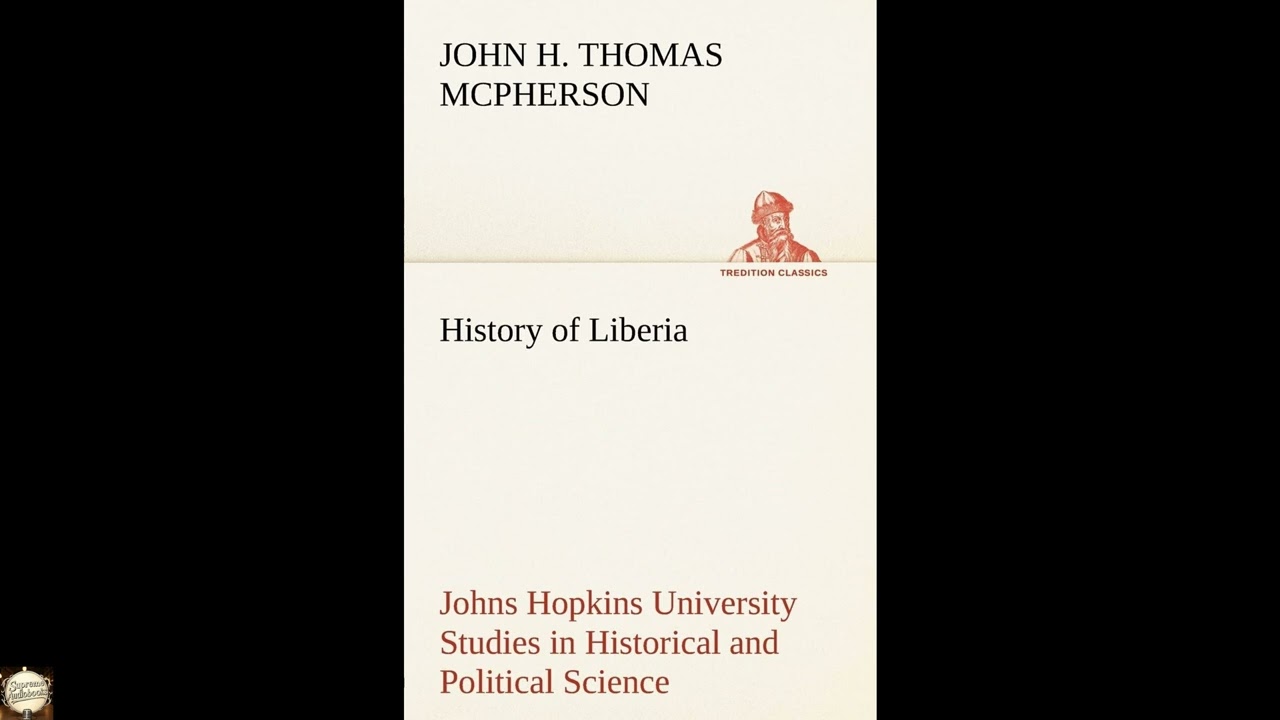
History of Liberia Johns Hopkins University Studies in Historical and Political Sci
The creation of Liberia stands as a truly singular moment in global history: a nation born from the aspirations of formerly enslaved people and their advocates in the United States, envisioned as a sanctuary of self-determination on the African continent. This compelling historical account, originally published as part of the esteemed Johns Hopkins University Studies in Historical and Political Science, peels back the layers of idealism, pragmatism, and conflict that defined Liberia's genesis and early decades. More than a mere academic record, this book presents a foundational narrative crucial for understanding the enduring legacies of slavery, the complexities of nation-building, and the persistent quest for sovereignty in the face of colonial expansion. For anyone seeking to grasp the deep roots of identity and international relations in West Africa, this detailed chronicle remains an essential point of reference, offering insights that resonate profoundly with contemporary discussions about heritage, independence, and the ongoing work of justice. The story begins not on the shores of Africa, but in the aftermath of slavery in the United States, where the American Colonization Society formed with the dual purpose of relocating freed American slaves and spreading Christianity in Africa. This account meticulously traces the initial, often perilous, steps taken by these settlers as they crossed the vast Atlantic Ocean, driven by the promise of a new life free from racial prejudice and subjugation. The setting for this audacious experiment was the Grain Coast of West Africa, a region already inhabited by diverse indigenous peoples with established societies and cultures. The narrative details the fraught process of acquiring land, the establishment of the first settlements like Christopolis (later Monrovia), and the constant struggle for survival against disease, unfamiliar environments, and the inherent tensions that arose between the newcomers and the existing communities. It portrays the early days as a delicate balance between the settlers' fervent hope for a haven and the harsh realities of their ambitious undertaking. As the scattered settlements grew and faced increasing pressure from European colonial powers eager to carve up the African continent, a profound shift occurred: the realization that true security and self-governance required full independence. This chronicle details the internal political maturation within the nascent Liberian society, culminating in the bold declaration of independence in 1847. The newly formed Republic of Liberia, unique in its founding by returning Africans from the diaspora, then faced the immense task of consolidating its authority, defining its borders, and establishing itself as a legitimate nation-state in a world dominated by imperialist ambitions. The account follows the early presidents, their struggles to build institutions, develop an economy, and navigate diplomatic relations, particularly with the United States and the European powers, who often viewed the young republic with a mixture of patronage and suspicion. The author of this significant historical document is not individually identified, as is common with works produced within the rigorous framework of an academic series like the Johns Hopkins University Studies in Historical and Political Science. This series, initiated in the late nineteenth century, represented a pioneering effort in American scholarship to professionalize the study of history and political science, moving towards empirically grounded, meticulously researched monographs. Johns Hopkins University, founded in 1876, quickly established itself as a premier institution for graduate studies, emphasizing original research and the methodical publication of findings. This volume, therefore, emerges from that specific intellectual tradition, standing as a testament to the era's commitment to detailed, institutional histories and the systematic gathering of evidence to illuminate complex political and social developments. Rather than being the singular creation of one literary figure, this historical study is best understood as a product of a collaborative academic environment, reflecting the prevailing methodologies and scholarly interests of its time. These "Studies" were often specialized, focused research pieces – sometimes dissertations or the work of early career academics – designed to contribute specific knowledge to the growing body of historical and political scholarship. The work's place in the canon is not that of a literary classic in the traditional sense, but rather as a classic of its academic genre: a foundational text offering an early, detailed American perspective on the origins and formative years of Liberia. Its value resides in its meticulous documentation and its representation of the historical inquiry methods practiced during a crucial period in the development of American higher education and academic publishing. This historical account enacts several enduring themes, providing concrete illustrations of abstract concepts. One prominent theme is the burden and complexities of self-determination. The dream of establishing a free black republic was immense, yet the book repeatedly shows the arduous practicalities: the constant negotiations with indigenous leaders for land, the establishment of a working legal code, and the formation of a government that could effectively serve a diverse populace. For instance, the struggle to define and enforce national borders against encroaching European powers, or the efforts to maintain internal peace between the Americo-Liberian settlers and the various native ethnic groups, vividly illustrates the heavy cost and continuous effort required to maintain autonomy. Another compelling theme is the inherent tension between idealistic vision and pragmatic reality. The founding of Liberia was rooted in noble aspirations for liberty and equality, but the narrative reveals how quickly these ideals were tested by the necessities of survival and governance. The formation of a distinct Américo-Liberian elite, who often replicated social and political structures reminiscent of the American South, and their sometimes-strained relationships with the indigenous populations, showcases how even a project born of freedom could create its own hierarchies and divisions. The book provides specific instances of policies and conflicts that arose from attempts to reconcile the settlers' vision with the diverse realities on the ground, highlighting the difficulties in building a unified nation from such disparate origins. The cultural and political milieu in which this historical study likely emerged was one of significant change and intellectual fervor. The late nineteenth and early twentieth centuries witnessed the professionalization of history as an academic discipline, with universities like Johns Hopkins leading the charge in establishing graduate programs focused on scientific historical research. This was also a period defined by intense European colonial expansion across Africa, making Liberia's unique status as an independent republic—founded by Africans from the diaspora—a subject of particular international interest and scholarly scrutiny. In the United States, lingering questions about the legacy of slavery, race relations, and the role of American influence abroad would have further spurred interest in Liberia's story. This work, therefore, fits into a broader trend of academic inquiry seeking to understand national origins, institutional development, and international relations through rigorous, documented research. Hearing this "History of Liberia" as an audiobook offers a singular experience, transforming what might otherwise be a dense academic text into an accessible narrative. The listener can absorb the intricate details of Liberia's founding and early development without the visual strain of a scholarly volume, allowing the complex progression of events, the names, and the dates to flow naturally. A skilled narrator brings clarity and appropriate pacing to the historical information, making the dense prose more approachable and helping to distinguish between the various figures and challenges that shaped the nascent nation. The "several hours" run length provides a comprehensive and immersive understanding of this critical period, making it ideal for listeners who wish to engage deeply with an often-overlooked yet profoundly significant chapter in world history, absorbing its lessons while commuting, exercising, or simply relaxing at home.
Enjoyed History of Liberia Johns Hopkins University Studies in Historical and Political Sci? A few ways to support us
Audible & Amazon links are affiliate; we may earn a small commission at no extra cost.
About this production
Human narration by a volunteer reader from LibriVox.org, the public-domain audiobook project. LibriVox volunteers record literary works whose copyright has expired in the United States, releasing the resulting recordings into the public domain.
History of Liberia Johns Hopkins University Studies in Historical and Political Sci by John Hanson Thomas McPherson. The underlying text is in the U.S. public domain. We do not republish any modern copyrighted edition, translation, or commentary.
The 4K cinematic visuals accompanying this audiobook are generated by an AI image model from prompts derived from the source text. No copyrighted photos, paintings, or stock footage are used. AI generation is disclosed on every video on our YouTube channel as required by YouTube's altered/synthetic content policy.
English subtitles are transcribed from the LibriVox recording with OpenAI Whisper. Translations into the 11 other supported languages are produced by Meta's NLLB-200 neural translation model. No human translator's copyrighted translation is used.
Questions about sourcing or rights? See our DMCA & Sourcing policy or contact us.
Enjoyed this audiobook?
If you'd like to own a copy of History of Liberia Johns Hopkins University Studies in Historical and Political Sci or hear a professionally produced edition, the links below help support free audiobook production at no extra cost to you.
As an Amazon Associate we earn from qualifying purchases. Audible / print links are affiliate.
More Audiobooks
A Briefe and True Report of the New Found Land of Virginia
Agriculture in Virginia, 1607-1699

A Soldier of Virginia (A Tale of Colonel Washington and Braddock's Defeat)
Formation of the Union, 1750-1829, (Epochs of American history)