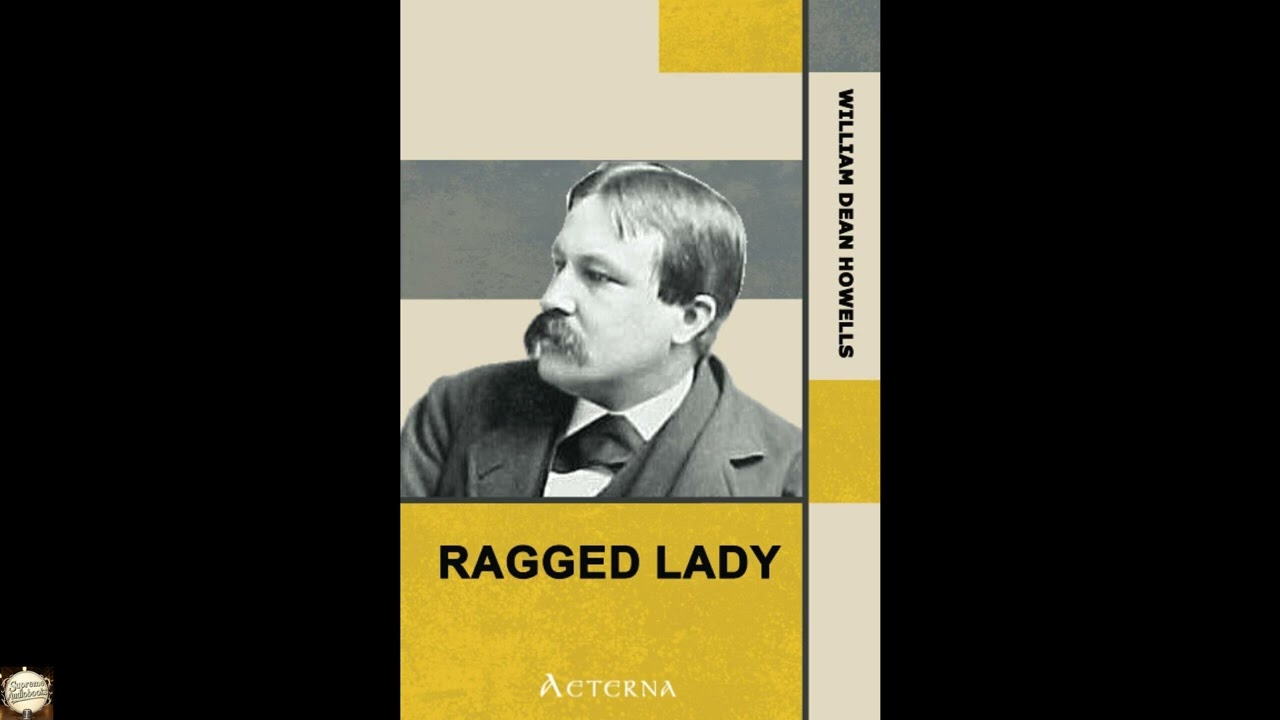
Ragged Lady
William Dean Howells’s Ragged Lady invites listeners into a vivid snapshot of late-nineteenth-century American society, where ambition wrestled with circumstance and social codes were as carefully constructed as the grandest summer homes. At its core, this novel tells a resonant story of a young woman striving for a place in a world that often judged by appearance and origin. It questions the very foundations of American opportunity and what it truly means to rise. For anyone who has ever felt the sting of social expectation, or wondered about the genuine value of wealth versus character, Ragged Lady offers not just a period piece, but a mirror reflecting enduring human aspirations and the often-humorous, sometimes poignant, challenges of forging one's own identity against the backdrop of societal convention. The story unfolds in the picturesque setting of a fashionable New England summer resort, where the privileged escape the city’s heat and cultivate their social circles. Here, we meet Florida Vervain, a young woman whose spirited nature and innate intelligence shine through her humble station. As a cashier in a local hotel, Florida exists on the periphery of the leisure class, observing their customs and interactions with a keen, discerning eye. Her wit and unconventional charm draw the attention of Mrs. Anther, a benevolent but somewhat naive woman of means, who takes a genuine interest in Florida's future. This unexpected patronage sets Florida on a path of social elevation, relocating her from the familiar rhythms of the resort town to a more formal, European-influenced household, where she is introduced to new ways of life and new expectations. Florida’s new situation brings her into contact with a distinct cast of characters, including the eligible and enigmatic Mr. Gorringe, a man of quiet integrity who sees beyond her social standing. Her attempts to navigate this unfamiliar world are central to the narrative. She grapples with the subtle demands of gentility, the unspoken rules of etiquette, and the sometimes-conflicting desires of her own independent spirit. The arc of the story follows Florida as she learns—often through trial and error—what it means to belong to a different class, and the personal sacrifices and compromises that such belonging might require. Howells masterfully renders the nuanced interactions and the evolving perceptions of Florida by those around her, painting a picture of a young woman caught between the allure of a refined existence and the steadfast authenticity of her own character. William Dean Howells, born in Ohio in 1837, rose from modest beginnings to become one of the most influential literary figures of his era. His early life as a printer's apprentice, working in his father's newspaper offices, instilled in him a precise eye for detail and a lifelong appreciation for the craft of writing. Howells’s career spanned the latter half of the nineteenth century and the early decades of the twentieth, during which he served as the esteemed editor of The Atlantic Monthly for many years, a position that placed him at the very heart of American literary life. From this influential perch, he championed the works of emerging talents like Henry James and Mark Twain, helping to shape the nascent literary landscape of a rapidly changing nation. Howells is widely recognized as a pivotal figure in the development of American Realism. Rather than relying on the romanticized narratives or sentimentalism that had characterized earlier American fiction, he sought to portray life as it truly was, focusing on the everyday experiences, ethical dilemmas, and social dynamics of ordinary Americans. His body of work includes celebrated novels such as The Rise of Silas Lapham, which examines the moral quandaries of a newly wealthy industrialist, and A Modern Instance, a unflinching look at marital discord. Howells’s commitment to capturing the subtle nuances of American character and society earned him the unofficial title of "The Dean of American Letters," solidifying his place as a foundational voice in the national literary tradition. Among the many compelling aspects of Ragged Lady, several enduring themes stand out. Howells directly addresses the complexities of social mobility in America, particularly through Florida’s ascent from hotel cashier to a position within a wealthy household. Her initial interactions, marked by an outsider's keen observation and sometimes awkward attempts to fit in, illustrate the challenges of bridging class divides. For instance, Florida’s frankness, a virtue in her original environment, can be perceived as an impropriety in more refined company, forcing her to consciously adapt her behavior. The novel also carefully examines the theme of authenticity versus appearance. Florida’s inherent honesty and spirited nature are constantly tested against the often-superficial conventions of polite society. Her internal struggles reveal the pressure to conform and the potential loss of self that can accompany the pursuit of social acceptance. Furthermore, Howells’s story sheds light on changing gender roles and the evolving expectations for women during the turn of the century. Florida, with her intelligence and independent spirit, embodies a proto-modern woman, challenging the passive ideals often ascribed to women of her time. Her desire for self-determination and her active role in shaping her own future mark her as a departure from more traditional heroines. Finally, the narrative offers insights into the nature of wealth and class distinction itself. Howells often contrasts the genuine kindness and simple integrity found in less affluent circles with the sometimes-hollow grandiosity of the wealthy, or the subtle snobbery embedded in old money versus new. These thematic threads are woven throughout the narrative, giving Ragged Lady a continued relevance. Ragged Lady emerged from a fascinating and tumultuous period in American history, often referred to as the Gilded Age. The decades following the Civil War witnessed unprecedented industrial expansion, rapid urbanization, and the accumulation of immense personal fortunes. This era gave rise to a new leisure class, eager to display its wealth through grand homes, fashionable resorts, and elaborate social rituals. Yet, alongside this prosperity, tensions simmered regarding economic inequality, social Darwinism, and the perceived erosion of traditional values. It was a time of immense social anxiety, as established hierarchies grappled with the rise of new money and a more fluid understanding of American identity. Howells, as a committed realist, felt it was the duty of literature to reflect these societal shifts honestly. He consciously moved away from the romanticized past or idealized futures, choosing instead to meticulously observe and document the social and psychological realities of his contemporary world. Ragged Lady, published in 1899, thus serves as a finely wrought social commentary, directly engaging with the questions of class, ambition, and moral integrity that defined late-nineteenth-century America. It questioned what constituted genuine success and happiness in a society increasingly preoccupied with outward signs of prosperity, illustrating the complex interactions between individuals and the powerful forces of their social environment. Listening to Ragged Lady as an audiobook offers a particularly rewarding experience, allowing the listener to fully immerse themselves in the world Howells so meticulously crafted. The narrative’s careful pacing and the nuanced dialogue truly come alive through skilled narration, lending individual voices to characters like the spirited Florida, the kindly Mrs. Anther, or the reserved Mr. Gorringe. The story unfolds at a measured pace, allowing for careful appreciation of Howells’s subtle social observations and his often-dry wit. A good narrator can highlight the unspoken tensions and the social comedy inherent in many scenes, capturing the period’s distinctive atmosphere and the unique rhythms of its speech. With several hours of listening time, this audiobook provides an extended opportunity to dwell in a pivotal moment of American literary history, engaging directly with the thoughtful prose of one of its most important chroniclers.
Enjoyed Ragged Lady? A few ways to support us
Audible & Amazon links are affiliate; we may earn a small commission at no extra cost.
About this production
Human narration by a volunteer reader from LibriVox.org, the public-domain audiobook project. LibriVox volunteers record literary works whose copyright has expired in the United States, releasing the resulting recordings into the public domain.
Ragged Lady by William Dean Howells. The underlying text is in the U.S. public domain. We do not republish any modern copyrighted edition, translation, or commentary.
The 4K cinematic visuals accompanying this audiobook are generated by an AI image model from prompts derived from the source text. No copyrighted photos, paintings, or stock footage are used. AI generation is disclosed on every video on our YouTube channel as required by YouTube's altered/synthetic content policy.
English subtitles are transcribed from the LibriVox recording with OpenAI Whisper. Translations into the 11 other supported languages are produced by Meta's NLLB-200 neural translation model. No human translator's copyrighted translation is used.
Questions about sourcing or rights? See our DMCA & Sourcing policy or contact us.
Enjoyed this audiobook?
If you'd like to own a copy of Ragged Lady or hear a professionally produced edition, the links below help support free audiobook production at no extra cost to you.
As an Amazon Associate we earn from qualifying purchases. Audible / print links are affiliate.