Desperate Remedies
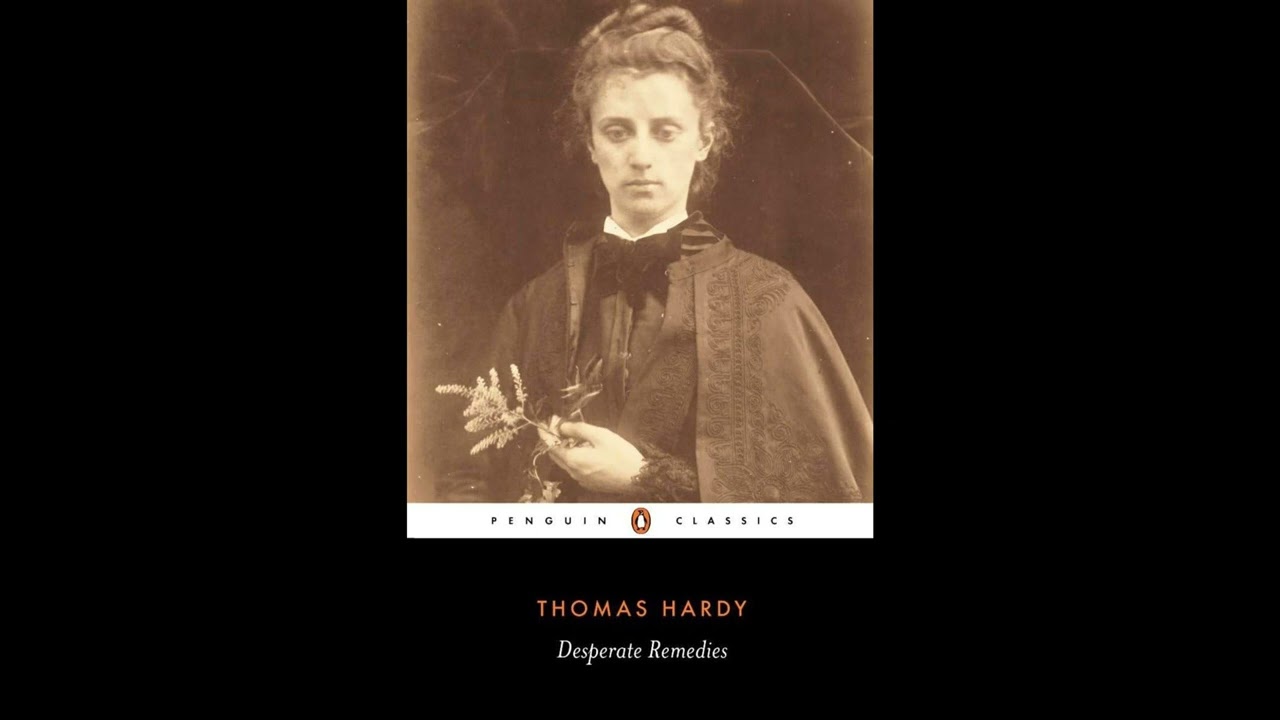
In the quiet shadows of Victorian England, where grand estates held secrets as deep as their foundations and social standing dictated destiny, a young woman finds herself caught in a web of circumstances far beyond her control. Thomas Hardy’s first published novel, Desperate Remedies, bursts forth not with the pastoral lyricism of his later, celebrated works, but with the thrilling suspense and dramatic twists of a sensation novel. This is a story that compels the listener from its opening scenes, offering a potent blend of romantic entanglements, hidden identities, and a central mystery that asks what lengths individuals will go to preserve their reputation, secure their future, or simply survive a world seemingly designed to thwart their happiness. Even today, the novel resonates with its examination of human desperation when faced with rigid social structures and the unpredictable nature of love and deception. The narrative introduces us to Cytherea Graye, a young woman of gentle breeding but reduced circumstances, who, after the death of her architect father, must become a governess to support herself and her brother. Her path soon intertwines with the wealthy and eccentric Miss Aldclyffe, the formidable lady of Knapwater House, and her charming but enigmatic steward, Mr. Manston. Cytherea’s heart, however, belongs to Edward Springrove, a promising architect with whom she shares a profound connection. But their budding romance is brutally severed by Miss Aldclyffe's manipulation and Manston's determined pursuit, which is driven by a hidden past he desperately wishes to keep buried. As Cytherea finds herself increasingly entangled in the affairs of Knapwater House and its inhabitants, a series of startling revelations and dark secrets begins to surface, threatening to unravel not only Manston's carefully constructed facade but also Cytherea’s very future. She faces an impossible choice: marry Manston, a man she does not love and whose past becomes increasingly suspect, or face financial ruin and social ostracization. The story meticulously charts her struggle against these forces, as the idyllic Dorset landscape belies the tumultuous human passions and clandestine activities that play out among its inhabitants. The intricate dance of love, duty, and concealed truths leads Cytherea down a path fraught with danger and moral dilemmas, as she strives to unearth the facts that might free her, or condemn her. Thomas Hardy, born in 1840 in Higher Bockhampton, Dorset, England, rose from humble beginnings to become one of the most significant literary figures of the Victorian era. Initially trained as an architect, he spent years sketching buildings and observing human nature in both London and his native Wessex before fully dedicating himself to writing. This practical background often informed his meticulous descriptions of setting and the careful construction of his plots. His first marriage to Emma Gifford, though initially passionate, grew distant over time, providing a complex backdrop to his often tragic portrayals of relationships. After Emma's death in 1912, he married his secretary, Florence Dugdale, and continued to write poetry, largely abandoning novels after the controversy surrounding Jude the Obscure. Hardy’s literary output is broadly divided into his Wessex novels and his later poetry. Beyond Desperate Remedies, his novels include such acclaimed works as Far from the Madding Crowd, The Return of the Native, The Mayor of Casterbridge, Tess of the d'Urbervilles, and Jude the Obscure. He is renowned for his vivid portrayals of rural life, his tragic vision, and his profound empathy for individuals caught between personal desire and societal constraints. Hardy developed a distinctive voice that bridged Victorian realism with the emerging naturalism, portraying characters as often victims of circumstance, fate, and inherent human flaws. He passed away in 1928, leaving behind a profound literary legacy that continues to be studied and admired worldwide. Desperate Remedies foregrounds several pervasive themes that would recur throughout Hardy’s later, more mature novels. One prominent theme is the social class and mobility of Victorian England. Cytherea’s precarious position as a governess highlights the extreme vulnerability of women who lacked independent means, demonstrating how financial necessity could compel individuals into desperate measures, often sacrificing personal happiness or moral conviction for survival. Her yearning for a connection with Edward Springrove, and the obstacles placed in their path by Miss Aldclyffe’s aristocratic machinations, clearly illustrate the power dynamics rooted in wealth and social standing. Another key theme is the overwhelming force of fate and circumstance versus individual free will. Time and again, characters find their carefully laid plans thwarted by unpredictable occurrences, coincidences, and the weight of past actions. The very title suggests a sense of individuals being driven to extremes by forces seemingly beyond their control. This sense of determinism is particularly evident in the series of unfortunate events that continually separate Cytherea from her true love, pushing her towards an undesirable union. Moreover, the narrative is propelled by the central theme of secrets and deception. The intricate plot hinges on hidden identities, concealed marriages, and clandestine pasts that threaten to explode into the present. Manston's mysterious background and the revelations surrounding it serve as the primary engine of the story's suspense, showing how secrets can corrode relationships and dictate lives. Desperate Remedies emerged in 1871, a period of significant cultural and social flux in Victorian Britain. While Hardy’s novels often looked back to a fading rural England, the literary landscape was increasingly shaped by industrialization, scientific advancements, and a growing urban readership. The novel itself belongs to the "sensation novel" genre, immensely popular in the 1860s and 1870s, which specialized in plots filled with mystery, crime, bigamy, mistaken identity, and sudden revelations, often set in country houses or middle-class homes. Authors like Wilkie Collins and Mary Elizabeth Braddon had paved the way for this style, and Hardy, keen to make a living through writing after his architectural career, wisely adopted its conventions for his first published work. This was a time when authors were experimenting with how to keep readers hooked, and Hardy's early novel clearly demonstrates his talent for crafting suspenseful narratives that transcended simple romantic fiction. Listening to Desperate Remedies as an audiobook offers a unique opportunity to immerse oneself in Hardy’s foundational narrative. The narrator’s voice becomes the thread that guides you through the winding paths of Knapwater House and the challenging landscapes of Cytherea’s life. Pay close attention to the pacing, which slowly builds the sense of impending revelation and the creeping dread of Manston’s true nature. The varied voices of the characters — from the manipulative Miss Aldclyffe to the earnest Edward Springrove and the desperate Cytherea — bring their personalities to life, highlighting the emotional nuances of their struggles and interactions. The evocative descriptions of the Dorset countryside, a hallmark of Hardy’s writing, paint vivid pictures for the mind’s eye, creating a strong sense of atmosphere that underscores the human drama unfolding within it. This substantial listening experience allows for a sustained engagement with Hardy’s origins as a novelist, revealing the nascent genius that would define his enduring literary legacy.
Enjoyed Desperate Remedies? A few ways to support us
Audible & Amazon links are affiliate; we may earn a small commission at no extra cost.
About this production
Human narration by a volunteer reader from LibriVox.org, the public-domain audiobook project. LibriVox volunteers record literary works whose copyright has expired in the United States, releasing the resulting recordings into the public domain.
Desperate Remedies by Thomas Hardy. The underlying text is in the U.S. public domain. We do not republish any modern copyrighted edition, translation, or commentary.
The 4K cinematic visuals accompanying this audiobook are generated by an AI image model from prompts derived from the source text. No copyrighted photos, paintings, or stock footage are used. AI generation is disclosed on every video on our YouTube channel as required by YouTube's altered/synthetic content policy.
English subtitles are transcribed from the LibriVox recording with OpenAI Whisper. Translations into the 11 other supported languages are produced by Meta's NLLB-200 neural translation model. No human translator's copyrighted translation is used.
Questions about sourcing or rights? See our DMCA & Sourcing policy or contact us.
Enjoyed this audiobook?
If you'd like to own a copy of Desperate Remedies or hear a professionally produced edition, the links below help support free audiobook production at no extra cost to you.
As an Amazon Associate we earn from qualifying purchases. Audible / print links are affiliate.