Poetics
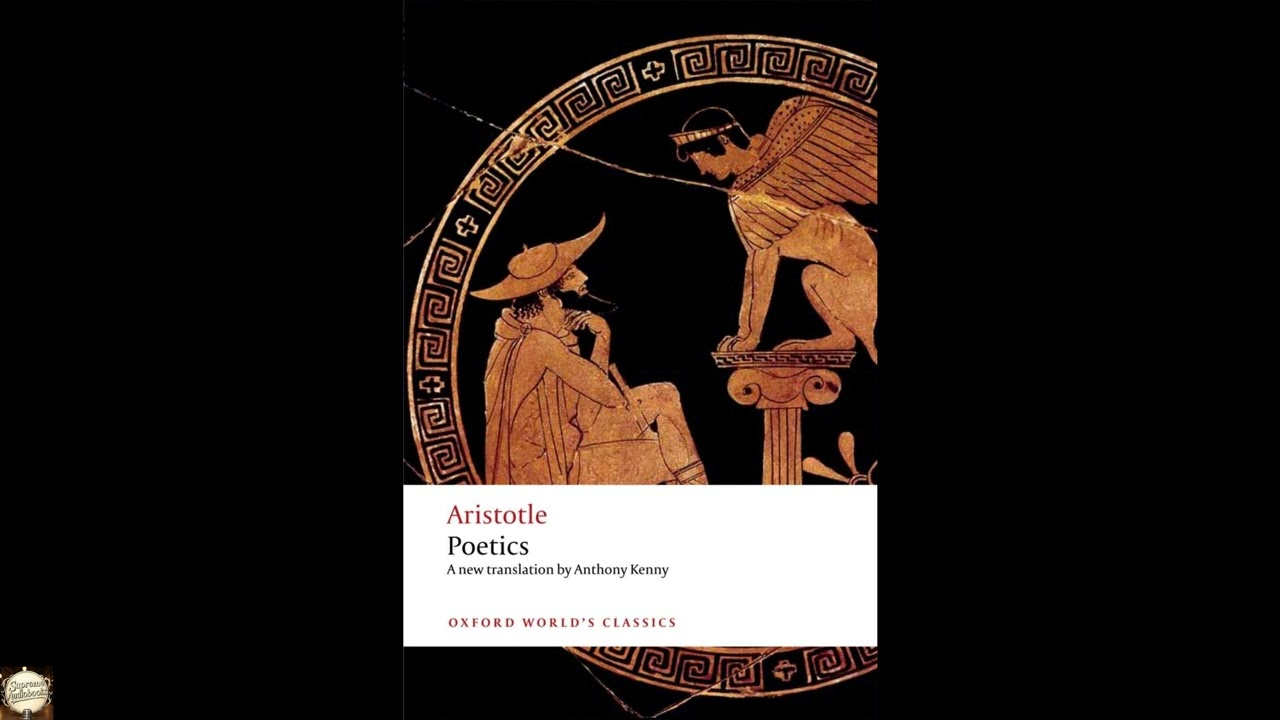
What makes a story good? What moves us when we hear a tale of heroes and their inevitable fall? Long before screenwriters penned their first scripts or novelists crafted their complex narratives, one of the greatest minds in Western thought sought to answer these questions with a rigorous, systematic approach. That mind belonged to Aristotle, and his Poetics is nothing less than the foundational blueprint for Western storytelling. This isn't just a dusty old book for academics; it's the very bedrock of drama, narrative structure, and emotional engagement that still underpins our favorite films, plays, and novels today. Listening to Poetics is like peering into the philosophical workshop where the principles of effective storytelling were first forged, understanding why certain narratives resonate and others fade. It offers a profound, enduring perspective on the art of making and receiving stories. Aristotle's discourse begins by classifying poetry as an act of imitation, or mimesis, a natural human instinct. He differentiates various poetic forms—epic, tragedy, comedy, dithyrambic poetry—by their means of imitation (rhythm, language, harmony), their objects of imitation (characters better, worse, or similar to average people), and their manner of imitation (narrative or dramatic). The bulk of the work then focuses intensely on tragedy, which he considers the highest form. He lays out the six constituent elements of tragedy: plot, character, diction, thought, spectacle, and melody. For Aristotle, plot stands supreme, the "soul of tragedy," emphasizing that drama is primarily an imitation of action, not merely of men. He meticulously details the ideal tragic plot, describing the necessity of a unified structure with a clear beginning, middle, and end, arguing against episodic plots and for the importance of events flowing with logical necessity or probability. He introduces concepts like peripeteia (reversal of fortune) and anagnorisis (recognition or discovery), showing how these elements, when skillfully integrated, amplify the tragic effect. Central to his analysis is the tragic hero, a figure who is neither perfectly virtuous nor utterly depraved, but one who falls from prosperity into misfortune due to a "hamartia"—often translated as a "mistake" or "error of judgment." This downfall, witnessed by the audience, is intended to evoke pity and fear, ultimately leading to catharsis, a purging or purification of these emotions. While Aristotle promised further discussion of comedy and other forms, much of his original text is lost, leaving us with a deeply influential yet somewhat fragmented study that nevertheless casts a long shadow over all subsequent literary theory. The author of this monumental work, Aristotle, was born in 384 BCE in Stagira, a city in northern Greece. His father was a physician to the king of Macedon, which may have influenced Aristotle's later empirical approach to knowledge. At the age of seventeen, he traveled to Athens to study at Plato's Academy, remaining there for some twenty years until Plato's death. During his time with Plato, Aristotle's thought began to diverge from his mentor's, particularly regarding the theory of Forms. While Plato believed in abstract, ideal Forms existing independently of the physical world, Aristotle focused more on observation and the study of concrete particulars. After leaving the Academy, Aristotle spent time traveling and conducting biological research. Later, he was invited by Philip II of Macedon to tutor his young son, Alexander—the future Alexander the Great—a role he held for several years, influencing one of history's most powerful leaders. Upon Alexander's ascension to the throne, Aristotle returned to Athens and established his own school, the Lyceum. Here, he continued his vast philosophical and scientific inquiries, teaching and writing extensively on virtually every subject imaginable: logic, metaphysics, ethics, politics, biology, physics, rhetoric, and aesthetics. His pupils were known as "Peripatetics" due to their habit of walking while discussing philosophy. After Alexander's death, anti-Macedonian sentiment in Athens grew, and Aristotle, facing charges of impiety, fled to Chalcis, where he died in 322 BCE. His surviving works, many believed to be lecture notes, form the cornerstone of Western intellectual tradition, making him one of the most significant figures in human history. Among the specific themes Aristotle unpacks in Poetics, the concept of mimesis, or imitation, stands out. He posits that humans have a natural propensity to imitate, and that learning through imitation is fundamental to human development and pleasure. For example, he points to how children learn by mimicking adults, or how we find delight in well-executed representations, even of things that might be unpleasant in reality. The power of a play, he suggests, lies not in its literal truth, but in its ability to convincingly imitate a plausible human action, allowing us to understand and react to universal truths through particular scenarios. A tragedy like Sophocles's Oedipus Rex is not a real-life event, but its imitation of human fallibility and the relentless uncovering of truth provides a powerful understanding of the human condition. Another key theme is catharsis, the emotional purging that tragedy is supposed to effect in the audience. Aristotle argues that by experiencing pity for the hero’s undeserved suffering and fear for what might befall us in similar circumstances, the audience undergoes a purification of these emotions. It’s not just a release, but a refinement. Consider the intense emotional roller coaster an audience experiences watching Oedipus’s horrific discoveries and self-mutilation; that emotional pressure, according to Aristotle, isn't just entertainment but a beneficial, perhaps even therapeutic, experience. The structured unfolding of events, where plot is indeed the "soul" of the play, ensures this emotional journey is purposeful and impactful, designed to move us precisely in this way. His focus on plot structure as paramount, with a clear beginning, middle, and end, and events linked by necessity or probability, fundamentally shaped how Western drama and narrative developed. Aristotle wrote Poetics during the 4th century BCE, a period of immense intellectual ferment in ancient Greece. This was after the Golden Age of Athenian drama, which saw the great tragedies of Aeschylus, Sophocles, and Euripides performed. The works Aristotle analyzes had already been created and were well-established in the cultural consciousness. His efforts to systematically analyze drama can be seen as a response to his teacher Plato's criticisms of poetry in The Republic, where Plato argued that poetry, being merely an imitation of an imitation, was removed from truth and potentially morally corrupting. Aristotle, while also acknowledging poetry as imitation, sought to defend its value, showing how it could reveal universal truths and provide moral and psychological benefits through catharsis. Culturally, Athens remained an intellectual center, but politically, the Hellenic city-states were increasingly under the sway of the rising Macedonian power, creating a climate ripe for reflection and the codification of knowledge that had previously been understood more intuitively. It was a time of looking back at monumental achievements and attempting to understand their underlying principles. Listening to Poetics as an audiobook offers a unique and highly advantageous way to absorb this foundational text. Its nature as a philosophical treatise, rich with precise definitions and complex logical arguments, benefits immensely from skilled narration. A clear, articulate voice can guide the listener through the nuances of Aristotle's thought, making his distinctions between plot, character, and thought more immediately understandable than a silent reading might allow. The "several hours" run length provides ample opportunity for focused listening, perhaps even replaying sections to fully grasp the progression of his reasoning. Pay attention to how the narrator articulates Aristotle’s definitions, the subtle shifts in emphasis as he moves from one element of tragedy to the next, and the way the ancient ideas resonate with modern storytelling instincts. It’s an auditory lecture from antiquity, clarifying concepts that continue to shape how we construct and appreciate stories, transforming a challenging read into an enlightening and engaging experience.
Enjoyed Poetics? A few ways to support us
Audible & Amazon links are affiliate; we may earn a small commission at no extra cost.
About this production
Human narration by a volunteer reader from LibriVox.org, the public-domain audiobook project. LibriVox volunteers record literary works whose copyright has expired in the United States, releasing the resulting recordings into the public domain.
Poetics by Aristotle. The underlying text is in the U.S. public domain. We do not republish any modern copyrighted edition, translation, or commentary.
The 4K cinematic visuals accompanying this audiobook are generated by an AI image model from prompts derived from the source text. No copyrighted photos, paintings, or stock footage are used. AI generation is disclosed on every video on our YouTube channel as required by YouTube's altered/synthetic content policy.
English subtitles are transcribed from the LibriVox recording with OpenAI Whisper. Translations into the 11 other supported languages are produced by Meta's NLLB-200 neural translation model. No human translator's copyrighted translation is used.
Questions about sourcing or rights? See our DMCA & Sourcing policy or contact us.
Enjoyed this audiobook?
If you'd like to own a copy of Poetics or hear a professionally produced edition, the links below help support free audiobook production at no extra cost to you.
As an Amazon Associate we earn from qualifying purchases. Audible / print links are affiliate.