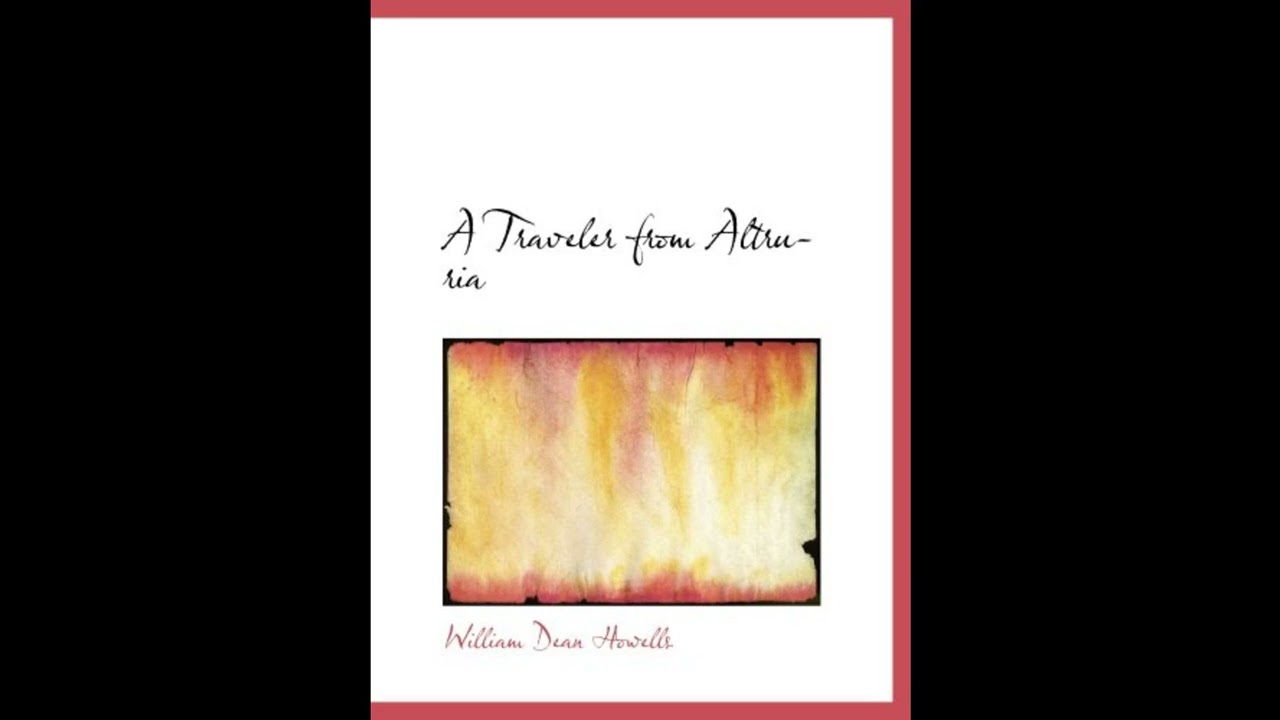
A Traveler from Altruria: Romance
Imagine a world where the principles of cooperation and equality aren't just abstract ideals, but the bedrock of an entire civilization. Now, imagine a visitor from that very world dropped into the bustling, stratified society of late nineteenth-century America, gently prodding its inhabitants with innocent questions that expose the very foundations of their capitalist existence. Such is the premise of William Dean Howells' A Traveler from Altruria: Romance, a biting social satire wrapped in the pleasant guise of a summer resort novel. This audiobook offers listeners a unique opportunity to experience a foundational text of American realism, a novel that, despite its age, continues to echo with relevance in our own conversations about wealth, poverty, and the elusive pursuit of a just society. The story unfolds at a fashionable New England summer hotel, a locus of American leisure and privilege, where a diverse group of prominent Americans has gathered. There's the cynical novelist, Mr. Twelvemough, who serves as our primary observer and interpreter of events; a prosperous banker, Mr. Peck; a thoughtful professor; an earnest minister; and a boisterous manufacturer, each representing a distinct pillar of the nation's burgeoning industrial age. Into this comfortable, self-satisfied circle arrives Mr. Homos, a distinguished, affable gentleman from the distant land of Altruria. His very name, derived from the Greek word for "same," hints at the egalitarian nature of his homeland, and his gentle demeanor belies a mind capable of dismantling the most cherished American assumptions. Homos, with an almost childlike curiosity, begins to question the American way of life. He observes the stark contrasts between the lavish ease of the hotel guests and the strenuous, often invisible, labor of the service staff. He asks why some individuals accumulate vast fortunes while others struggle to survive, why competition is glorified, and why charity is seen as a solution rather than a symptom of deeper systemic issues. The Americans, initially amused and eager to explain their "superior" system, find themselves increasingly on the defensive, their logical justifications for social inequality and economic disparity crumbling under Homos's mild but penetrating inquiries. The narrative skillfully charts this intellectual sparring, revealing the inherent contradictions and often uncomfortable truths about a society built on the principles of individualism and material gain. William Dean Howells, born in Martin's Ferry, Ohio, in 1837, rose from humble beginnings as a printer's apprentice to become one of the most influential literary figures of his era. His early career included a stint as consul to Venice under Abraham Lincoln, an experience that broadened his European perspective and deepened his literary sensibilities. Upon returning to the United States, Howells assumed the prestigious editorship of The Atlantic Monthly, a position he held for over a decade, using his platform to champion a new wave of American realist writers, including Henry James and Mark Twain. He later contributed significantly to Harper's Magazine, further solidifying his reputation as "the Dean of American Letters." Throughout his extensive career, Howells penned over a hundred books, including novels, essays, and plays, often focusing on the everyday lives of ordinary Americans and the moral dilemmas of their rapidly changing society. His novels, such as The Rise of Silas Lapham and A Modern Instance, are considered touchstones of American realism, known for their psychological depth, detailed social observation, and commitment to portraying life "as it is." He was a tireless advocate for social justice, becoming increasingly vocal about economic inequality and the plight of the working class in the latter part of his life, concerns that became central to his fiction, including this very novel. Howells passed away in New York City in 1920, leaving behind a profound legacy as a literary innovator and a thoughtful critic of American life. A Traveler from Altruria enacts several significant themes, most notably the critique of social and economic inequality. Homos's gentle but persistent questions force the Americans to confront the chasm between their professed democratic ideals and the reality of a society where a few enjoy immense wealth while many toil in poverty. For instance, when the conversation turns to the servants, Homos expresses genuine bewilderment that people who perform necessary labor are regarded with less respect than those who merely consume. He directly challenges the American notion that hard work necessarily leads to prosperity, noting the stark contrast between the lives of the hotel's unseen staff and its visible, leisured guests. Another central theme is the exploration of utopian ideals versus capitalist realities. Homos's detailed descriptions of Altruria—a land where cooperation replaces competition, where labor is equally honored, and where basic needs are met for all—serve as a powerful counterpoint to the American characters' justifications for their competitive, class-bound system. The novel also subtly examines the nature of charity, presenting it not as a genuine solution to poverty, but as a superficial salve that allows the wealthy to avoid confronting the systemic causes of suffering. The Altrurian view posits that a truly just society would render such individual acts of charity largely unnecessary by ensuring fundamental fairness. The late nineteenth century, often dubbed the Gilded Age, forms the essential backdrop for Howells's pointed social commentary. This was a period of unprecedented industrial growth and material prosperity in America, but also one marked by immense social upheaval. Rapid urbanization, waves of immigration, and the consolidation of vast fortunes led to stark disparities between the super-rich industrialists and the struggling working class. Labor unrest, strikes, and calls for social reform were commonplace, fueled by growing awareness of the harsh conditions faced by many. Writers like Howells, influenced by figures like Leo Tolstoy and increasingly adopting socialist sympathies, turned their literary gaze from romanticized notions of the past to the pressing social issues of their present. A Traveler from Altruria emerged directly from this cultural ferment, offering a fictional framework for Howells to engage with contemporary debates about economic justice, the ethics of capitalism, and the very definition of the American dream. Listening to A Traveler from Altruria as an audiobook offers a particularly immersive experience, given the novel's dialogic nature. The story largely unfolds through conversations, debates, and monologues, making it perfectly suited for audio presentation. A skilled narrator can bring to life the distinct voices of the diverse cast—the earnest innocence of Homos, the defensive rationalizations of the banker and manufacturer, the intellectual musings of the professor, and the wry observations of the novelist. The run length, several hours, makes it an ideal companion for commutes, thoughtful walks, or dedicated listening sessions. Pay attention to the subtle shifts in tone, the carefully crafted arguments, and the atmosphere of a privileged summer retreat that gradually gives way to uncomfortable self-reflection, allowing you to fully absorb the novel's enduring power as both a social critique and a thought-provoking romance of ideas.
Enjoyed A Traveler from Altruria: Romance? A few ways to support us
Audible & Amazon links are affiliate; we may earn a small commission at no extra cost.
About this production
Human narration by a volunteer reader from LibriVox.org, the public-domain audiobook project. LibriVox volunteers record literary works whose copyright has expired in the United States, releasing the resulting recordings into the public domain.
A Traveler from Altruria: Romance by William Dean Howells. The underlying text is in the U.S. public domain. We do not republish any modern copyrighted edition, translation, or commentary.
The 4K cinematic visuals accompanying this audiobook are generated by an AI image model from prompts derived from the source text. No copyrighted photos, paintings, or stock footage are used. AI generation is disclosed on every video on our YouTube channel as required by YouTube's altered/synthetic content policy.
English subtitles are transcribed from the LibriVox recording with OpenAI Whisper. Translations into the 11 other supported languages are produced by Meta's NLLB-200 neural translation model. No human translator's copyrighted translation is used.
Questions about sourcing or rights? See our DMCA & Sourcing policy or contact us.
Enjoyed this audiobook?
If you'd like to own a copy of A Traveler from Altruria: Romance or hear a professionally produced edition, the links below help support free audiobook production at no extra cost to you.
As an Amazon Associate we earn from qualifying purchases. Audible / print links are affiliate.