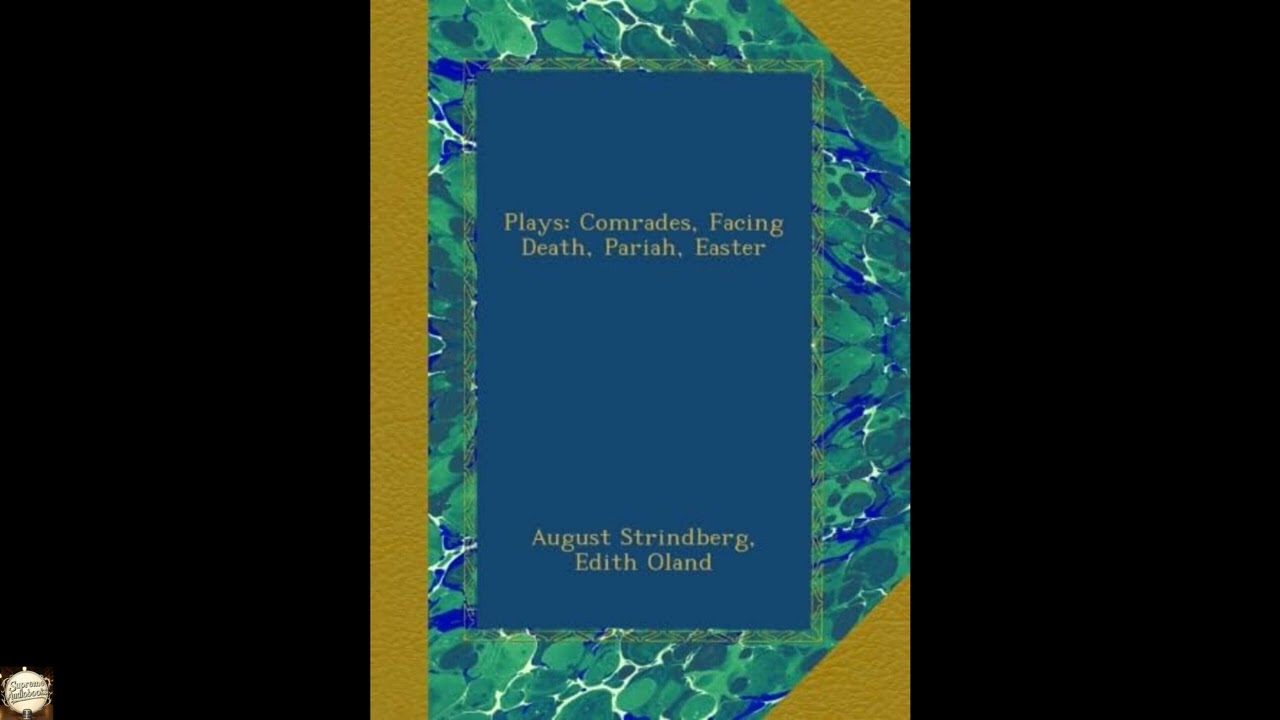
Plays: Comrades, Facing Death, Pariah, Easter
August Strindberg’s Plays: Comrades, Facing Death, Pariah, Easter offers a concentrated dose of one of modern drama’s most volatile and influential voices. This collection presents four distinct works, each a powerful snapshot of human psychology under duress, moving from the sharp, often brutal realism for which Strindberg became famous to the more symbolic, spiritual explorations of his later period. To engage with these plays today is to confront the enduring anxieties of identity, the struggle for power in intimate relationships, and the search for meaning in a world increasingly stripped of traditional certainties. Listeners will find in these pages not dusty relics, but a startlingly prescient examination of the conflicts that continue to define our lives. The collection opens with Comrades, a searing domestic drama set within bohemian artistic circles. Here, the marriage of Axel and Bertha, both painters, becomes a relentless battleground. Bertha strives to establish her artistic independence and identity, fiercely defending her work and her intellectual capabilities against a subtly (and not-so-subtly) dismissive husband. Axel, meanwhile, is consumed by professional envy and suspicion, questioning Bertha's talent and fidelity. Their home in Paris transforms into a psychological arena where accusations fly, loyalties are tested, and the very foundations of their union erode under the weight of ambition, gender expectations, and bitter resentment. Following this, the short, intense one-act Facing Death plunges into the bleak solitude of M. Durand, an elderly man confronting his imminent demise. Alone in his meager apartment, abandoned by his children and financially ruined, Durand reflects on a life marked by perceived failures and an unyielding sense of isolation. This stark piece offers a chilling portrait of human vulnerability and societal neglect. Next, Pariah delivers a taut, intellectual duel between two men, Mr. X and Mr. Y, confined by circumstance during a summer storm. The play unfolds as a tense conversation, a cat-and-mouse game of wits, where each man probes the other's past, morality, and social standing. Mr. X, seemingly respectable and learned, gradually hints at a dark secret involving murder, while Mr. Y, an archaeologist, finds himself both drawn to and repelled by the chilling confessions, holding a hidden piece of knowledge that could expose his companion. The drama builds on unspoken threats and philosophical arguments concerning justice, guilt, and the nature of crime, creating an atmosphere of palpable psychological tension. The collection concludes with Easter, a dramatically different work that shifts into a more lyrical and symbolic register. During Holy Week, the Heyst family—Elis, Kristina, and Benjamin—grapples with overwhelming debt and the lingering shame of the patriarch's past embezzlement. Their despair is challenged by the return of Eleonora, the family’s fragile, visionary daughter, recently released from an asylum. Her innocent perspective and profound spiritual insights introduce an element of grace and unexpected understanding, offering a path toward forgiveness and a reimagining of their shadowed reality. August Strindberg (1849-1912) was a literary force born in Stockholm, Sweden, whose turbulent personal life often fueled his intense and groundbreaking artistic output. The son of a shipping agent and a former servant, his childhood was marked by insecurity, poverty, and a strict religious upbringing, experiences that would deeply inform his later critiques of society and religion. He pursued various careers, including teaching, acting, and journalism, before committing fully to writing. His early marriage to Siri von Essen, a baroness and actress, became a tempestuous and complex union, famously influencing many of his plays that dissect the battle between sexes. Strindberg initially gained recognition with novels such as The Red Room (1879), a biting satire of Stockholm's artistic and political establishment. However, it was his plays that propelled him to international fame. Works like The Father (1887) and the iconic Miss Julie (1888) showcased his mastery of naturalism, a movement committed to portraying life with unvarnished realism, often focusing on the influence of heredity and environment. These dramas, with their unflinching psychological portraits and brutal honesty, made him a pivotal figure in the development of modern European theater, challenging conventional morality and dramatic structure. The mid-1890s brought a period of profound personal crisis for Strindberg, often referred to as his "Inferno Crisis," a time of mental anguish, spiritual searching, and an increasing interest in mysticism and the occult. This intensely autobiographical period, detailed in his novel Inferno, marked a significant shift in his dramatic style. He began to move away from strict naturalism toward symbolism and expressionism, seeking to represent subjective internal realities and spiritual dimensions rather than objective external ones. Plays such as A Dream Play and The Ghost Sonata exemplify this later phase, cementing his legacy as a radical innovator who bridged 19th-century realism and 20th-century modernism, leaving behind a prolific body of work encompassing over sixty plays, numerous novels, and volumes of autobiography. Strindberg’s plays consistently stage the intense conflict of the sexes and the institution of marriage as a battleground. In Comrades, Bertha’s struggle for artistic and personal autonomy against Axel’s manipulative jealousy is a prime example. Their dialogue bristles with accusations and power plays, revealing marriage not as a sanctuary, but as a site of psychological warfare where individuality is often crushed. Even the familial dynamics in Easter show the ripple effects of a patriarch’s past actions, underscoring how deeply entrenched gender roles and expectations influence domestic spheres. Another central theme is guilt, crime, and the possibility of redemption. Pariah brilliantly pits two men against each other in a moral and legal debate, where the very definition of a criminal—and the righteousness of those who judge him—is called into question. Mr. X’s past murder and Mr. Y’s intellectual cunning complicate any easy judgment. In Easter, the Heyst family’s collective shame over the father’s embezzlement weighs heavily, yet Eleonora’s innocent suffering and spiritual insight offer a surprising, almost miraculous, path toward understanding and the potential for a different kind of atonement. These works challenge the listener to consider what truly constitutes justice and forgiveness. These plays emerged during a period of immense intellectual and social ferment in Europe during the late nineteenth and early twentieth centuries. Industrialization and urbanization were transforming societies, science (Darwin, Freud) was challenging traditional religious and philosophical certainties, and movements for women’s suffrage and changing gender roles were gaining momentum. Naturalism in literature, of which Strindberg was a leading exponent, sought to portray life with scientific rigor, often focusing on the deterministic forces of heredity and environment. Strindberg used this mode to dissect the raw, often uncomfortable, psychological realities of individuals caught in these societal shifts, particularly the institution of marriage and the struggle for female independence. As the century turned, a broader artistic and philosophical shift occurred, moving away from strict rationalism towards Symbolism and Expressionism. This coincided with a growing disillusionment with purely objective reality and a desire to represent subjective inner states, spiritual crises, and the subconscious. Strindberg's later works, including Easter, reflect this evolution. His willingness to experiment with dramatic form and content mirrored a widespread European grappling with existential questions and the rise of new psychologies. He stands as a crucial bridge figure, embodying both the sharp realism of his era and the nascent modernism that would define the next century. To experience these plays as an audiobook is to gain an immediate and intimate connection with Strindberg’s dramatic genius. The plays were, after all, written to be spoken and heard. A skillful narrator breathes life into the charged dialogue and internal monologues, allowing the listener to fully grasp the nuances of Axel’s simmering resentment in Comrades, the quiet desperation of M. Durand in Facing Death, or the chilling intellectual sparring between Mr. X and Mr. Y in Pariah. The pacing of the dialogue, the subtle shifts in voice, and the palpable atmosphere of each scene can be conveyed with a vividness that stage productions sometimes struggle to achieve. Without the visual distractions of a theater, the listener is invited to focus intensely on the psychological depths of the characters and the powerful exchanges of ideas, making for a uniquely immersive and thought-provoking listening experience.
Enjoyed Plays: Comrades, Facing Death, Pariah, Easter? A few ways to support us
Audible & Amazon links are affiliate; we may earn a small commission at no extra cost.
About this production
Human narration by a volunteer reader from LibriVox.org, the public-domain audiobook project. LibriVox volunteers record literary works whose copyright has expired in the United States, releasing the resulting recordings into the public domain.
Plays: Comrades, Facing Death, Pariah, Easter by August Strindberg. The underlying text is in the U.S. public domain. We do not republish any modern copyrighted edition, translation, or commentary.
The 4K cinematic visuals accompanying this audiobook are generated by an AI image model from prompts derived from the source text. No copyrighted photos, paintings, or stock footage are used. AI generation is disclosed on every video on our YouTube channel as required by YouTube's altered/synthetic content policy.
English subtitles are transcribed from the LibriVox recording with OpenAI Whisper. Translations into the 11 other supported languages are produced by Meta's NLLB-200 neural translation model. No human translator's copyrighted translation is used.
Questions about sourcing or rights? See our DMCA & Sourcing policy or contact us.
Enjoyed this audiobook?
If you'd like to own a copy of Plays: Comrades, Facing Death, Pariah, Easter or hear a professionally produced edition, the links below help support free audiobook production at no extra cost to you.
As an Amazon Associate we earn from qualifying purchases. Audible / print links are affiliate.