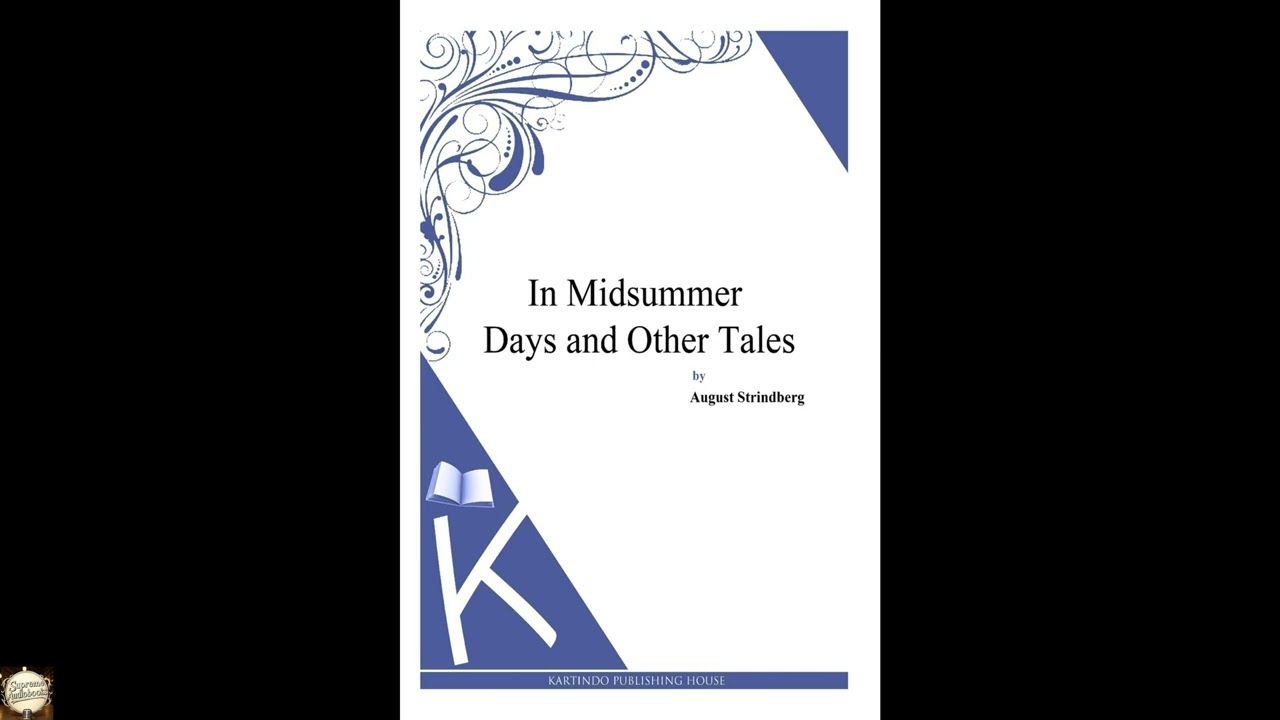
In Midsummer Days and Other Tales
Step into a world where the everyday shimmers with the mystical, where the human heart beats with both profound longing and stark despair, and where the natural world holds secrets both ancient and unsettling. August Strindberg's "In Midsummer Days and Other Tales" presents a collection of short prose pieces that defy easy categorization, pulling listeners into the unique, often disquieting, vision of one of literature's most formidable minds. These stories are not mere diversions; they are psychological portraits, allegories, and dreamscapes that challenge perceptions of reality, love, and existence itself. Strindberg's raw intensity and his unwavering gaze into the depths of human experience remain as piercing and relevant today as they were over a century ago, offering a potent antidote to superficiality and an invitation to confront the strange beauty of life. The tales gathered here often begin in familiar settings – a Swedish farmhouse, a bustling city street, a quiet cottage nestled by the sea – only to subtly, then dramatically, shift into the realm of the uncanny. Characters, whether they are striving artists, disillusioned lovers, or simple folk observing the turning seasons, find themselves confronted by forces beyond their immediate understanding. The title story, "In Midsummer Days," evokes the singular atmosphere of the Nordic summer solstice, a time when the veil between worlds thins, and ancient pagan spirits seem to stir in the long twilight hours. We encounter individuals grappling with love, loss, and the eternal questions of faith and doubt, often through a lens of folklore and symbolic imagery. Strindberg masterfully blends detailed observation of the material world with startling incursions into the supernatural, blurring the lines between waking life and feverish dream. Many of these narratives pivot on moments of profound revelation or quiet desperation. A character might witness an inexplicable phenomenon in nature, receive a cryptic message from a stranger, or find their most deeply held beliefs challenged by an unforeseen turn of events. Conflicts are frequently internal, with protagonists battling their own desires, their societal conditioning, or a pervasive sense of isolation. The arc of these stories rarely provides neat resolutions; instead, they often leave the listener with a haunting question, a lingering image, or a new perspective on the complex, often contradictory, nature of being human. They serve as glimpses into the soul of turn-of-the-century Scandinavia, but their emotional resonance is universal and enduring. August Strindberg, born in Stockholm, Sweden, in 1849, lived a life as turbulent and dramatic as any of his literary creations. His early years were marked by poverty and emotional upheaval, which profoundly shaped his artistic sensibilities. A polymath who dabbled in everything from journalism and painting to alchemy and botany, Strindberg is perhaps best known as a pioneering dramatist, whose plays like Miss Julie and The Father shook the foundations of European theater with their unflinching psychological realism and fierce critiques of gender dynamics. He was a central figure in the Naturalist movement, striving to depict life with scientific accuracy, yet he later moved into Symbolism and Expressionism, channeling his personal crises and mystical leanings into works like A Dream Play and The Ghost Sonata. Strindberg's private life was notoriously tumultuous, marked by three marriages, periods of profound mental distress (including his infamous "Inferno Crisis" in the mid-1890s), and frequent moves across Europe. Despite personal struggles, he remained extraordinarily prolific, producing novels, essays, poetry, and over sixty plays before his death in 1912. He was a controversial figure in his time, frequently clashing with critics, institutions, and former friends, yet his profound influence on subsequent generations of writers, from Eugene O'Neill to Ingmar Bergman, is undeniable. Strindberg stands as one of the most significant figures in modern literature, a writer who dared to expose the raw nerves of human existence. The stories within "In Midsummer Days and Other Tales," published in 1903, consistently return to several core themes that preoccupied Strindberg throughout his career. One prominent thread is the power and mystery of nature, particularly the changing seasons and the folklore associated with them. In the title story, the long days of summer are not merely a backdrop but an active force, influencing moods, blurring perceptions, and hinting at ancient, pagan energies lurking beneath Christian piety. Another recurring theme is the fragility of reality and the pervasive influence of dreams and the subconscious. Characters frequently experience visions, hallucinations, or encounters that challenge their sense of what is real, suggesting a deeper, often unsettling, layer of existence beneath the surface. This is often enacted through scenes where the mundane suddenly gives way to the supernatural, or where a character's internal state manifests outwardly. Strindberg also grapples with the complexities of human relationships and societal expectations, particularly between men and women, albeit in a more allegorical or veiled manner than in his direct dramas. There is often a sense of unfulfilled longing, misunderstanding, or the crushing weight of convention. Finally, a profound existential questioning and a search for meaning permeate these tales. Characters often feel isolated, grappling with doubt, and seeking some form of spiritual or intellectual truth in a world that often seems indifferent or absurd. Strindberg often portrays individuals struggling against the constraints of fate, the limitations of their own minds, or the perceived injustice of their circumstances, giving voice to a profound sense of human anguish and aspiration. This collection emerged during a period of immense cultural and intellectual ferment across Europe. The late 19th and early 20th centuries saw rapid industrialization, growing social unrest, and significant advancements in science and psychology. Sigmund Freud's theories were beginning to circulate, offering new ways to understand the human mind and its hidden depths. In the literary world, the rigid strictures of Naturalism were giving way to new forms of expression – Symbolism, which sought to convey inner experience through symbolic representation, and early Modernism, which embraced fragmentation and psychological realism. Strindberg, always an innovator and often ahead of his time, found in the short story form a perfect vehicle for his evolving artistic vision, allowing him to experiment with narrative structure, psychological depth, and the blending of the real with the fantastical, reflecting the anxieties and spiritual quests of an age in transition. Listening to "In Midsummer Days and Other Tales" as an audiobook offers a unique opportunity to immerse oneself in Strindberg's distinctive atmosphere. The duration of several hours makes it ideal for focused listening sessions or for enjoying over an extended period. A skilled narrator can bring out the subtle shifts in tone, moving from the pastoral and contemplative to the psychologically unsettling with seamless fluidity. Listen for how the voice artist renders the internal monologues of the characters, conveying their anxieties, their quiet epiphanies, and their often-unspoken desires. The pacing of the narration is crucial, allowing the listener to absorb the symbolic weight of certain images and to feel the gradual build-up of suspense or melancholy. The spoken word adds another layer to Strindberg's already rich prose, allowing the dreamlike qualities and folkloric elements to truly unfold and envelop the imagination.
Enjoyed In Midsummer Days and Other Tales? A few ways to support us
Audible & Amazon links are affiliate; we may earn a small commission at no extra cost.
About this production
Human narration by a volunteer reader from LibriVox.org, the public-domain audiobook project. LibriVox volunteers record literary works whose copyright has expired in the United States, releasing the resulting recordings into the public domain.
In Midsummer Days and Other Tales by August Strindberg. The underlying text is in the U.S. public domain. We do not republish any modern copyrighted edition, translation, or commentary.
The 4K cinematic visuals accompanying this audiobook are generated by an AI image model from prompts derived from the source text. No copyrighted photos, paintings, or stock footage are used. AI generation is disclosed on every video on our YouTube channel as required by YouTube's altered/synthetic content policy.
English subtitles are transcribed from the LibriVox recording with OpenAI Whisper. Translations into the 11 other supported languages are produced by Meta's NLLB-200 neural translation model. No human translator's copyrighted translation is used.
Questions about sourcing or rights? See our DMCA & Sourcing policy or contact us.
Enjoyed this audiobook?
If you'd like to own a copy of In Midsummer Days and Other Tales or hear a professionally produced edition, the links below help support free audiobook production at no extra cost to you.
As an Amazon Associate we earn from qualifying purchases. Audible / print links are affiliate.