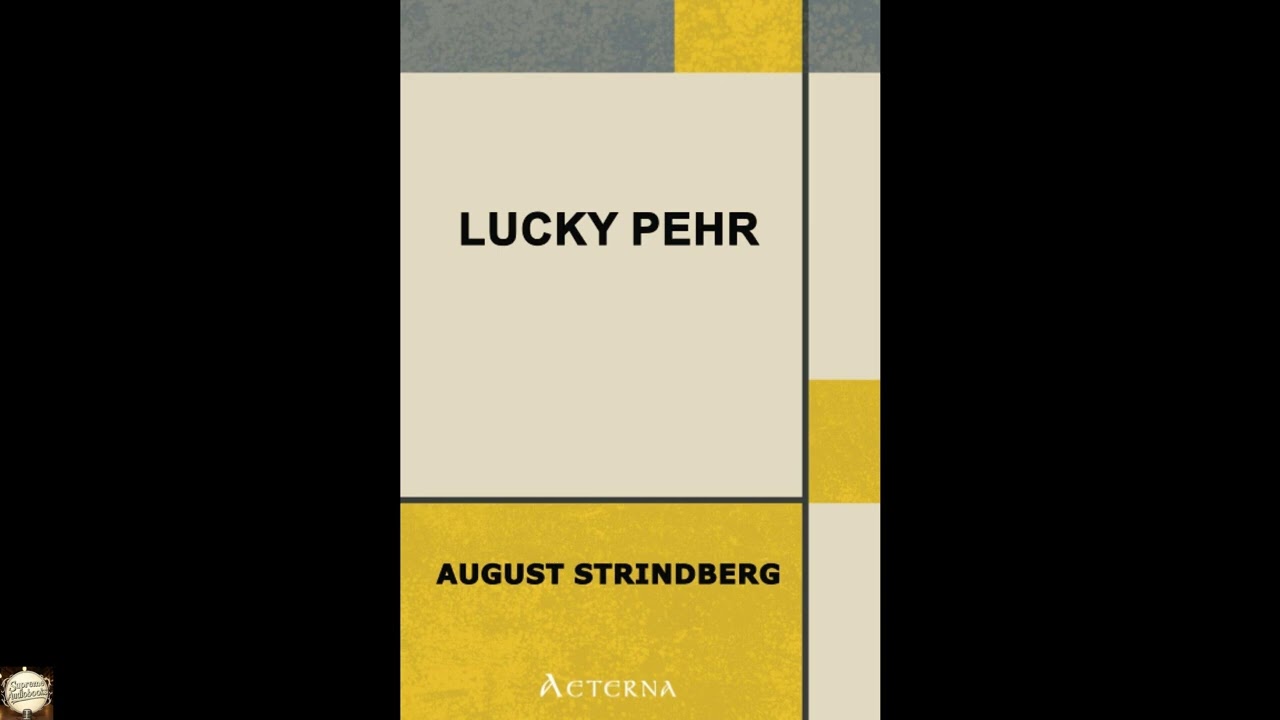
Lucky Pehr
Lucky Pehr offers listeners a refreshing glimpse into a side of August Strindberg less often associated with his dramatic, intense plays. Far from the psychological realism of Miss Julie, this compelling narrative draws on the spirit of folklore and fairy tale, presenting a story both simple in its premise and profound in its implications. It is a fable for all ages, questioning the very nature of desire, the illusion of good fortune, and the true path to contentment—themes as relevant to our modern anxieties as they were when Strindberg first penned this unique work. Step into a world where magic is real, wishes come true with unexpected consequences, and a young man's quest for happiness mirrors our own perpetual longing. The story begins in a humble Swedish village, introducing Pehr, a good-hearted but naive young man. His life takes an extraordinary turn one day when he stumbles upon a mysterious old woman—a witch, it turns out—who grants him a magical ring. This ring carries an incredible power: it will grant Pehr three wishes, promising him whatever his heart desires. Naturally, Pehr's initial wishes are for things he believes will bring ultimate joy and status: immense wealth and the hand of a beautiful princess. With his wishes granted, Pehr is catapulted from his provincial life into the highest echelons of society. He becomes a powerful count, accustomed to luxury, and eventually wins the love of a princess. Yet, beneath the glittering surface of his new existence, Pehr discovers that neither riches nor royal affection guarantee true happiness. The magic ring, while granting his desires, also seems to strip away the simple pleasures and genuine connections he once held dear. His experiences among the aristocracy prove to be a series of disillusionments, revealing the emptiness behind grand titles and inherited privilege. As Pehr navigates the complexities of his magically altered life, he faces challenges that test his character and force him to reconsider his priorities. The magic ring’s power has a curious way of revealing the true nature of the world around him, often leading him into predicaments that underscore the superficiality of his achievements. He confronts greed, envy, and the capriciousness of fate, slowly coming to understand that outward fortune often hides inner turmoil. His path becomes a poignant reckoning with what it truly means to be "lucky." August Strindberg, born in Stockholm, Sweden, in 1849, was a colossal figure in European literature, a playwright, novelist, and painter whose restless intellect and turbulent personal life fueled an astonishing output. His early years were marked by financial hardship and a strained relationship with his family, experiences that deeply informed his later, often starkly autobiographical, writing. He briefly considered careers in medicine and acting before dedicating himself fully to writing, and his early literary efforts were marked by a naturalistic style, depicting life with unflinching honesty and psychological realism. Strindberg's personal life was famously tumultuous, characterized by three tumultuous marriages and periods of severe mental distress, including the "Inferno Crisis" of the mid-1890s when he experimented with alchemy and turned to mystical studies. Despite, or perhaps because of, these personal upheavals, his creative drive remained relentless. He is primarily celebrated for his groundbreaking contributions to modern drama, particularly plays like Miss Julie, a searing psychological study of class and sexuality, and The Father, a brutal domestic tragedy. These works established him as a pioneer of naturalism, pushing the boundaries of stagecraft and character portrayal. Later in his career, Strindberg moved beyond naturalism, foreshadowing the Expressionist and Symbolist movements with dream plays such as A Dream Play and The Ghost Sonata. These later works allowed him to manifest subjective experience and psychological states onto the stage, creating a profound impact on 20th-century theatre. His novels, though often overshadowed by his plays, are equally powerful. Strindberg passed away in 1912, leaving behind a legacy as one of the most influential and controversial literary figures of his era, a true titan whose work continues to provoke and inspire. At its core, Lucky Pehr is a penetrating examination of what constitutes genuine happiness. Pehr's initial wishes—for wealth and a princess—are the classic symbols of worldly success, yet they bring him little lasting satisfaction. Strindberg illustrates this by showing Pehr's growing disillusionment with the superficiality of court life and the burdens that come with status. For instance, when Pehr attains his grand title and marries the princess, he finds himself trapped by courtly expectations and the absence of authentic connection, far from the simple joys he once knew. This highlights the theme that external fortune does not necessarily equate to inner contentment. Another significant theme is the often-blurry line between illusion and reality. The magic ring itself is a powerful symbol of illusion, granting wishes that create a facade of perfect life. Pehr, blinded by his desires, initially embraces these illusions, only to find them hollow. Strindberg also uses the social interactions within the story to comment on societal facades, where people present one face to the world while harboring different intentions. The story subtly suggests that true insight comes not from magical intervention, but from confronting the unvarnished truth of one's circumstances and internal state. This blend of fable and psychological realism allows Strindberg to comment on human nature with a unique tenderness compared to his more caustic dramas. Lucky Pehr emerged from a period of intense cultural and intellectual ferment in late 19th-century Europe. The era saw the peak of Naturalism, a literary movement that sought to depict life with scientific objectivity and brutal honesty, often focusing on the struggles of the working class and the deterministic forces of heredity and environment. Strindberg himself was a leading proponent of Naturalism for a significant part of his career, producing plays that shocked audiences with their raw portrayals of human conflict. However, alongside Naturalism, there was also a growing counter-current: Symbolism and the re-emergence of interest in myth, folklore, and the irrational. As the century drew to a close, many artists and thinkers felt constrained by scientific materialism and began searching for deeper, more spiritual, or psychological truths. Strindberg, with his restless artistic spirit, was keenly attuned to these shifts. Lucky Pehr, often considered a "fairy tale" or folk play, represents Strindberg's turn towards these symbolic and fantastical elements, a deliberate move away from the stark realism that defined much of his earlier work. It demonstrates his capacity to synthesize the observed world with an imaginative, almost mystical dimension, reflecting the broader artistic currents that would give rise to modernism. Listening to Lucky Pehr as an audiobook allows the narrative to truly unfold like a classic oral tradition, much as fairy tales were originally shared. The spoken word lends itself perfectly to the story's blend of magical elements and human drama. As Pehr's adventures progress, a skilled narrator can distinguish characters with subtle vocal shifts, bringing to life the innocent boy, the proud count, the mysterious witch, and the various figures he encounters on his path. The several hours of listening time provide an ideal opportunity to become fully immersed in Strindberg's imaginative world, whether during a commute, while tending to household tasks, or simply relaxing with a cup of tea. Pay attention to the pacing, which can reflect Pehr's rapid ascent and his more contemplative moments of disillusionment, allowing the atmosphere of wonder and eventual introspection to fully resonate.
Enjoyed Lucky Pehr? A few ways to support us
Audible & Amazon links are affiliate; we may earn a small commission at no extra cost.
About this production
Human narration by a volunteer reader from LibriVox.org, the public-domain audiobook project. LibriVox volunteers record literary works whose copyright has expired in the United States, releasing the resulting recordings into the public domain.
Lucky Pehr by August Strindberg. The underlying text is in the U.S. public domain. We do not republish any modern copyrighted edition, translation, or commentary.
The 4K cinematic visuals accompanying this audiobook are generated by an AI image model from prompts derived from the source text. No copyrighted photos, paintings, or stock footage are used. AI generation is disclosed on every video on our YouTube channel as required by YouTube's altered/synthetic content policy.
English subtitles are transcribed from the LibriVox recording with OpenAI Whisper. Translations into the 11 other supported languages are produced by Meta's NLLB-200 neural translation model. No human translator's copyrighted translation is used.
Questions about sourcing or rights? See our DMCA & Sourcing policy or contact us.
Enjoyed this audiobook?
If you'd like to own a copy of Lucky Pehr or hear a professionally produced edition, the links below help support free audiobook production at no extra cost to you.
As an Amazon Associate we earn from qualifying purchases. Audible / print links are affiliate.