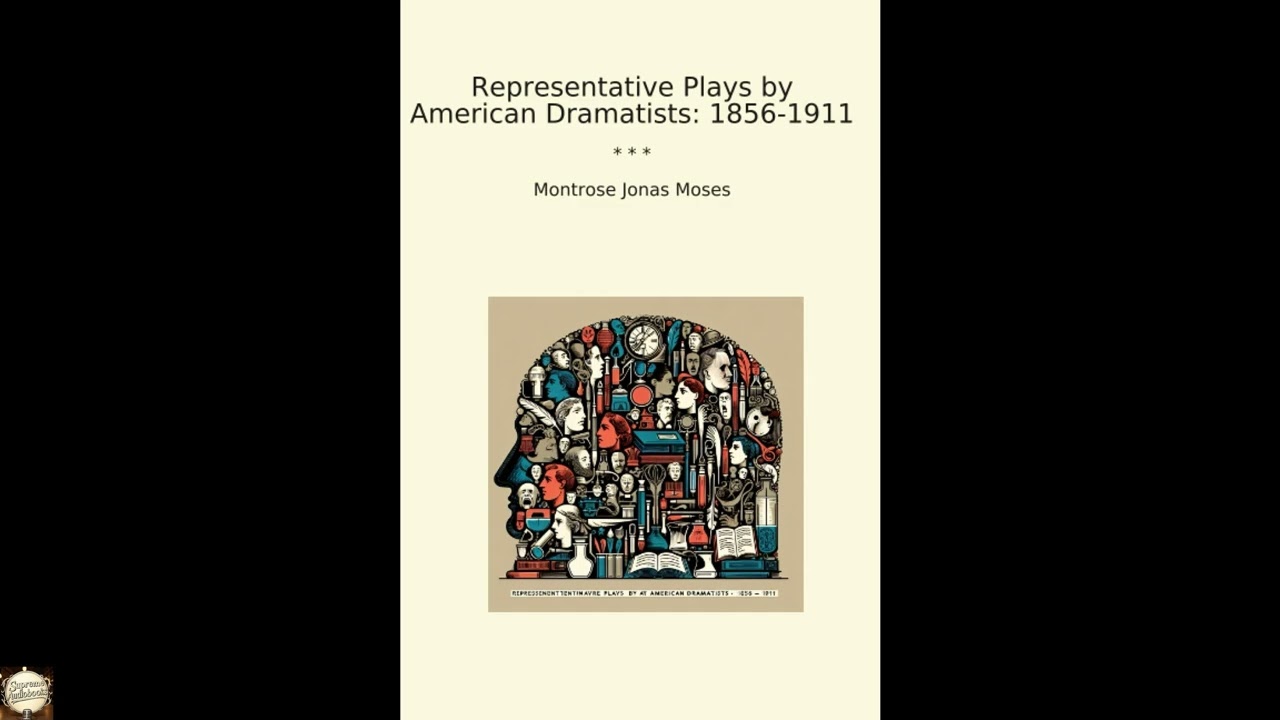
Representative Plays
"Representative Plays: American Dramatists: 1856-1911," compiled by Montrose Jonas Moses, offers a compelling gateway into the foundational era of American theatre. This collection is a living archive of a nation grappling with its identity, values, and future. The concerns echoed in these dramatic works—from social upheaval and industrial change to evolving gender roles and American character—resonate powerfully today. Before modern playwrights, these stages showcased America's anxieties and aspirations, providing crucial understanding of how our dramatic traditions and national narrative began to take shape. As an anthology, this collection presents a panorama of dramatic worlds, each reflecting American life from the mid-nineteenth century through the dawn of the twentieth. Listeners are transported to bustling post-Civil War cities, Gilded Age drawing rooms, middle-class parlors, and occasionally the rugged frontier. The plays often revolve around characters caught in change: ambitious entrepreneurs, women navigating new freedoms or societal constraints, immigrants seeking belonging, and families grappling with moral dilemmas. Central conflicts often pit individual desire against societal expectation. Characters struggle with financial ruin, prosperity, honor, or the complexities of love and marriage in an era of shifting social codes. The arc here is the collective unfolding of a nation’s dramatic consciousness. Moses selected works showcasing American playwriting's stylistic evolution, from earlier melodramatic ideals to nascent realism. Each play offers a contained world, painting a comprehensive picture of dramatic concerns across these pivotal decades. The architect of this compilation is Montrose Jonas Moses (1878-1934), a prominent American drama critic, editor, and anthologist, dedicated to documenting and promoting American theatre. Born in New York City, Moses became a tireless advocate for plays by his countrymen. His career began in the late 19th century as American drama shed European influences. He worked as a drama editor and quickly established himself as a leading authority. Moses was more than a collector; he was an insightful scholar, understanding the historical and cultural significance of each work. He authored critical studies, including "The American Dramatist" (1911)—the year this collection concludes. Other compilations like "A Treasury of Plays for Children" (1921) and "Representative American Dramas, National and Local" (1925) cemented his reputation. Through meticulous research and discerning selections, Moses helped define the American drama canon, ensuring earlier voices were understood as integral to the nation's performing arts. The plays in "Representative Plays" illuminate enduring themes shaping American society during this dynamic period. One prominent theme is the changing role of women. Listeners will encounter female characters grappling with domestic expectations versus personal ambition, often challenging limited societal spheres. A character might be torn between an advantageous marriage and an independent career, or use wit to navigate a male-dominated world, subtly subverting norms through clever dialogue. Industrialization and urbanization's impact on American life is a pervasive theme. Plays depict societal shifts from new technologies and rapid city growth, leading to class disparities and moral quandaries. Characters might be factory owners battling labor issues, or families facing business compromises. Texts also grapple with American identity, post-Civil War, exploring patriotism, regional differences, and immigrant assimilation. The collection confronts social hypocrisy and moral judgment, with characters exposing respectability's false fronts and ethical failings. A scene might feature a citizen whose hidden vices are brought to light, forcing a community to confront its standards. The decades 1856-1911 were a crucible for the United States, and Moses's plays mirror these transformative times. The period began on the eve of the Civil War, moved through Reconstruction, and swelled into the booming Gilded Age—characterized by industrial growth, wealth disparities, and mass immigration. Culturally, America was in flux, with agrarian values clashing against urban realities and technological progress. Women's suffrage gained momentum, and reformers challenged temperance to workers' rights. In the literary world, this era marked a transition from romanticism and sentimentality towards realism and naturalism. Playwrights, like novelists, focused on everyday life, social problems, and psychological depth, even as melodrama still swayed commercial theatre. Moses's collection emerged from a later moment of reflection in the early 20th century, as scholars sought to establish a canon of American literature and drama, preserving and analyzing cultural artifacts. He worked when scholarship systematically evaluated the nation's artistic output, understanding theatre's crucial role as a barometer of the American experience. Listening to "Representative Plays" as an audiobook offers an immersive way to engage with these historical texts. Drama is meant to be heard and performed; professional narrators bring characters and conflicts to vivid life in a way reading cannot. You will hear distinct voices, emotional inflections, and calibrated pacing that captivated audiences over a century ago. The several-hour run length makes this a perfect companion for extended listening—on a long drive, during household tasks, or as a thoughtful evening backdrop. The audio format allows dialogue and atmospheric descriptions to unfold naturally, giving listeners deeper appreciation for speech rhythms and dramatic tension. It transforms historical curiosity into an immediate, compelling theatrical experience.
Enjoyed Representative Plays? A few ways to support us
Audible & Amazon links are affiliate; we may earn a small commission at no extra cost.
About this production
Human narration by a volunteer reader from LibriVox.org, the public-domain audiobook project. LibriVox volunteers record literary works whose copyright has expired in the United States, releasing the resulting recordings into the public domain.
Representative Plays by American Dramatists: 1856-1911 by Montrose Jonas Moses. The underlying text is in the U.S. public domain. We do not republish any modern copyrighted edition, translation, or commentary.
The 4K cinematic visuals accompanying this audiobook are generated by an AI image model from prompts derived from the source text. No copyrighted photos, paintings, or stock footage are used. AI generation is disclosed on every video on our YouTube channel as required by YouTube's altered/synthetic content policy.
English subtitles are transcribed from the LibriVox recording with OpenAI Whisper. Translations into the 11 other supported languages are produced by Meta's NLLB-200 neural translation model. No human translator's copyrighted translation is used.
Questions about sourcing or rights? See our DMCA & Sourcing policy or contact us.
Enjoyed this audiobook?
If you'd like to own a copy of Representative Plays or hear a professionally produced edition, the links below help support free audiobook production at no extra cost to you.
As an Amazon Associate we earn from qualifying purchases. Audible / print links are affiliate.