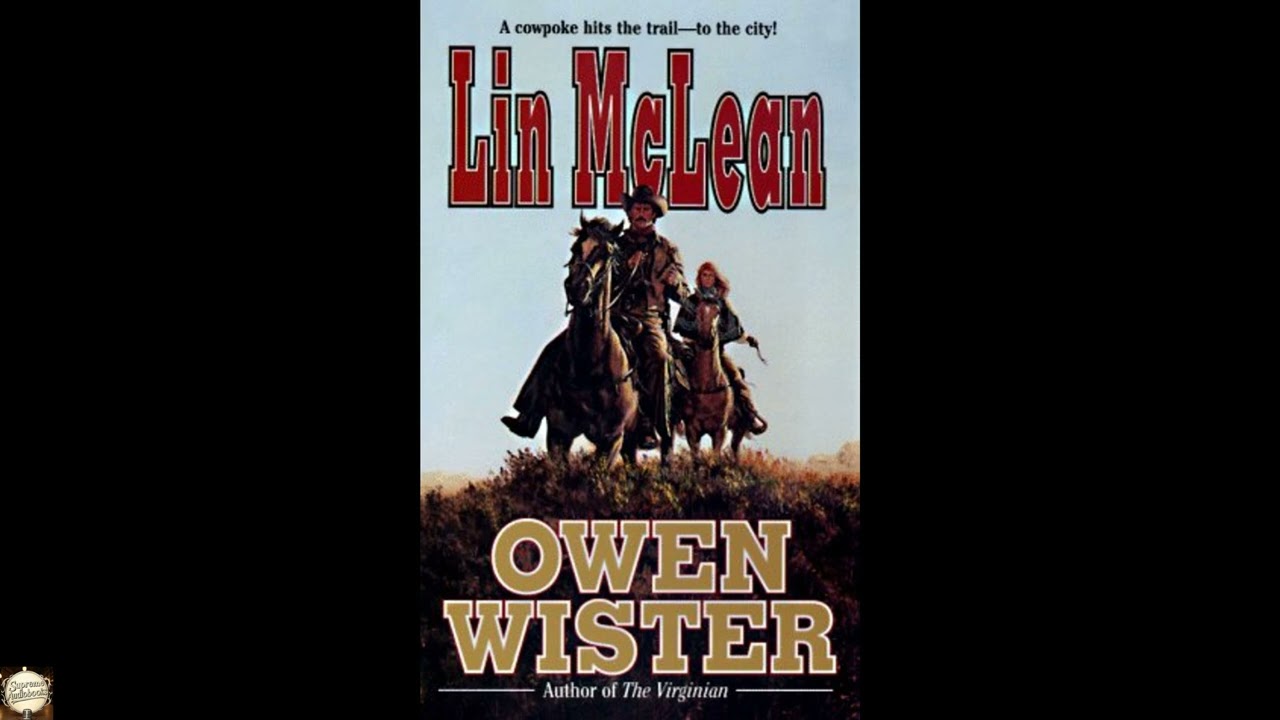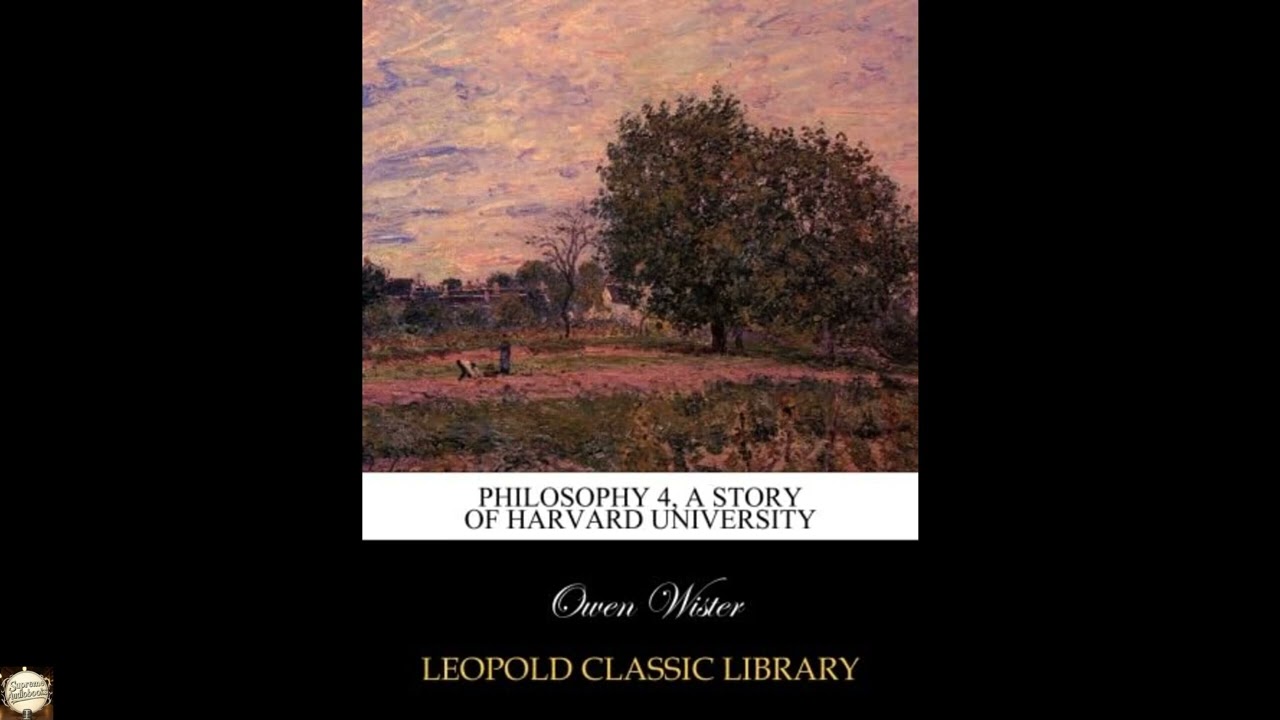
Philosophy 4, a story of Harvard University
Step back into the hallowed halls of Harvard University at the turn of the twentieth century with Owen Wister’s delightful novella, Philosophy 4, a story of Harvard University. This charming and perceptive tale offers a vivid snapshot of collegiate life, full of wit and the universal anxieties of youth facing academic challenges. More than a simple period piece, this story still resonates today because it skewers the perennial student struggle between the lure of leisure and the looming threat of exams, all while gently poking fun at the pretensions of privilege and the sometimes-stuffy world of academia. It’s a comedic gem from an author widely celebrated for defining the American Western, yet here, he turns his keen eye to an entirely different kind of frontier—the intellectual proving grounds of an elite institution. The story drops us right into the comfortable, if slightly precarious, lives of two Harvard undergraduates, Billy and Bertie. These aren’t your typical earnest scholars; they are young men of considerable charm and social standing, but with a rather pronounced disinterest in the rigors of formal education—at least when it comes to certain subjects. Their particular nemesis is Philosophy 4, a course taught by Professor Griggs, a man of profound intellect and even more profound dedication to his subject. Billy and Bertie, however, find the intricacies of philosophical thought a far less compelling pursuit than the various social diversions available to gentlemen of their station. As the dreaded final exam approaches, the two friends realize they are woefully unprepared, teetering on the brink of academic disaster that could mean expulsion. Their central conflict ignites from this very real threat. Faced with a choice between belatedly buckling down to study and devising an ingenious way around it, Billy and Bertie, with characteristic youthful hubris, opt for the latter. Their attempts to circumvent intellectual effort lead them down a series of humorous, sometimes farcical, paths. One such path involves a peculiar encounter with Miss Clara, a young woman who possesses an unexpected perspective on philosophy and a surprisingly direct approach to life. Her presence subtly complicates their schemes and offers them an unforeseen challenge that goes beyond the textbook. As their desperate ploys grow increasingly elaborate and absurd, Wister masterfully builds a narrative arc that highlights the folly of their ways while maintaining a genuine affection for their youthful exuberance. The story follows their bumbling yet earnest efforts to outwit the system, culminating in a situation where their character, rather than their intellect, faces its ultimate test. Owen Wister, born in Philadelphia in 1860, lived a life that spanned significant shifts in American history and culture. A Harvard alumnus himself, Wister studied music in Europe before returning to earn a law degree from Harvard Law School. Though he practiced law briefly, ill health prompted his travels to the American West, experiences that profoundly shaped his literary career. He became a close friend of Theodore Roosevelt, sharing a passion for the outdoors and American character. Wister is most famously known for The Virginian: A Horseman of the Plains, published in 1902, a seminal novel that helped define the Western genre and solidify the myth of the American cowboy as a figure of rugged individualism and moral rectitude. This work, alongside his numerous short stories set on the frontier, established him as a key figure in American literature, one who articulated a distinctive national identity during a period of rapid change and expansion. While The Virginian cemented Wister's legacy, Philosophy 4 reveals another facet of his talent—a keen observer of social dynamics and a gifted humorist. His ability to capture the specific cadence of Harvard life, along with its inherent academic pressures, demonstrates a versatility often overshadowed by his Western output. Wister occupied an interesting place in the literary canon, bridging the gap between late 19th-century realism, with its focus on detailed social observation, and the nascent movements of the early 20th century. He infused his narratives with a sense of adventure and character development that resonated deeply with a public eager for stories that reflected America's unique spirit, whether set in the wide-open spaces of Wyoming or the brick quadrangles of Massachusetts. He passed away in 1938, leaving behind a body of work that continues to influence American storytelling. At its core, Philosophy 4 enacts several enduring themes, often with a light comedic touch that belies their underlying weight. One prominent theme is the ongoing tension between education and social standing. Billy and Bertie, clearly from privileged backgrounds, assume their social connections or inherent charm might offer a shortcut around genuine academic effort. Their expectation that their position will protect them from consequences is a quiet critique of the era's class structures and the perceived value of an elite university degree. For instance, their initial casual dismissal of studying, believing they can 'cram' last minute or somehow charm their way through, perfectly illustrates this assumption. Another significant theme is youthful indolence versus responsibility. The story humorously tracks the boys' elaborate avoidance strategies—anything but sitting down with a textbook. Their grand plans to outsmart the system, born more from a desire for ease than malice, serve as a relatable depiction of youthful procrastination and the eventual dawning realization of impending consequences. The absurd scene where they try to deduce exam questions based on the professor's past habits, rather than learning the material, vividly captures their resistance to genuine effort. The novella also provides a subtle social satire of the American upper class and a nuanced commentary on the nature of academic pursuit itself. Wister gently pokes fun at the insularity of elite institutions and the sometimes-superficial engagement with profound subjects. The irony of students struggling with a course titled "Philosophy 4" without ever truly grappling with philosophical concepts highlights the divide between formal learning and genuine understanding. Through the unexpected wisdom offered by Miss Clara, Wister also suggests that true insight might come from unexpected sources, challenging the notion that knowledge is exclusively found within ivy-covered walls. Her pragmatic, down-to-earth perspective on the world provides a refreshing counterpoint to the boys' academic blind spots and their intellectual inertia, prompting them to consider ideas beyond the confines of their textbooks. This story emerged in the early years of the twentieth century, a period of immense change for the United States. Following the Gilded Age, the country was entering the Progressive Era, a time marked by widespread social activism and political reform aimed at addressing issues stemming from industrialization and urbanization. Universities like Harvard were growing in prominence and influence, shaping the next generation of leaders and thinkers, but also grappling with questions of access, purpose, and the nature of higher education. Culturally, America was asserting its own identity distinct from European influences, and authors like Wister were instrumental in crafting narratives that reflected this burgeoning sense of self. While realism and naturalism held sway in much of American literature, there was also a strong demand for stories that offered both entertainment and insight into the American character, whether set in the wilds of the West or the relatively tame environment of a university campus. Philosophy 4 fits this latter category, using humor and observation to comment on societal values and individual shortcomings within a recognizable American setting, providing a window into the prevailing attitudes of its time regarding class, education, and youth. Listening to Philosophy 4, a story of Harvard University as an audiobook offers a particularly rewarding experience, enhancing the inherent charm and wit of Wister's prose. The lighthearted comedic tone truly comes alive when delivered by a skilled narrator who can differentiate the distinct personalities of Billy, Bertie, and the various characters they encounter. You'll hear the earnest, albeit misguided, enthusiasm in their dialogue, the exasperation of their professor, and the surprising candor of Miss Clara. The narration can expertly handle the subtle shifts in pacing, accelerating during the boys' more frantic schemes and allowing moments of quiet reflection to land with impact. With a run length of several hours, this audiobook is perfectly suited for an afternoon's leisure, a series of commutes, or as a delightful companion for unwinding. It provides an immersive dive into a bygone era, allowing you to appreciate Wister's precise language and his knack for creating memorable, relatable characters whose struggles with academic pressure and the call of responsibility feel remarkably enduring.
Enjoyed Philosophy 4, a story of Harvard University? A few ways to support us
Audible & Amazon links are affiliate; we may earn a small commission at no extra cost.
About this production
Human narration by a volunteer reader from LibriVox.org, the public-domain audiobook project. LibriVox volunteers record literary works whose copyright has expired in the United States, releasing the resulting recordings into the public domain.
Philosophy 4, a story of Harvard University by Owen Wister. The underlying text is in the U.S. public domain. We do not republish any modern copyrighted edition, translation, or commentary.
The 4K cinematic visuals accompanying this audiobook are generated by an AI image model from prompts derived from the source text. No copyrighted photos, paintings, or stock footage are used. AI generation is disclosed on every video on our YouTube channel as required by YouTube's altered/synthetic content policy.
English subtitles are transcribed from the LibriVox recording with OpenAI Whisper. Translations into the 11 other supported languages are produced by Meta's NLLB-200 neural translation model. No human translator's copyrighted translation is used.
Questions about sourcing or rights? See our DMCA & Sourcing policy or contact us.
View 10 famous quotes from this book →
Enjoyed this audiobook?
If you'd like to own a copy of Philosophy 4, a story of Harvard University or hear a professionally produced edition, the links below help support free audiobook production at no extra cost to you.
As an Amazon Associate we earn from qualifying purchases. Audible / print links are affiliate.