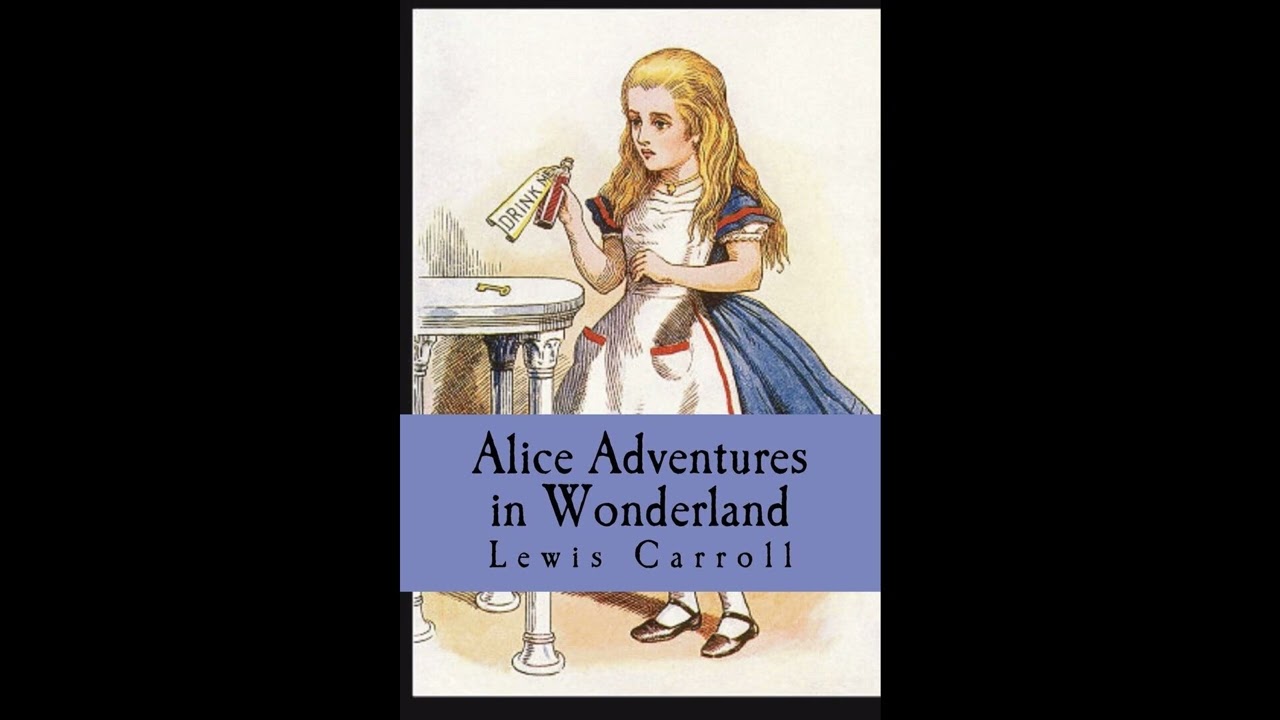
Alice's Adventures in Wonderland
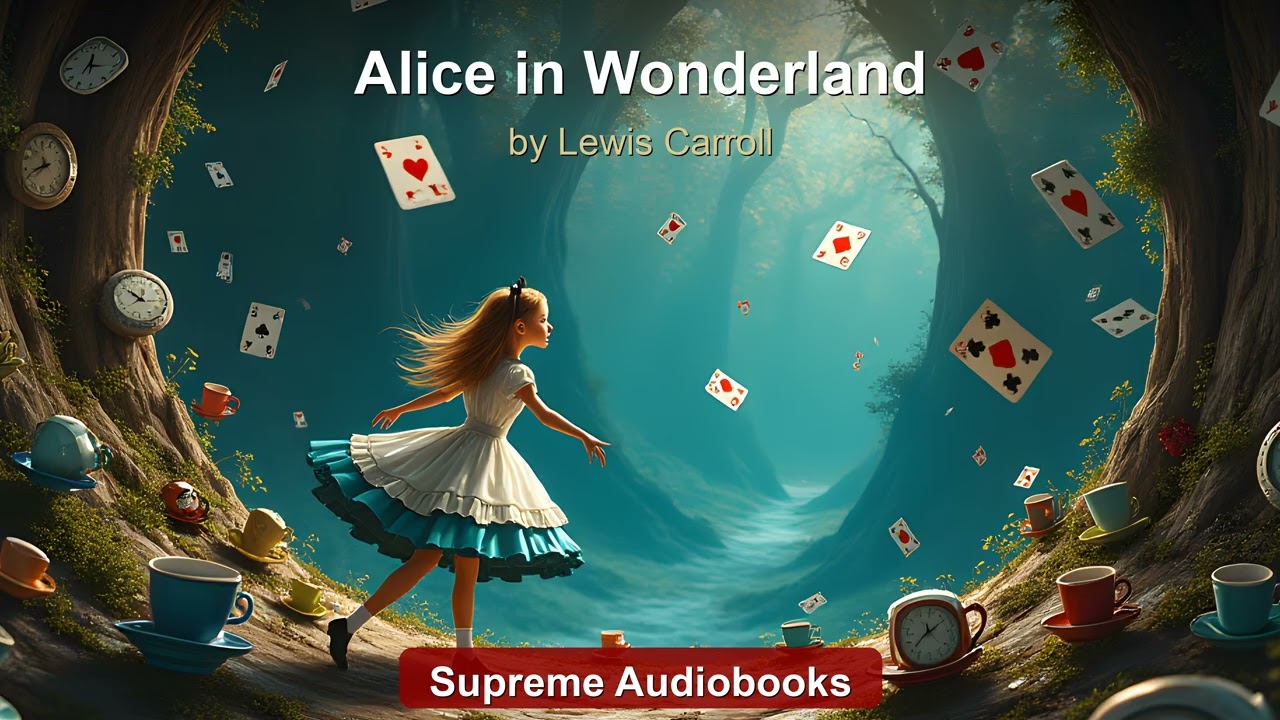
Step through the looking-glass of convention and fall into a world where logic bends and imagination reigns supreme. Lewis Carroll’s Alice’s Adventures in Wonderland is far more than a children’s tale; it is a foundational work of literary nonsense, a playful subversion of Victorian sensibilities, and a perennial source of wonder for listeners of all ages. Its profound humor and philosophical undercurrents continue to resonate today, inviting us to question the arbitrary rules of our own realities and find joy in the delightfully absurd. This is a story that defies simple categorization, a cultural touchstone that has shaped countless works of art, literature, and film, yet its truest magic lies in its original, unadulterated form – a potent antidote to the mundane. The story opens on a languid summer afternoon, with a young girl named Alice sitting idly by a riverbank, bored by her sister’s dull book. Her attention is soon caught by a peculiar sight: a White Rabbit, dressed in a waistcoat, consulting a pocket watch and exclaiming about being late. Driven by curiosity, Alice follows the creature down a rabbit hole, tumbling into a bizarre realm unlike anything she has ever known. Here, the rules of reality are fluid; she finds herself shrinking to miniature size after drinking from a bottle labeled “DRINK ME” and growing enormously after eating a cake marked “EAT ME,” navigating rooms filled with locked doors and strange concoctions. As Alice tries to make sense of her predicament, she encounters a parade of unforgettable characters. There’s the wise, hookah-smoking Caterpillar, who challenges her sense of identity; the enigmatic Cheshire Cat, whose grin lingers long after his body vanishes; and the perpetually confused Dodo. She attends an un-birthday tea party hosted by the Mad Hatter, the March Hare, and a sleepy Dormouse, where conversations spin into delightful, frustrating non-sequiturs. Her adventures culminate in an encounter with the tyrannical Queen of Hearts, a monarch obsessed with croquet and ordering beheadings, and a bizarre trial for the Knave of Hearts, accused of stealing tarts. Throughout it all, Alice struggles to impose logic on a world that utterly rejects it, her patience wearing thin as she is confronted by ever-escalating absurdity. The mind behind this fantastical realm belonged to Charles Lutwidge Dodgson, born in Daresbury, Cheshire, in 1832. A reserved man of many talents, he was an Anglican deacon, a precise mathematician, a logician, and a pioneering photographer, spending much of his adult life as a lecturer in mathematics at Christ Church, Oxford. It was under the pseudonym Lewis Carroll that his literary genius blossomed. The seeds of Alice’s Adventures in Wonderland were sown on a boating trip on the Isis River on July 4, 1862, when Dodgson entertained the three young daughters of Henry George Liddell, the Dean of Christ Church, with an impromptu story. Ten-year-old Alice Liddell, the middle child, particularly loved the tale and urged him to write it down. Dodgson meticulously expanded his handwritten manuscript, originally titled Alice’s Adventures Under Ground, into the published version, which first appeared in 1865. His later works included Through the Looking-Glass, and What Alice Found There (1871), a worthy successor that continued Alice’s dream logic, and the famously nonsensical poem The Hunting of the Snark (1876). Carroll’s unique brand of wit, his fondness for wordplay, and his deep understanding of logic—and its intentional subversion—set his writing apart. He passed away in 1898, leaving behind a legacy that firmly established him as a seminal figure not just in children’s literature, but in the broader landscape of English letters, particularly as a foundational voice in the tradition of literary nonsense. At its core, Alice’s Adventures in Wonderland grapples with the fluid nature of identity. Alice is repeatedly questioned about who she is, especially by the Caterpillar, and her constant changes in size physically mirror her struggle to define herself in a world that offers no stable ground. Her confusion reflects a child's often bewildering encounter with the arbitrary rules and expectations of adulthood. The book also brilliantly examines the clash between logic and absurdity. Alice, a product of Victorian rationality, continuously tries to apply reason to the irrational inhabitants and events of Wonderland. Her frustration with the nonsensical dialogue at the Mad Hatter’s tea party or the illogical pronouncements of the Queen of Hearts serves as a humorous yet pointed commentary on the limitations of rigid thinking. Furthermore, Carroll masterfully plays with language itself. Puns, riddles, and distorted idioms abound, challenging the very mechanics of communication. Words lose their conventional meanings, leading to delightful misinterpretations and demonstrating how language, when unmoored from shared understanding, can create utter chaos. Consider the Mouse’s "tail" being a "tale," or the March Hare’s insistence that "you might as well say that 'I see what I eat' is the same thing as 'I eat what I see'!" This linguistic play serves not only as humor but also as a deeper commentary on how meaning is constructed and deconstructed. The mid-Victorian era, when Alice’s Adventures in Wonderland was conceived and published, was a period marked by tremendous scientific advancement, industrial expansion, and an increasing emphasis on reason and order. Charles Darwin's On the Origin of Species had only recently rocked the scientific world, challenging established beliefs. Children's literature of the time was often highly didactic, focusing on moral instruction and proper conduct. Carroll's work emerged as a radical departure from this tradition, offering pure entertainment and imagination for its own sake, rather than a thinly veiled lesson. It was a refreshing counterpoint to the perceived seriousness and practicality of the age, using fantastical elements and absurd situations to offer both escape and subtle social critique. The author's background as a logician also seeped into the text, presenting paradoxes and mathematical jokes disguised as whimsical dialogue, a sly nod to his academic world that would have been subtly appreciated by some contemporary readers. Listening to Alice’s Adventures in Wonderland as an audiobook offers a singular experience, perfectly suited to the story's inherent theatricality. The length of several hours allows for complete immersion into Alice’s disorienting world, giving listeners ample time to become accustomed to its peculiar rhythms. The distinct voices of the diverse characters – the imperious Queen of Hearts, the melancholic Mock Turtle, the perpetually grinning Cheshire Cat, and, of course, the ever-bewildered Alice – come alive through a skilled narrator’s performance. The rapid-fire, witty, and often perplexing dialogue truly shines when spoken, allowing the nuances of Carroll’s wordplay and the specific inflections of each eccentric inhabitant to resonate. Pay close attention to the pacing, the shifts in tone, and how the narrator embodies the growing frustration and eventual assertiveness of Alice against the backdrop of Wonderland’s delightful chaos. This is a story meant to be heard, to let its absurdity wash over you and draw you into its unforgettable atmosphere.
Enjoyed Alice's Adventures in Wonderland? A few ways to support us
Audible & Amazon links are affiliate; we may earn a small commission at no extra cost.
About this production
Human narration by a volunteer reader from LibriVox.org, the public-domain audiobook project. LibriVox volunteers record literary works whose copyright has expired in the United States, releasing the resulting recordings into the public domain.
Alice's Adventures in Wonderland by Lewis Carroll. The underlying text is in the U.S. public domain. We do not republish any modern copyrighted edition, translation, or commentary.
The 4K cinematic visuals accompanying this audiobook are generated by an AI image model from prompts derived from the source text. No copyrighted photos, paintings, or stock footage are used. AI generation is disclosed on every video on our YouTube channel as required by YouTube's altered/synthetic content policy.
English subtitles are transcribed from the LibriVox recording with OpenAI Whisper. Translations into the 11 other supported languages are produced by Meta's NLLB-200 neural translation model. No human translator's copyrighted translation is used.
Questions about sourcing or rights? See our DMCA & Sourcing policy or contact us.
Enjoyed this audiobook?
If you'd like to own a copy of Alice's Adventures in Wonderland or hear a professionally produced edition, the links below help support free audiobook production at no extra cost to you.
As an Amazon Associate we earn from qualifying purchases. Audible / print links are affiliate.