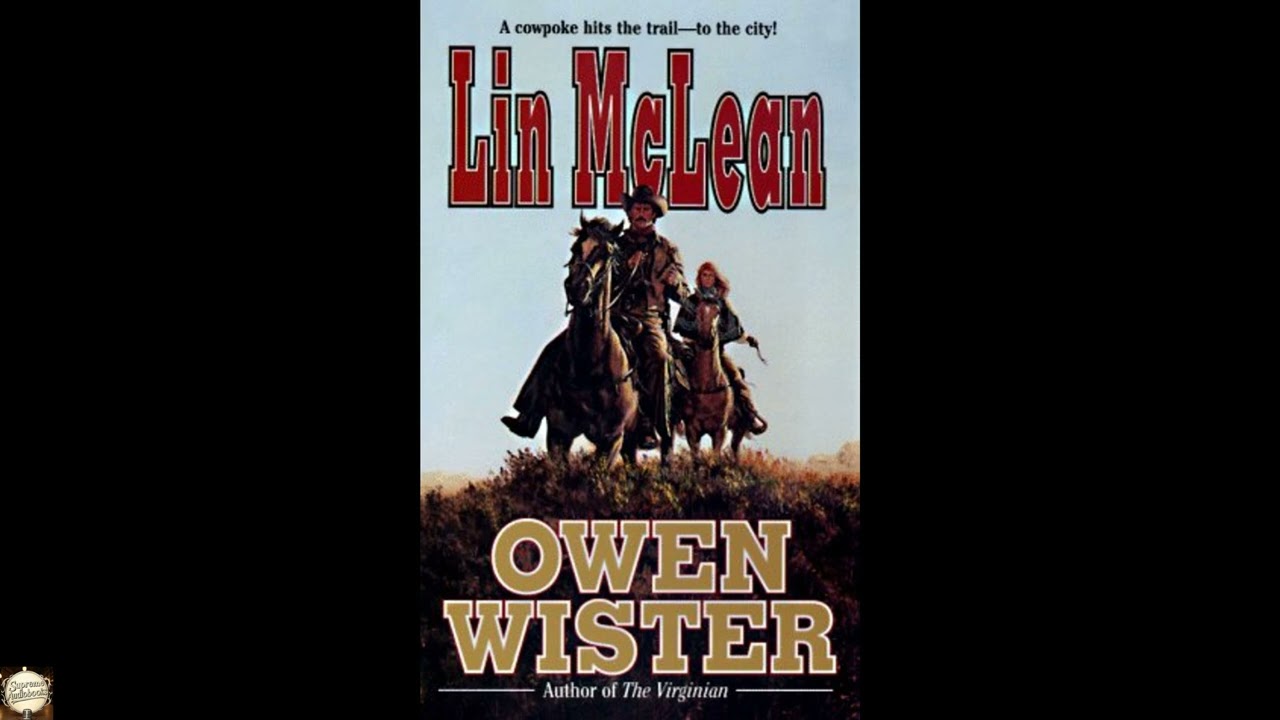
Lin McLean
Owen Wister’s Lin McLean, first gathered and published in 1897, stands as a foundational stone in the landscape of American literature, offering a compelling window into the myth and reality of the American West. More than just a collection of frontier tales, this work introduces us to a character who embodies the complex spirit of a nation still defining itself, a man whose struggles with love, loyalty, and self-definition resonate just as powerfully today as they did over a century ago. Listeners will find in Lin McLean not only the thrilling adventures of a cowboy but a poignant and often humorous examination of the human heart grappling with change, isolation, and the relentless pursuit of an honest life. Set against the vast, rugged expanses of late 19th-century Wyoming Territory, Lin McLean chronicles the episodic life of its namesake, a young, spirited, and undeniably charming cowboy. Lin is a man of innate decency and fierce loyalty, yet often hampered by his own impulsiveness and a streak of ill luck. We meet him as a young man, navigating the raw, untamed world of cattle drives, remote ranches, and dusty frontier towns. Through a series of linked stories, Wister paints a vivid picture of Lin’s friendships, his brushes with justice both formal and informal, and the everyday struggles that forged the character of those who dared to call the West home. The central thread woven through these narratives is Lin’s often-turbulent pursuit of love and a stable home. His affections are captured first by Jessamine Buckner, a woman whose past is as complicated as her future, leading Lin through a labyrinth of devotion, misunderstanding, and sacrifice. Later, he encounters Katie Peck, a strong-willed and independent woman who offers a different kind of challenge and comfort. Each relationship shapes Lin, forcing him to confront his own ideals of honor, responsibility, and happiness, all while the harsh realities of frontier life – sudden danger, profound loss, and the changing social fabric – test his resilience at every turn. Owen Wister, born in Philadelphia in 1860, was an unlikely candidate to become the bard of the American cowboy. A descendant of a prominent Pennsylvania family, he was educated at Harvard, graduating in 1882, and later attended Harvard Law School. His path westward began in 1885 when he traveled to Wyoming for health reasons, a trip that proved transformative. He became enchanted by the rugged landscape and the distinct characters he met, returning frequently over the next decade. These experiences would forever alter his literary trajectory, shifting his focus from law to the vibrant, vanishing world of the frontier. While Wister’s most celebrated work remains The Virginian, published in 1902, Lin McLean (1897) served as a vital precursor, establishing many of the themes and archetypes that would come to define the Western genre. Before its compilation, several of the Lin McLean stories appeared in magazines and within his earlier collection, Red Men and White, in 1896. Wister was an intimate friend of Theodore Roosevelt, a fellow enthusiast of the West, and together they shared a vision for the preservation of an American identity rooted in the frontier spirit. Wister’s detailed observations and distinctive voice helped to solidify the image of the cowboy as a uniquely American hero, capable of both brute strength and refined honor. Among the prominent concerns Wister addresses, the theme of frontier masculinity and morality stands out. Lin McLean, though often impulsive and prone to romantic folly, consistently displays an inherent goodness and a code of ethics that guides his actions, even when formal law is distant. For example, his unwavering loyalty to his friends, regardless of their predicaments, underscores a deep-seated sense of communal responsibility. Another core theme is the often-heartbreaking reality of love and loss on the frontier. Lin’s long, complicated courtship of Jessamine and his later relationship with Katie demonstrate the immense difficulty of building and sustaining personal connections in a transient and unforgiving environment, where individuals are often forced to choose between personal happiness and practical survival. Furthermore, Lin McLean vividly portrays the encroaching end of the open range and the vanishing frontier. Wister captures a specific historical moment when the vast, untamed wilderness was beginning to give way to settlement, fences, and more formalized systems of law and order. The book shows how individuals like Lin grapple with this transition, embodying the spirit of fierce independence even as the world around them changes. Lin McLean himself, with his blend of rough-hewn charm and underlying decency, serves as an essential prototype for the iconic American cowboy, an archetype that Wister would later perfect with The Virginian, cementing his place as a pivotal figure in shaping American literary identity. The late 19th century in America was a period of immense change and introspection. Following the Civil War, the nation turned its gaze westward, driven by expansionist desires and the promise of new beginnings. This era, however, also saw the official "closing" of the frontier, a concept popularized by historian Frederick Jackson Turner, leading to a profound sense of nostalgia for a perceived simpler, more heroic past. Culturally, there was a hunger for stories that captured this uniquely American experience. While literary realism and naturalism were gaining traction, a segment of the public also sought adventure and romanticism. Wister skillfully blended these impulses, grounding his stories in realistic detail and dialect while imbuing his characters with a heroic, often romanticized, spirit that perfectly suited the era’s yearning for defining national narratives. Listening to Lin McLean as an audiobook offers a singular opportunity to immerse oneself fully in Wister’s evocative world. The length of several hours makes it an ideal companion for long drives, peaceful evenings, or even just as a background to daily tasks, allowing the story to unfold at a natural pace. A skilled narrator can bring Lin’s earnest voice to life, along with the distinctive accents and cadences of the other characters — from gruff cowboys and resilient women to the more formal tones of occasional Easterners. The spoken performance can capture the vast, quiet atmosphere of the Wyoming plains, the tension of a poker game, or the heartfelt sincerity of Lin’s romantic declarations, providing an immediate, vivid connection to a classic that continues to shape our understanding of the American spirit.
Enjoyed Lin McLean? A few ways to support us
Audible & Amazon links are affiliate; we may earn a small commission at no extra cost.
About this production
Human narration by a volunteer reader from LibriVox.org, the public-domain audiobook project. LibriVox volunteers record literary works whose copyright has expired in the United States, releasing the resulting recordings into the public domain.
Lin McLean by Owen Wister. The underlying text is in the U.S. public domain. We do not republish any modern copyrighted edition, translation, or commentary.
The 4K cinematic visuals accompanying this audiobook are generated by an AI image model from prompts derived from the source text. No copyrighted photos, paintings, or stock footage are used. AI generation is disclosed on every video on our YouTube channel as required by YouTube's altered/synthetic content policy.
English subtitles are transcribed from the LibriVox recording with OpenAI Whisper. Translations into the 11 other supported languages are produced by Meta's NLLB-200 neural translation model. No human translator's copyrighted translation is used.
Questions about sourcing or rights? See our DMCA & Sourcing policy or contact us.
Enjoyed this audiobook?
If you'd like to own a copy of Lin McLean or hear a professionally produced edition, the links below help support free audiobook production at no extra cost to you.
As an Amazon Associate we earn from qualifying purchases. Audible / print links are affiliate.