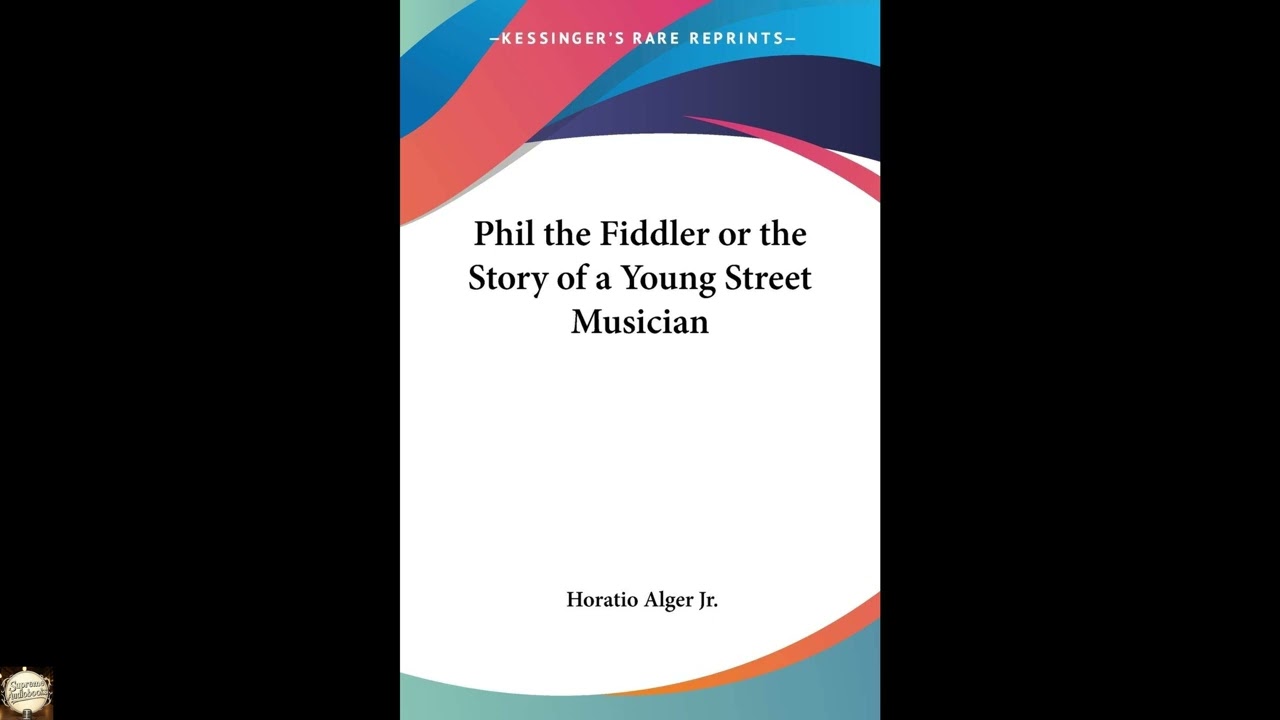
Phil the Fiddler or the Story of a Young Street Musician
Step into a bygone era, into the bustling, sometimes unforgiving, streets of nineteenth-century New York City, and meet a young boy whose determination could inspire listeners even today. Horatio Alger Jr.'s "Phil the Fiddler or the Story of a Young Street Musician" offers more than just a glimpse into the past; it presents a timeless narrative about the power of perseverance, the dignity of hard work, and the unwavering spirit of youth in the face of formidable odds. This classic tale, presented here in an engaging audiobook format, reminds us that even from the most humble beginnings, character and talent can carve a path toward a brighter future. It is a story that speaks to the enduring human desire for self-improvement and the search for one's true place in the world, making its messages strikingly relevant for anyone seeking encouragement or a deeper understanding of American literary heritage. Our story introduces Phil, a spirited young boy who finds himself without family and under the harsh care of an indifferent, even cruel, guardian. Cast into the vast urban landscape of New York, Phil’s main possession and source of hope is his beloved fiddle. With this instrument, he strives to earn a meager living, playing tunes on street corners, in parks, and wherever a few coins might be tossed his way. His daily existence is a constant struggle against hunger, cold, and the predatory forces that often preyed upon the city's vulnerable children. Each day brings new challenges—sometimes a kind face, often a scolding, and always the uncertainty of where his next meal will come from or where he will find shelter from the elements. Despite the relentless hardship, Phil never loses his innate goodness or his resolve to better his circumstances. He encounters various characters along his path: other street children, some who offer camaraderie, others who represent the darker temptations of urban life; shopkeepers and passersby, some sympathetic, some dismissive; and the occasional well-meaning adult who perceives the boy's inherent worth and talent. These encounters shape Phil's understanding of the world, testing his values and reinforcing his commitment to honesty and diligence. The narrative follows Phil's earnest efforts to rise above his destitute situation, driven by a simple yet profound desire for a stable home and a chance to truly develop his musical gifts, charting a course that promises growth and a gradual, hard-won ascent from the shadows of poverty. Horatio Alger Jr. (1832-1899) became an almost mythical figure in American letters, his name synonymous with the "rags-to-riches" narrative. Born in Revere, Massachusetts, the son of a Unitarian minister, Alger himself initially followed a similar path, graduating from Harvard College and later Harvard Divinity School. After a brief and controversial tenure as a minister in Brewster, Massachusetts, he moved to New York City in 1866. It was there, amidst the bustling post-Civil War landscape, that he found his true calling: writing moralistic stories for boys. He became a prolific author, publishing over 100 books, many of which first appeared as serials in newspapers and magazines. His works, including "Ragged Dick," "Tattered Tom," and "Luck and Pluck," sold millions of copies, making him one of the most widely read authors of his time. Alger's literary output positioned him as a central figure in juvenile fiction, particularly within the genre of the "dime novel." He meticulously crafted narratives designed to instill virtues like industry, honesty, frugality, and self-reliance in young readers. His stories consistently featured a virtuous but impoverished boy who, through a combination of hard work, good deeds, and often a stroke of luck or the intervention of a benevolent patron, overcomes adversity to achieve financial stability and social respectability. While often criticized for their formulaic plots and didactic tone, Alger's books played a significant role in shaping the popular imagination of what constituted success and moral character in late nineteenth-century America, embedding the idea of the self-made man deeply within the national consciousness. "Phil the Fiddler" powerfully enacts several core themes central to Alger's body of work. Foremost among these is perseverance and the reward of hard work. We see Phil, day after day, regardless of hunger or cold, taking out his fiddle to play, honing his skill not just for survival but for a deeper love of music. A scene where he practices his scales in a quiet corner, despite having not eaten all day, underscores his dedication and refusal to give up. This relentless effort, the story implies, is the very foundation upon which a better life can be built. Another prominent theme is moral rectitude and the importance of honesty. Even when faced with the direst poverty, Phil consistently resists temptations to steal or deceive. When he finds a lost purse, for instance, his first instinct is to find its owner, even if it means sacrificing a momentary gain that could ease his immediate suffering. This steadfast integrity often catches the eye of sympathetic adults, proving that virtue itself can be a valuable currency. The book also addresses the powerful idea of social mobility and the American Dream, albeit in a somewhat idealized form. Phil's ascent from a street musician to a more stable life represents the belief that individual effort and good character can transcend the circumstances of birth. His story suggests that even in a society with vast economic disparities, there exists a path for the deserving poor to improve their lot. This theme is often reinforced by the kindness of strangers and the role of benevolent patronage. Phil's progress is frequently aided by the timely appearance of a compassionate older gentleman or a generous family who recognize his inherent goodness and talent, offering him opportunities he might not otherwise have found. These acts of charity, while perhaps simplifying the realities of social change, offer a comforting narrative that good deeds are observed and eventually rewarded. "Phil the Fiddler" emerged from a period of profound transformation in American society. The late nineteenth century, often called the Gilded Age, witnessed rapid industrialization, massive urbanization, and waves of immigration. Cities like New York swelled with populations seeking opportunity, but also faced unprecedented challenges of poverty, overcrowding, and social unrest. This era saw the rise of immense fortunes alongside widespread destitution, creating a palpable tension between the promise of American opportunity and the harsh realities of economic inequality. In the literary world, there was a growing demand for literature, especially for young people, that addressed these changes while reinforcing traditional values. Alger's stories perfectly fit this cultural moment, offering optimistic, moralizing narratives that assured readers that individual virtue and effort could still lead to success, providing a comforting counter-narrative to the anxieties of a rapidly changing nation. His books served as a sort of moral compass for young boys, guiding them through the complexities of urban life with clear lessons on proper conduct and the path to upward mobility. Listening to "Phil the Fiddler" as an audiobook offers a particularly immersive and intimate experience. The narrator's voice becomes the conduit to Phil's struggles and triumphs, painting vivid soundscapes of old New York, from the cacophony of street hawkers to the quiet melodies of Phil's fiddle. Over several hours, you can let the story unfold at a natural pace, perfect for commutes, long walks, or simply relaxing at home. A skilled narrator will subtly convey the youthful innocence and unwavering hope in Phil's voice, the gruffness of the city's less sympathetic characters, and the gentle wisdom of those who offer guidance. The pacing often reflects the episodic nature of Alger's storytelling, with moments of intense struggle interspersed with periods of reflection and growth. The dialogue, true to the period, offers a window into the language and social interactions of the time, further enriching the atmosphere of this classic tale of resilience.
Enjoyed Phil the Fiddler or the Story of a Young Street Musician? A few ways to support us
Audible & Amazon links are affiliate; we may earn a small commission at no extra cost.
About this production
Human narration by a volunteer reader from LibriVox.org, the public-domain audiobook project. LibriVox volunteers record literary works whose copyright has expired in the United States, releasing the resulting recordings into the public domain.
Phil the Fiddler or the Story of a Young Street Musician by Horatio Alger Jr. The underlying text is in the U.S. public domain. We do not republish any modern copyrighted edition, translation, or commentary.
The 4K cinematic visuals accompanying this audiobook are generated by an AI image model from prompts derived from the source text. No copyrighted photos, paintings, or stock footage are used. AI generation is disclosed on every video on our YouTube channel as required by YouTube's altered/synthetic content policy.
English subtitles are transcribed from the LibriVox recording with OpenAI Whisper. Translations into the 11 other supported languages are produced by Meta's NLLB-200 neural translation model. No human translator's copyrighted translation is used.
Questions about sourcing or rights? See our DMCA & Sourcing policy or contact us.
Enjoyed this audiobook?
If you'd like to own a copy of Phil the Fiddler or the Story of a Young Street Musician or hear a professionally produced edition, the links below help support free audiobook production at no extra cost to you.
As an Amazon Associate we earn from qualifying purchases. Audible / print links are affiliate.