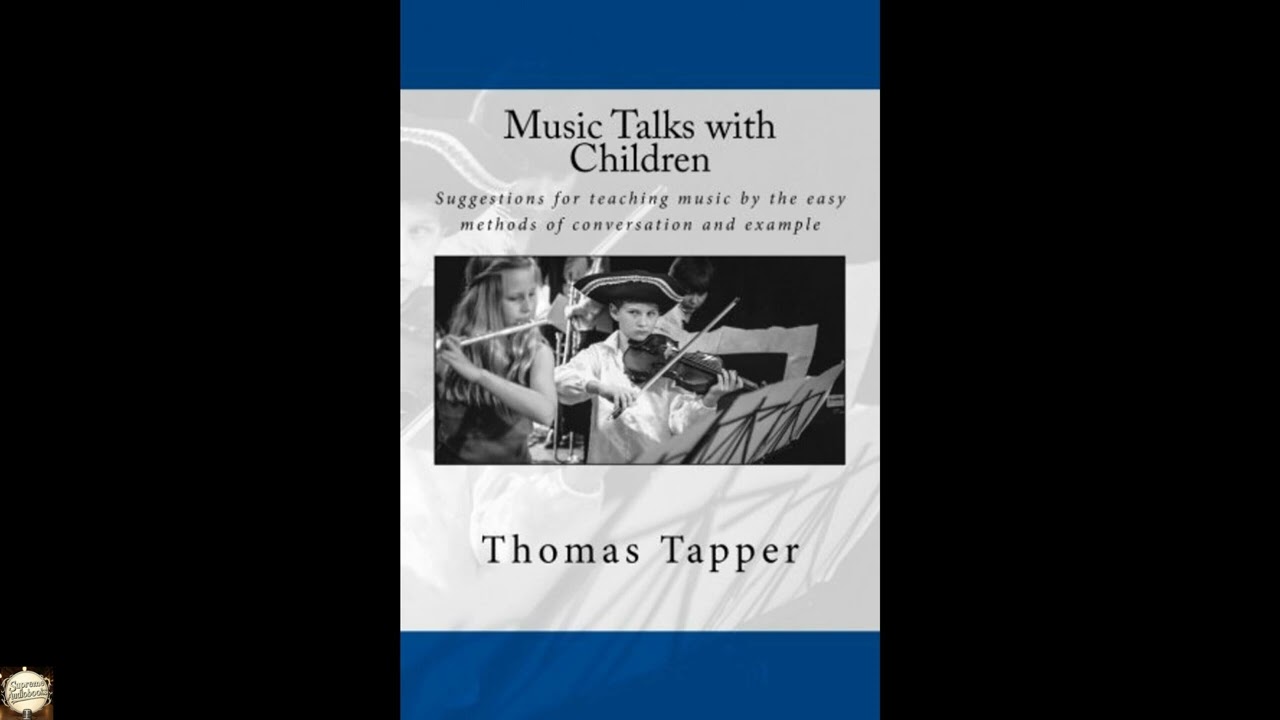
Music Talks with Children
"Music Talks with Children" by Thomas Tapper offers more than just a historical curiosity; it presents a profound and enduring argument for the power of music in a child's development, a message as relevant today as it was over a century ago. Far from being a dry academic treatise, this remarkable book unfolds as a series of gentle conversations and imaginative lessons, inviting young minds – and those who guide them – into the magical realm of sound, rhythm, and melody. Tapper's approach isn't about creating virtuosos overnight, but about nurturing an innate love for music, building a foundational understanding that fosters creativity, discipline, and emotional intelligence. For anyone seeking to inspire a child's connection to the arts, or simply wishing to understand the historical roots of modern pedagogical thought, this insightful classic provides a comforting, instructive hand. The setting for these "talks" often feels like a warm, sunlit classroom or perhaps a cozy parlor, where a sympathetic teacher – Thomas Tapper himself, it would seem – gathers a small group of attentive children. Their distinct personalities and varying levels of understanding emerge through the interactions, even if their names are not always explicitly stated. The central purpose is clear: to demystify music, to strip away its perceived complexities and reveal its fundamental components in a way that resonates with youthful perception. Tapper doesn't lecture; he engages, he questions, and he listens, always guiding with gentle encouragement and a deep respect for the child's perspective. The story arc isn't a dramatic adventure with a hero's quest, but rather a progressive unfolding of musical concepts, mirroring the gradual blossoming of understanding within the children. We see them begin with the most basic elements: the difference between sound and noise, the concept of rhythm through simple clapping games, and the wonder of a single musical note. Tapper guides them through the landscape of the musical staff, explaining sharps and flats not as arbitrary symbols, but as changes in character and mood. He introduces them to the families of instruments, making each one a distinct personality with its own voice and role in the orchestra, often through imaginative stories and vivid comparisons. The challenge is consistently how to translate abstract musical theory into tangible, relatable experiences for small hands and questioning minds, transforming potential boredom into a delightful discovery. As the lessons progress, the children grow visibly more confident, learning to identify intervals, understand basic harmony, and even grasp rudimentary compositional ideas, culminating in a quiet satisfaction of awakened curiosity and a burgeoning appreciation for the universal language that music offers. Thomas Tapper, an influential American music educator, composer, and author, dedicated a significant portion of his life to making music accessible and understandable for students of all ages. Born in Canton, Massachusetts, in 1864, Tapper grew up in a period when music education was often reserved for the elite or delivered through rigid, uninspiring methods. He received his musical training at various institutions, including the American Institute of Applied Music and the Institute of Musical Art, which later became the Juilliard School. These formative experiences clearly shaped his progressive pedagogical philosophy, one that championed engagement and enjoyment over rote memorization. Throughout his distinguished career, Tapper held prominent positions, including lecturer at New York University and associate director of the Institute of Musical Art. His work extended far beyond the classroom; he became a prolific writer, penning numerous books that aimed to revolutionize music teaching. Titles such as "First Studies in Music Biography," which introduced young readers to the lives of great composers, and "The Music Supervisor," a guide for educators, stand alongside "Music Talks with Children" as cornerstones of his educational legacy. His contributions were vital in developing structured, yet imaginative, curricula for public schools and conservatories alike, influencing generations of music teachers and students across the United States until his passing in 1941. He was a true pioneer in American music pedagogy. At its core, "Music Talks with Children" champions the democratization of music education, arguing implicitly that a love for music is not an inherited talent but a cultivated appreciation, available to every child regardless of their background. Tapper’s method bypasses the formality often associated with classical training, instead presenting musical concepts in simple, relatable terms. For example, when he teaches the rhythm of a quarter note, he doesn’t just show the symbol; he connects it to a familiar action, like walking, making the abstract concrete and universally understandable to a small child who might not yet read a note. This approach underscores the belief that music is an inherent human experience, waiting to be unlocked in everyone. Another profound theme is the power of learning through play and narrative. Tapper consistently frames lessons as stories or games, transforming potentially dry theory into an engaging adventure. He might tell a tale about a lonely little note seeking its family to explain intervals, or personify different instruments, giving them voices and characteristics that children can easily recall. The intrinsic value of music itself also shines through; it is presented not merely as an art to be performed, but as a language for emotional expression and intellectual development. The lessons move beyond identifying notes to discussing how certain melodies make one feel, or how different harmonies create a sense of tension or resolution, fostering a deeper, more personal connection to the art form. "Music Talks with Children" emerged during a particularly fertile period for educational reform in the United States, roughly spanning the late 19th and early 20th centuries. This era, often called the Progressive Era, saw significant societal shifts and a growing emphasis on public education as a means of improving civic life and individual well-being. Educators like John Dewey were advocating for child-centered learning, experiential education, and curricula that were relevant to students' lives, moving away from rigid, authoritarian teaching methods. Tapper’s work fits perfectly into this paradigm, reflecting a broader cultural movement towards nurturing the whole child – mind, body, and spirit – rather than simply filling them with facts. Before this period, music education in schools was often rudimentary, focusing on rote singing or, in more privileged settings, on technical instruction for specific instruments. There was a pressing need for systematic, yet engaging, methods to introduce music appreciation and fundamental theory to a wider student population. Tapper, along with other visionary educators, helped fill this void, developing resources that made music education both accessible and meaningful within the burgeoning public school system. His "talks" offered a blueprint for how to integrate music into the daily lives of children, ensuring that the arts were not an afterthought but a core component of a well-rounded education, reflecting a societal push to enrich the lives of citizens through cultural engagement. To experience "Music Talks with Children" as an audiobook is to welcome a patient, guiding presence directly into your own listening space. The "several hours" run length allows for a deliberate, unhurried pace, perfect for absorbing Tapper's thoughtful lessons without rush. Listen for a narrator's clear, articulate voice, one that embodies Tapper's gentle, encouraging demeanor, bringing his interactions with the children to life and imbuing the pedagogical discussions with warmth. The audio format deepens the atmosphere of discovery and quiet learning, allowing the listener to truly imagine the classroom and the magic of musical awakening, making complex ideas resonate with simple clarity.
Enjoyed Music Talks with Children? A few ways to support us
Audible & Amazon links are affiliate; we may earn a small commission at no extra cost.
About this production
Human narration by a volunteer reader from LibriVox.org, the public-domain audiobook project. LibriVox volunteers record literary works whose copyright has expired in the United States, releasing the resulting recordings into the public domain.
Music Talks with Children by Thomas Tapper. The underlying text is in the U.S. public domain. We do not republish any modern copyrighted edition, translation, or commentary.
The 4K cinematic visuals accompanying this audiobook are generated by an AI image model from prompts derived from the source text. No copyrighted photos, paintings, or stock footage are used. AI generation is disclosed on every video on our YouTube channel as required by YouTube's altered/synthetic content policy.
English subtitles are transcribed from the LibriVox recording with OpenAI Whisper. Translations into the 11 other supported languages are produced by Meta's NLLB-200 neural translation model. No human translator's copyrighted translation is used.
Questions about sourcing or rights? See our DMCA & Sourcing policy or contact us.
Enjoyed this audiobook?
If you'd like to own a copy of Music Talks with Children or hear a professionally produced edition, the links below help support free audiobook production at no extra cost to you.
As an Amazon Associate we earn from qualifying purchases. Audible / print links are affiliate.
![Children's Classics in Dramatic Form, Book Two. [1909] by Augusta Stevenson — free full audiobook](https://img.youtube.com/vi/h4bTKUeuO7U/maxresdefault.jpg)