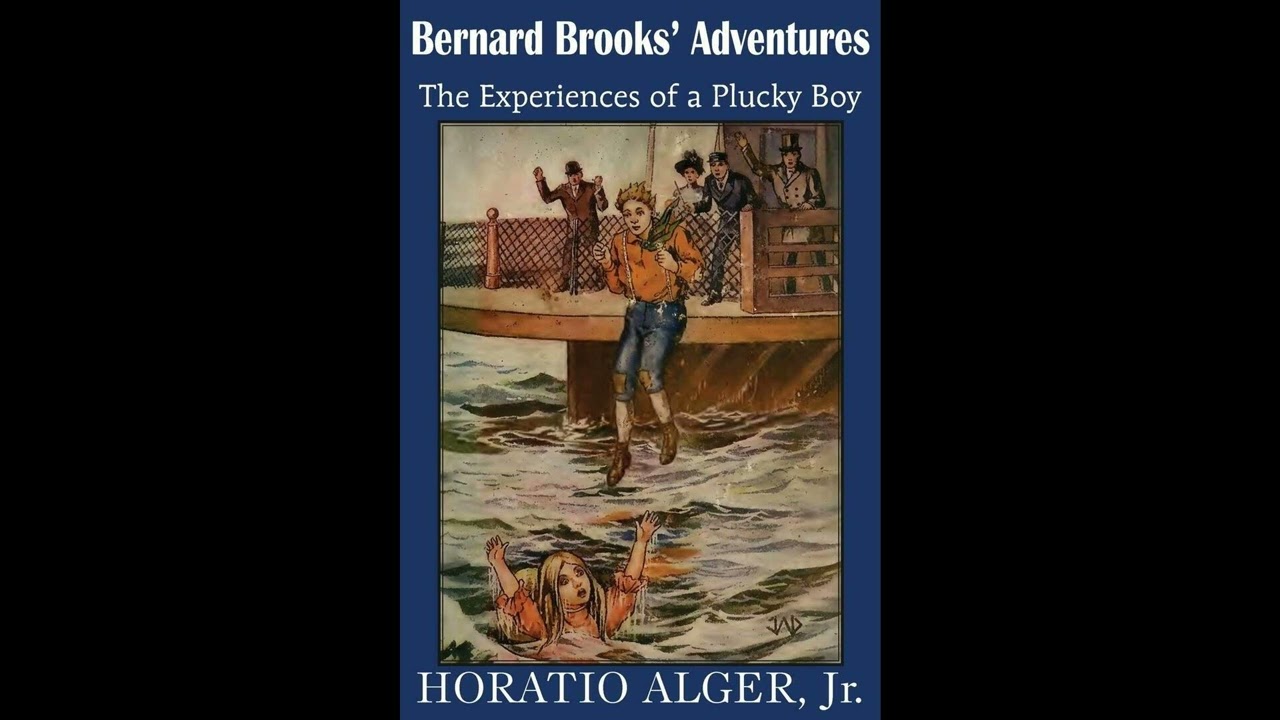
Bernard Brooks' Adventures, the Experience of a Plucky Boy
Horatio Alger Jr.'s "Bernard Brooks' Adventures, the Experience of a Plucky Boy" arrives on SupremeAudiobooks.com not merely as a relic of a bygone era, but as a potent echo of aspirations that resonate fiercely even today. It tells the story of an earnest young man facing overwhelming odds, a narrative structure that has captivated readers for generations and continues to hold a mirror to our own desires for self-improvement and success. At its heart, this tale is an ode to perseverance, an optimistic blueprint for navigating a world that often seems stacked against the individual. It asks us to consider what foundational virtues truly lead to a fulfilling life, suggesting that character and diligence can be as powerful as inherited wealth or privilege. For anyone who has ever dreamed of overcoming adversity through sheer will and good deeds, Bernard Brooks' story offers both comfort and inspiration, reminding us that the spirit of the "plucky boy" still beats strong within us. The story drops us into the bustling, sometimes unforgiving, urban landscape of post-Civil War America, a time of rapid change and stark economic contrasts. Bernard Brooks is precisely what the subtitle promises: a plucky boy, bright-eyed and honest, but without the benefit of family support or material comfort. Orphaned and penniless, he arrives in the city with nothing but the clothes on his back and a determined spirit. His immediate challenge is survival itself: finding food, shelter, and an honest way to earn a living in a place where opportunities are scarce for those without connections. He encounters the harsher realities of city life, from the indifference of strangers to the schemes of unscrupulous characters who would gladly exploit his innocence. Bernard’s central conflict quickly crystalizes as he strives to maintain his integrity amidst the pressures of poverty and temptation. He refuses to compromise his values, seeking out any honorable work he can find, whether it’s selling newspapers, polishing shoes, or running errands. His encounters introduce a varied cast of characters: some are fellow strugglers, some are cynical figures who view Bernard as an easy mark, and others are benevolent individuals who recognize his innate goodness. The arc of his story follows his struggle to rise above his circumstances, consistently demonstrating his honesty, diligence, and unfailing optimism. Through a series of small triumphs and significant setbacks, Bernard learns valuable lessons about human nature and the true meaning of success, gradually finding his footing in a world that initially seemed to offer him no quarter. Horatio Alger Jr. (1832-1899) was an American author whose name became synonymous with the "rags-to-riches" narrative that defined a significant portion of late 19th-century American popular fiction. Born in Chelsea, Massachusetts, Alger was the son of a Unitarian minister, a background that heavily influenced his moralistic storytelling. He graduated from Harvard Divinity School in 1860 and, after a brief and tumultuous tenure as a Unitarian minister, moved to New York City in 1866. It was there, amidst the burgeoning metropolis teeming with both immense wealth and grinding poverty, that he found his true calling: writing moral tales for young boys. Alger became incredibly prolific, reportedly penning over 100 novels, often dictating them to a typist. His works, including famous titles like "Ragged Dick" and "Tattered Tom," consistently featured virtuous, poor boys who, through a combination of hard work, honesty, and a stroke of luck (often involving the timely intervention of a wealthy benefactor), achieved financial success and social standing. Alger's place in the literary canon is complex; while often dismissed by critics for simplistic plots and predictable morality, his stories were immensely popular in their day, selling millions of copies and deeply embedding the myth of the self-made man into the American consciousness. He tapped into a pervasive cultural belief in individualism and the idea that anyone, regardless of their origins, could achieve prosperity through sheer grit and good character. "Bernard Brooks' Adventures" enacts several core themes that are emblematic of Alger's entire body of work. Foremost among these is perseverance through hard work. Bernard never shies away from honest labor, no matter how menial or exhausting. We see this vividly when he diligently cleans a shop floor, going beyond the basic requirements, or when he spends long hours selling papers in the cold, always giving his best effort. His consistent application to his tasks, rather than a single grand gesture, steadily builds his reputation and opportunities. Another powerful theme is unwavering honesty and integrity. Early in the story, Bernard might find a lost wallet. Despite his own desperate hunger and need, he will seek out the rightful owner to return it, often at personal sacrifice. This act of moral fortitude, repeated in various forms, not only defines his character but also serves as the catalyst for the fortuitous encounters that move his story forward. Further themes include the value of kindness and charity, both given and received. Bernard, despite his own lack, often shares his meager earnings or offers a helping hand to someone even worse off than himself, demonstrating a generosity of spirit that transcends his circumstances. These acts of kindness are frequently reciprocated later in the narrative, illustrating a karmic justice that underpins Alger's moral universe. Lastly, the book strongly champions self-reliance and individual initiative. While luck and benefactors play a role, it is Bernard's own decision to pick himself up, to seek employment, and to make the most of every opportunity that truly propels him. He doesn't wait for salvation; he actively creates his own path, embodying the era's strong belief in personal agency. The late nineteenth century, often termed the Gilded Age, provided fertile ground for stories like "Bernard Brooks' Adventures." This was an era of unprecedented industrial expansion, rapid urbanization, and significant economic shifts following the Civil War. Fortunes were being made and lost, and the social fabric was constantly reweaving itself. Waves of immigration brought new populations to burgeoning cities, creating a diverse but often challenging environment for new arrivals and those at the bottom of the economic ladder. In this period of immense change and perceived social mobility, there was a widespread cultural hunger for narratives that offered hope and moral guidance. Alger's stories perfectly fit this niche, serving as a kind of secular sermon for the masses. They reinforced Victorian virtues of thrift, industry, and sobriety, assuring readers that hard work and good character could indeed lead to advancement in a world that often felt chaotic and unjust. The books provided a comforting moral framework and an aspirational blueprint for success to an audience eager for both. Listening to "Bernard Brooks' Adventures" as an audiobook offers a distinct pleasure, allowing the straightforward prose and clear moral lessons to wash over you with an engaging directness. The "several hours" run length makes it perfect for concentrated listening sessions, perhaps during a long walk or while tackling household chores, or even for a thoughtful commute. A skilled narrator will bring Bernard's earnest voice to life, allowing the listener to truly empathize with his struggles and celebrate his small victories. The pacing of Alger's narratives, typically episodic and building on a series of encounters, lends itself wonderfully to the spoken word, maintaining a consistent rhythm that is easy to follow. You can listen for the subtle differences in character voices—the sincerity of Bernard, the gruffness of a foreman, or the warmth of a kind elder—all contributing to the atmosphere of a bygone era, rendered accessible and intimate through the power of narration.
Enjoyed Bernard Brooks' Adventures, the Experience of a Plucky Boy? A few ways to support us
Audible & Amazon links are affiliate; we may earn a small commission at no extra cost.
About this production
Human narration by a volunteer reader from LibriVox.org, the public-domain audiobook project. LibriVox volunteers record literary works whose copyright has expired in the United States, releasing the resulting recordings into the public domain.
Bernard Brooks' Adventures, the Experience of a Plucky Boy by Horatio Alger Jr. The underlying text is in the U.S. public domain. We do not republish any modern copyrighted edition, translation, or commentary.
The 4K cinematic visuals accompanying this audiobook are generated by an AI image model from prompts derived from the source text. No copyrighted photos, paintings, or stock footage are used. AI generation is disclosed on every video on our YouTube channel as required by YouTube's altered/synthetic content policy.
English subtitles are transcribed from the LibriVox recording with OpenAI Whisper. Translations into the 11 other supported languages are produced by Meta's NLLB-200 neural translation model. No human translator's copyrighted translation is used.
Questions about sourcing or rights? See our DMCA & Sourcing policy or contact us.
Enjoyed this audiobook?
If you'd like to own a copy of Bernard Brooks' Adventures, the Experience of a Plucky Boy or hear a professionally produced edition, the links below help support free audiobook production at no extra cost to you.
As an Amazon Associate we earn from qualifying purchases. Audible / print links are affiliate.