About Horatio Alger Jr
America’s cultural landscape of the late 19th century found a powerful voice in the narratives of Horatio Alger Jr., whose tales profoundly shaped the popular understanding of success and self-improvement. Born in Revere, Massachusetts, on January 13, 1832, the son of a Unitarian minister, Alger's early life was marked by academic pursuit. He attended Gates Academy before enrolling at Harvard College, graduating in 1852, then continuing his studies at Harvard Divinity School, from which he graduated in 1860. A brief tenure as a Unitarian minister in Brewster, Massachusetts, preceded his full commitment to a literary career that would define his legacy.
The post-Civil War era offered a burgeoning market for juvenile literature, particularly stories that championed moral fortitude and ambition. Alger, who had already published some poetry and stories, turned his full attention to writing for boys, tapping into the nation's burgeoning industrial spirit and its belief in individual opportunity. His breakthrough came with *Ragged Dick; or, Street Life in New York with the Boot-Blacks*, first serialized in 1867 and published as a book in 1868. This success launched a prolific career that saw him become one of the most widely read authors of his generation.
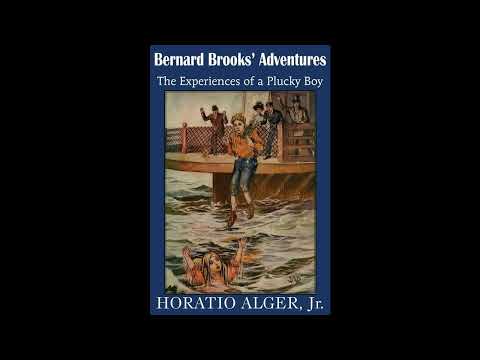
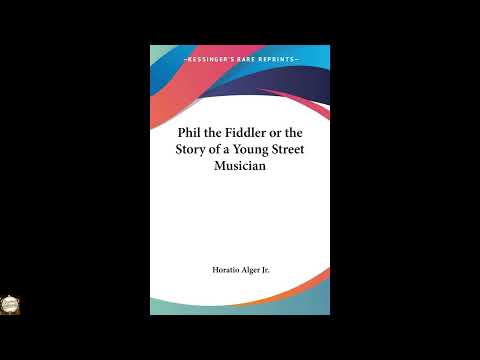
Alger’s immense output centered on the experiences of impoverished but virtuous youths who, through diligence, honesty, and a stroke of good fortune, rose from humble circumstances. Among his scores of titles, *Ragged Dick* remains iconic, chronicling a plucky New York bootblack’s ascent through hard work and good character. *Phil the Fiddler, or the Story of a Young Street Musician*, published in 1872, recounts an Italian boy’s escape from exploitation and his progression towards a better life. In *Driven from Home: or, Carl Crawford's Experience* from 1869, readers follow a boy navigating hardship after leaving an abusive household, eventually finding success through perseverance. *Strive and Succeed*, published in 1872, directly embodies the principle that effort yields reward. *Bernard Brooks' Adventures, the Experience of a Plucky Boy* introduces another young protagonist whose resilience guides him through various trials. These stories consistently presented narratives of upward mobility, providing moral blueprints for young readers.
Across these many volumes, Alger employed a clear, direct prose style, crafting narratives that were easily accessible and highly didactic. His works consistently portrayed the themes of self-reliance, perseverance against adversity, the rewards of honesty, and the transformative power of hard work. A recurring motif involves a benevolent patron appearing at a crucial moment to offer guidance or opportunity, reinforcing the idea that virtue attracts support. For instance, in *Ragged Dick*, the protagonist’s commitment to self-improvement—saving money, learning to read, and maintaining integrity—draws the attention of a wealthy merchant who provides the chance for Dick to secure a respectable clerkship. This formula, while sometimes criticized as simplistic, resonated deeply with contemporary American values.
Horatio Alger Jr. secured an undeniable place in American literary history, his name becoming shorthand for the “rags-to-riches” narrative. His influence extended far beyond his lifetime, shaping generations of readers’ perceptions of individual agency and the potential for social advancement in America. While critical assessments often highlight the formulaic nature of his plots and characters, the enduring cultural power of his optimistic vision of opportunity remains significant. His works instilled a powerful message of hope and personal responsibility, resonating deeply within a society undergoing rapid change.
Today, these narratives, once devoured by eager young readers in print, offer a unique window into the aspirations and moral teachings of a bygone era, waiting to be rediscovered through the simple act of listening to a free audiobook.
More on Wikipedia →