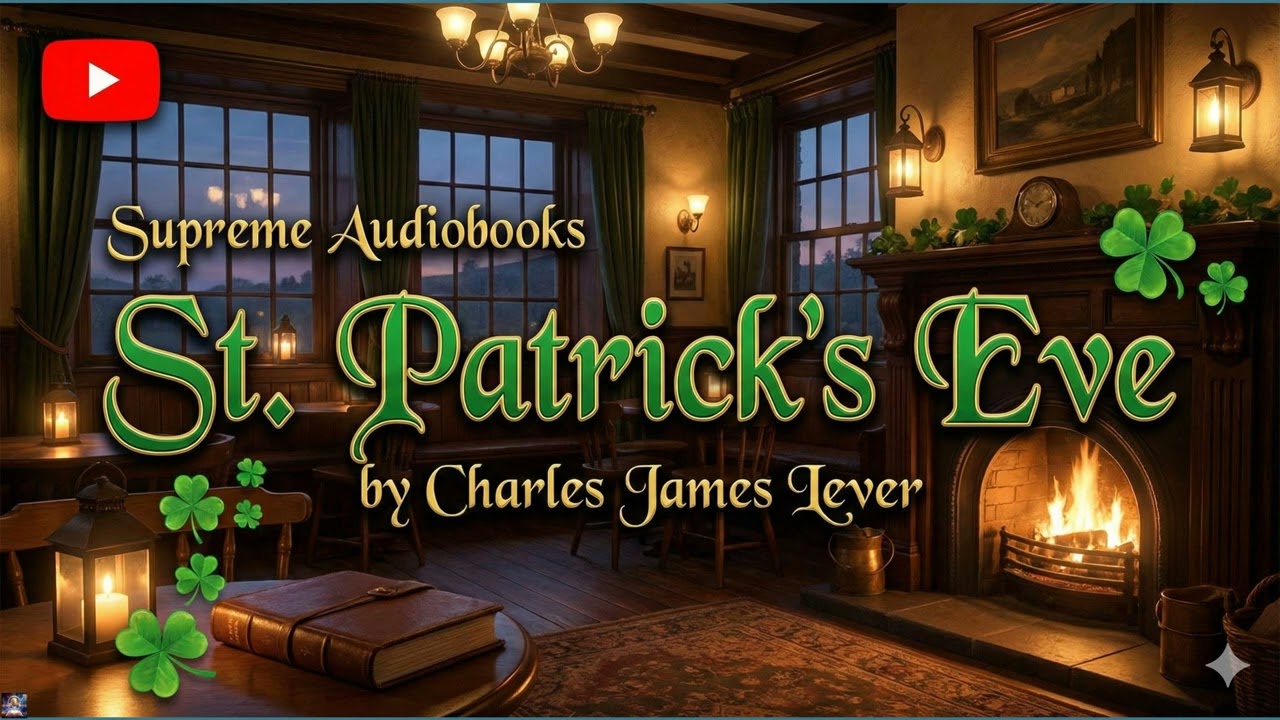
St. Patrick's Eve
Step into a moment of Irish history, a pivotal eve on the calendar that foreshadowed immense change, as Charles James Lever's St. Patrick's Eve unfolds. This shorter novel, first published in 1845, offers a vivid snapshot of Ireland at a critical juncture – on the precipice of profound societal upheaval and the devastating Great Famine. Far from a simple holiday tale, Lever’s work plunges listeners into the deeply stratified world of landlord and tenant, rich and poor, where ancient loyalties clash with emerging realities. It is a story that, despite its specific historical setting, resonates with persistent questions about justice, community, and the human cost of inequality, inviting us to reflect on how past grievances continue to echo in our present. The story transports us to the rugged, often picturesque, landscape of mid-19th century Ireland, where the lives of the gentry and the peasantry are inextricably linked, yet starkly divided. At its heart is the venerable O'Hara family, represented by the proud and somewhat traditional Martin O'Hara, whose ancestral estate faces mounting challenges. His spirited daughter, Bessy, finds herself caught between the expectations of her class and her own burgeoning conscience, often mediating the fraught relationships between her family and their struggling tenants. A particular point of contention arises with the local peasantry, personified by the resolute but economically vulnerable family of Mat Donovan. Their pleas for a reduction in rent, or at least forbearance in a time of growing hardship, set the stage for a simmering conflict. The central conflict quickly crystallizes around a dispute over land and the very means of survival for the tenant families. As St. Patrick's Eve approaches, a night traditionally marked by both celebration and a deepening of local customs, tensions heighten. A crucial legal or financial decision looms, threatening to displace families from their homes and disrupt the delicate balance of the community. A figure of authority—perhaps a zealous agent or a new, less sympathetic landlord—further complicates matters, pushing the O'Haras to make difficult choices that pit their financial stability against their moral obligations. The narrative arc builds towards a dramatic confrontation or revelation, where characters are forced to choose sides, revealing the true nature of their loyalties and the profound impact of their decisions on the lives of those around them. Lever skillfully weaves in elements of local folklore and the strong communal spirit that characterizes the Irish people, even in the face of adversity, creating a narrative that is both deeply personal and broadly societal in its implications. Charles James Lever, born in Dublin in 1806, lived a life as varied and colorful as many of his characters. Initially trained as a physician, he served as a ship's surgeon and later as a medical commissioner, experiences that undoubtedly lent a realism to his observations of different strata of society. He gave up medicine for literature, however, rising to prominence as a novelist in the 1830s and 40s. Lever became a prodigious contributor to the Dublin University Magazine, eventually serving as its editor. His early novels, such as Harry Lorrequer (1839) and Charles O'Malley, The Irish Dragoon (1841), established his reputation for lively, often humorous, depictions of military life and the Irish gentry, earning him comparisons to contemporary literary giants like William Makepeace Thackeray, though his focus remained distinctly on Ireland. Lever spent much of his later life abroad, serving in various diplomatic posts in Florence and Trieste until his death in 1872. This expatriate perspective perhaps sharpened his understanding of Irish identity and politics, allowing him to portray his homeland with both affection and a critical eye. While sometimes criticized for romanticizing certain aspects of Irish life or relying on stereotypical characterizations, Lever's voluminous output offers an invaluable literary record of 19th-century Ireland, particularly the Anglo-Irish gentry class and their interactions with the broader populace. He was a central figure in the Anglo-Irish literary tradition, using his narratives to comment on social change, class relations, and the evolving sense of national identity during a tumultuous period. St. Patrick's Eve vividly brings to life several important themes. One prominent thread concerns social justice and the ethics of landownership. The strained relationship between the O'Haras and the Donovans directly illustrates the systemic inequalities of the landlord-tenant system, where the economic stability of one class directly impacts the survival of another. Lever shows how a landlord’s decision, whether driven by greed or simply by impersonal market forces, can lead to devastating consequences for tenant families, stripping them of their homes and livelihoods. Another significant theme is the erosion of traditional communal bonds in the face of economic hardship and changing social structures. The story suggests that the old ways of reciprocal obligation and community support are under threat, replaced by more rigid, often unforgiving, legalistic approaches to property and debt. A third theme is the burden of responsibility, particularly for those in positions of power. Martin O'Hara, as a man of his time and class, grapples with his familial legacy and his duty to his tenants, highlighting the moral complexities that arise when personal honor collides with economic necessity. Bessy's burgeoning understanding of these dynamics further emphasizes this theme, as she questions the prevailing norms and seeks a more equitable path. Lever also touches upon the resilience of the human spirit and the quiet dignity of those enduring hardship, demonstrating the enduring strength of the Irish people even when faced with overwhelming odds, a characteristic often found in his portrayal of the peasantry. When St. Patrick's Eve appeared in 1845, Ireland was on the verge of its greatest catastrophe: the Great Famine. The year of publication was precisely when the potato blight first manifested, making the novella’s themes of landlord-tenant relations, food security, and social inequality acutely relevant, almost prescient. Politically, the Repeal movement, led by Daniel O'Connell, was at its height, advocating for the dissolution of the Act of Union with Great Britain. There was a palpable sense of political and social tension, as economic distress and calls for national self-determination animated the populace. In the literary world, Victorian literature was flourishing, but Lever provided a unique window into Irish society, often contrasting it with prevailing British sensibilities. His work emerged from a tradition of Anglo-Irish writing that sought to interpret Ireland for both an Irish and a wider British audience, grappling with national character and the complexities of colonial rule. Listening to St. Patrick's Eve as an audiobook allows the inherent drama and character voice to truly shine. The several hours of run time make this a relatively concise yet impactful listening experience, ideal for a sustained single sitting or a few focused sessions. A skilled narrator will bring out the distinct cadences of Lever's prose, particularly in the dialogue, which often captures the rich dialect and expressive nature of Irish speech from the period. You can listen for the subtle shifts in tone that convey the societal divisions, from the more formal utterances of the gentry to the heartfelt, often poetic, language of the peasantry. The pacing of the narration will likely mirror the story's rising tension, building towards its pivotal moments, allowing the atmosphere of anticipation and conflict to fully envelop you. It’s an opportunity to immerse yourself not just in a story, but in the soundscape of a critical moment in Irish history.
Enjoyed St. Patrick's Eve? A few ways to support us
Audible & Amazon links are affiliate; we may earn a small commission at no extra cost.
About this production
Human narration by a volunteer reader from LibriVox.org, the public-domain audiobook project. LibriVox volunteers record literary works whose copyright has expired in the United States, releasing the resulting recordings into the public domain.
St. Patrick's Eve by Charles James Lever. The underlying text is in the U.S. public domain. We do not republish any modern copyrighted edition, translation, or commentary.
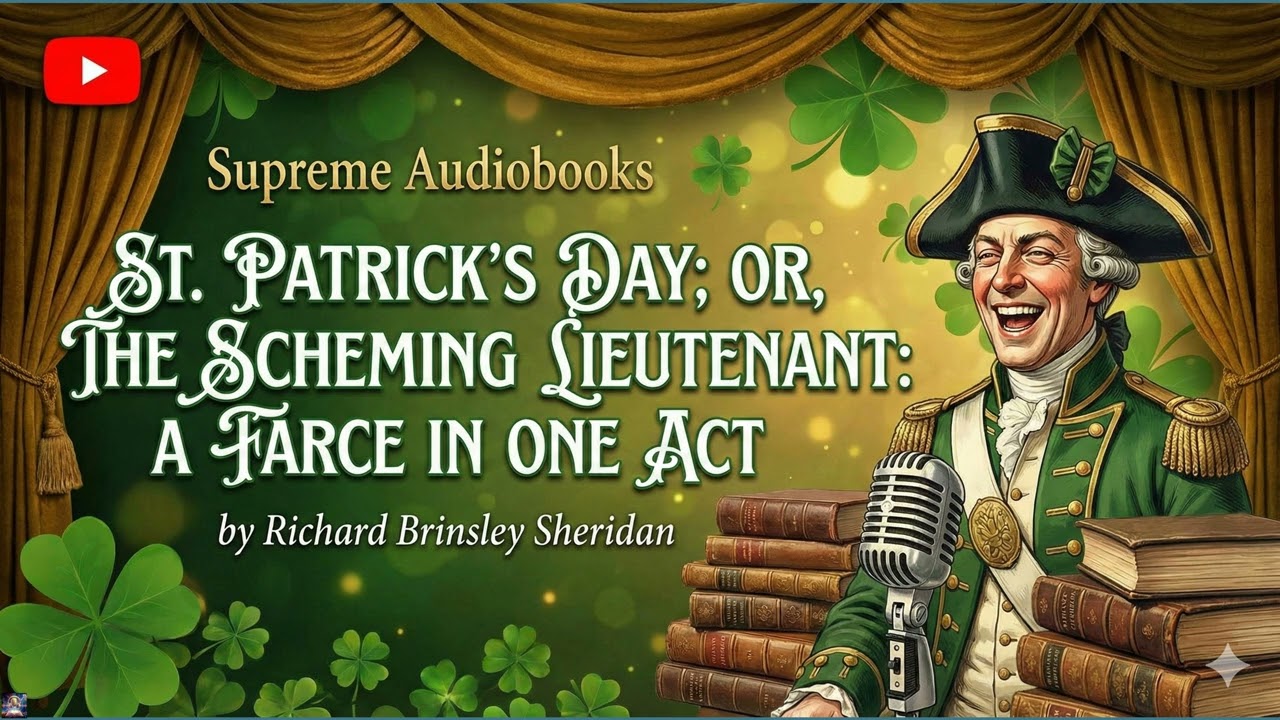
The 4K cinematic visuals accompanying this audiobook are generated by an AI image model from prompts derived from the source text. No copyrighted photos, paintings, or stock footage are used. AI generation is disclosed on every video on our YouTube channel as required by YouTube's altered/synthetic content policy.
English subtitles are transcribed from the LibriVox recording with OpenAI Whisper. Translations into the 11 other supported languages are produced by Meta's NLLB-200 neural translation model. No human translator's copyrighted translation is used.
Questions about sourcing or rights? See our DMCA & Sourcing policy or contact us.
Enjoyed this audiobook?
If you'd like to own a copy of St. Patrick's Eve or hear a professionally produced edition, the links below help support free audiobook production at no extra cost to you.
As an Amazon Associate we earn from qualifying purchases. Audible / print links are affiliate.