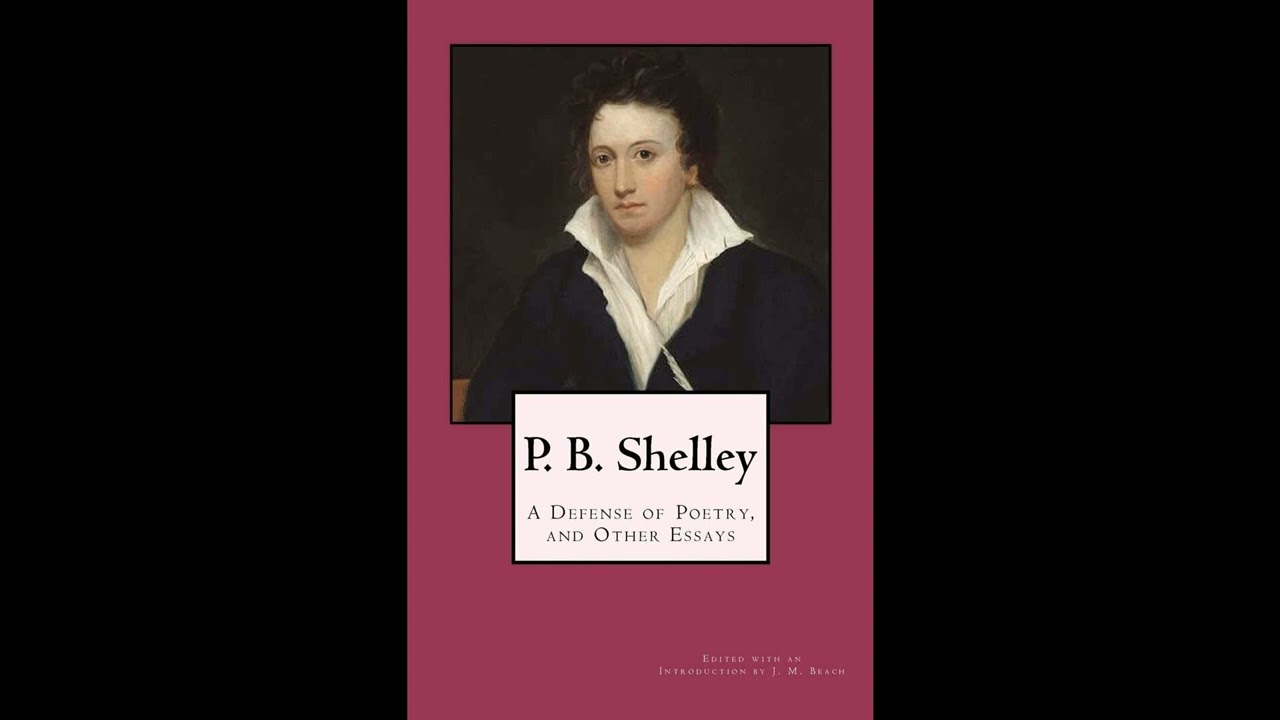
P. B. Shelley: A Defense of Poetry, and Other Essays
Percy Bysshe Shelley's A Defense of Poetry, and Other Essays isn't just a historical document; it's a resounding call to arms for the creative spirit, a powerful argument for why art matters, and why it's more than mere entertainment. In an age often dominated by logic, data, and utility, Shelley reminds us that the human spirit craves and needs beauty, imagination, and the transcendent truth poetry can unveil. This collection, anchored by his seminal essay, offers listeners an urgent reminder of the poet's unique place in society – not as a frivolous decorator of words, but as an unacknowledged legislator of the world, shaping consciousness and moral progress. It's a foundational text for understanding Romanticism, but its ideas resonate deeply with anyone who believes in the transformative power of art and seeks to understand how it sculpts our very humanity. The central argument in A Defense of Poetry unfolds as a spirited intellectual confrontation against the prevailing attitudes of the early 19th century, which often diminished poetry to a pleasant but ultimately superfluous diversion. Shelley steps onto this intellectual battlefield to elevate and redefine poetry's role. His initial move is to distinguish the faculty of imagination – which he sees as the very wellspring of all creative thought and moral sympathy – from the more prosaic faculty of reason. Reason, in his view, merely enumerates and classifies existing knowledge, while imagination creates new connections, new truths, and new forms of beauty. Shelley’s argument builds systematically, illustrating how poetry, as the highest expression of this imagination, functions not just as an aesthetic pursuit but as a profound moral and social engine. He takes us through history, showing how poets, from ancient Greece to his own time, initiated progress, expanding human capacity for empathy and understanding. He posits that poetry indirectly shapes the laws, customs, and ethical frameworks of society by influencing the way individuals perceive and relate to the world around them. It is through the poet's vision that humanity can glimpse higher ideals and strive for a more just and beautiful existence. The "Other Essays" collected here complement and extend Shelley’s philosophical and political concerns. These additional pieces frequently examine themes of ethics, justice, and governmental power, reflecting the passionate belief in individual liberty and the power of ideas that permeates his "Defense." Listeners will find Shelley contemplating the complexities of moral action, the potential for human perfectibility, and the societal implications of various philosophical stances. While each essay stands on its own, they collectively offer a broader panorama of Shelley’s intellectual landscape, showing a mind relentlessly engaged with the pressing questions of his era and beyond. Percy Bysshe Shelley (1792-1822) stands as one of the most brilliant and controversial figures of English Romanticism, a poet whose life was as dramatic and unconventional as his verse. Born into an affluent, aristocratic family in Horsham, Sussex, Shelley was educated at Eton and Oxford, but his radical ideas put him at odds with the establishment. He was expelled from University College, Oxford, for co-authoring "The Necessity of Atheism," a pamphlet advocating for rational inquiry over dogmatic belief. This early defiance set the tone for a life lived on the fringes of polite society, marked by unconventional relationships, strong political convictions, and a fervent dedication to idealism. Shelley's poetic output, though tragically cut short by his death at sea at the age of 29, includes some of the most enduring lyrics and philosophical dramas in the English language. He is known for iconic poems such as "Ozymandias," a stark meditation on the transience of power; "Ode to the West Wind," a stirring evocation of nature's destructive and regenerative forces; and "To a Skylark," a celebration of untamed joy. His longer, more ambitious works, like Prometheus Unbound, a lyrical drama, showcase his profound belief in human perfectibility and liberation from tyranny. Along with Lord Byron and John Keats, Shelley forms the second generation of Romantic poets, distinguished by intense subjectivity, an embrace of nature, and revolutionary political and social ideals. Despite his early death, Shelley’s influence on subsequent generations of writers and thinkers has been immense. He championed liberty, justice, and the power of the imagination against oppression and conformity. His impassioned voice resonated with socialists, anarchists, and proponents of reform throughout the 19th and 20th centuries. His work remains a cornerstone of the literary canon, admired for its lyrical beauty, intellectual depth, and unwavering commitment to humanity's potential for transcendence and betterment. Shelley’s essays, particularly A Defense of Poetry, center on several profound themes, chief among them the redemptive power of imagination. He presents imagination not as a whimsical faculty but as the very essence of human sympathy and moral development. For Shelley, it is through imagination that we can place ourselves in the shoes of another, expanding our understanding and fostering compassion. He argues that poetry, as the highest expression of this imaginative capacity, makes us "moral" by prompting us to identify with experiences beyond our own, thus cultivating empathy and discouraging narrow self-interest. The work thus champions imagination as the wellspring of ethical behavior and social harmony. Another key theme is the social and political utility of poetry. Against critics who saw poetry as useless in a world driven by scientific and economic progress, Shelley boldly asserts its profound practical value. He posits that poets are the true visionaries, the "unacknowledged legislators" who intuit future truths and articulate the moral foundations upon which just societies are built. He points to historical moments where poetic thought preceded and inspired legal or social reform, suggesting that poetry influences human will and action more deeply than direct political discourse. This connection between aesthetic beauty and societal progress underscores Shelley's idealistic vision, aligning art with the pursuit of a better world. The collection also touches upon individual liberty and the pursuit of truth, consistent with Shelley’s broader philosophical outlook, showing how unfettered thought and creative expression are essential for human flourishing. Shelley's A Defense of Poetry emerged from a specific and turbulent cultural moment in early 19th-century Britain. The Industrial Revolution was rapidly reshaping society, emphasizing material progress, scientific innovation, and an increasingly utilitarian worldview that prioritized observable facts and economic efficiency. This climate often viewed poetry and the arts with skepticism, seeing them as unproductive or secondary to the 'real' work of national advancement. A notable catalyst for Shelley’s essay was Thomas Love Peacock’s "The Four Ages of Poetry," which satirically suggested poetry was an outdated art form in a modern, scientific age. Shelley wrote his "Defense" as a direct, impassioned rebuttal, convinced that Peacock’s view dangerously underestimated poetry’s fundamental importance. Politically, the era was characterized by a conservative backlash following the excesses of the French Revolution, leading to repression and a suppression of radical ideas in Britain. Intellectual discourse was heavily influenced by Enlightenment rationalism, which, while valuable, often elevated cold logic above emotional and imaginative truths. The Romantic movement, to which Shelley belonged, was in many ways a direct response to these societal currents, seeking to reassert the value of emotion, individualism, nature, and the sublime. Shelley’s essay, therefore, is not merely an academic argument; it is a fervent declaration of faith in the human spirit and its capacity for imaginative creation, a necessary counter-voice in a world determined to reduce human experience to quantifiable terms. To experience Shelley's eloquent and persuasive arguments as an audiobook is to grant these profound ideas the cadence and resonance they deserve. The sustained length, spanning several hours, allows ample time for his intricate logic and soaring rhetoric to sink in, inviting listeners into direct, intimate conversation with one of history's most articulate defenders of art. A skilled narrator brings Shelley's passionate convictions to life, allowing the listener to appreciate the nuanced shifts in his tone – from rigorous philosophical exposition to moments of lyrical grandeur. The spoken word emphasizes the rhythm of his prose, making his powerful advocacy for imagination and poetry not just understandable, but truly felt, creating an immersive experience that highlights the enduring power and beauty of Shelley’s own language.
Enjoyed P. B. Shelley: A Defense of Poetry, and Other Essays? A few ways to support us
Audible & Amazon links are affiliate; we may earn a small commission at no extra cost.
About this production
Human narration by a volunteer reader from LibriVox.org, the public-domain audiobook project. LibriVox volunteers record literary works whose copyright has expired in the United States, releasing the resulting recordings into the public domain.
P. B. Shelley: A Defense of Poetry, and Other Essays by Percy Bysshe Shelley. The underlying text is in the U.S. public domain. We do not republish any modern copyrighted edition, translation, or commentary.
The 4K cinematic visuals accompanying this audiobook are generated by an AI image model from prompts derived from the source text. No copyrighted photos, paintings, or stock footage are used. AI generation is disclosed on every video on our YouTube channel as required by YouTube's altered/synthetic content policy.
English subtitles are transcribed from the LibriVox recording with OpenAI Whisper. Translations into the 11 other supported languages are produced by Meta's NLLB-200 neural translation model. No human translator's copyrighted translation is used.
Questions about sourcing or rights? See our DMCA & Sourcing policy or contact us.
Enjoyed this audiobook?
If you'd like to own a copy of P. B. Shelley: A Defense of Poetry, and Other Essays or hear a professionally produced edition, the links below help support free audiobook production at no extra cost to you.
As an Amazon Associate we earn from qualifying purchases. Audible / print links are affiliate.