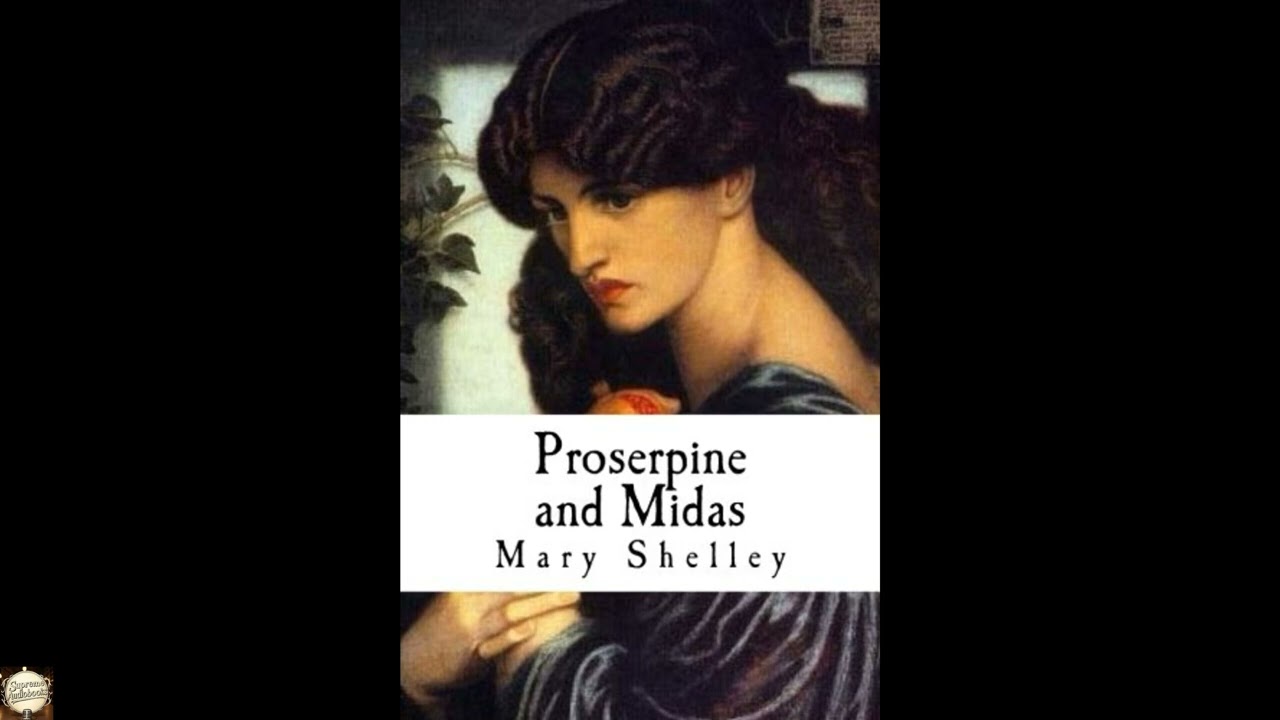
Proserpine and Midas
Beyond the shadows and scientific ambition of her most famous creation lies a different dimension of Mary Shelley's genius: a heartfelt engagement with the eternal power of classical mythology. Proserpine and Midas presents two dramatic poems, originally penned not long after the publication of Frankenstein, which allow us a glimpse into Shelley's broader philosophical and artistic landscape. These works are not merely retellings; they are thoughtful investigations into human emotion, divine power, and the often-painful consequences of desire, rendered with the profound sensitivity and intellectual depth that defines her writing. Listening to these tales today offers a unique opportunity to appreciate Shelley’s versatility and her enduring ability to imbue ancient stories with resonant, immediate meaning, reminding us that the human heart, whether mortal or divine, grapples with universal experiences. The first of these dramatic pieces, Proserpine, draws us into the poignant myth of the goddess Ceres and her beloved daughter. The setting begins in the sun-drenched fields of Sicily, a picture of idyllic innocence where Proserpine gathers flowers. This tranquility is shattered by the unexpected appearance of Pluto, the stern ruler of the underworld, who, struck by Proserpine's beauty, seizes her and carries her away to his subterranean realm. The narrative then shifts to Ceres' immense sorrow. Her grief is not merely personal; it spills over, causing the earth to become barren, crops to wither, and life itself to falter in her profound despair. The story follows Ceres' relentless search for her lost daughter, her pleas to the other gods, and the ultimate struggle for Proserpine's return, highlighting the desperate love of a mother and the devastating impact of loss upon the natural world. The second drama, Midas, transports us to the ancient kingdom of Phrygia, where the ambitious King Midas harbors a singular passion for gold. His tale begins when he kindly assists Silenus, a companion of the god Bacchus. In gratitude, Bacchus grants Midas any wish he desires. Overwhelmed by his avarice, Midas asks for the power to turn everything he touches into gold. Initially, the king rejoices in his new ability, transforming rocks, trees, and even household objects into gleaming metal. However, the swift onset of the golden touch soon reveals its bitter irony and cruel downsides. What initially seemed a blessing quickly transforms into a crushing burden, forcing Midas to confront the true cost of his insatiable desire. Mary Shelley, born Mary Wollstonecraft Godwin in 1797 in London, inherited a formidable intellectual legacy from her parents: the pioneering feminist philosopher Mary Wollstonecraft and the influential political philosopher William Godwin. Her mother died shortly after her birth, leaving her to be raised by her father, who encouraged her education and introduced her to the radical thinkers and literary figures of the day. This upbringing steeped her in a world of intellectual debate and creative expression, fostering her imaginative spirit from an early age. Her life took a dramatic turn when, at sixteen, she met and eloped with the poet Percy Bysshe Shelley. Their unconventional life together included extensive travels across Europe, particularly Switzerland and Italy, and deep friendships with other Romantic literary giants like Lord Byron. It was during a notorious summer gathering at Byron’s villa on Lake Geneva in 1816 that the challenge was issued to write a ghost story, an inspiration that famously led to the creation of Frankenstein; or, The Modern Prometheus, published anonymously in 1818. This novel solidified her place in literary history, not just as a Gothic novelist, but as a progenitor of science fiction, grappling with profound ethical questions about creation and responsibility. Her life was also marked by personal tragedies, including the deaths of several of her children and the untimely drowning of Percy Bysshe Shelley in 1822. Despite these profound losses, she continued to write and to diligently preserve and edit her late husband's poetic works, maintaining her own literary output until her death in 1851. These mythological dramas, Proserpine and Midas, while less known than Frankenstein, enact themes central to Shelley's broader oeuvre. In Proserpine, the overwhelming grief of Ceres for her lost daughter stands as a powerful testament to maternal love and the devastating nature of loss. The barrenness of the earth, directly linked to Ceres' sorrow, offers a visceral depiction of how personal anguish can resonate through and disrupt the natural order, mirroring perhaps Shelley's own profound experiences with death and mourning. It also touches upon themes of power and subjugation, with Pluto's forceful abduction highlighting the vulnerability of innocence to overwhelming force. Midas, on the other hand, vividly illustrates the destructive power of unchecked desire and the ironic consequences of greed. Midas's initial elation at his golden touch quickly turns to despair as the very elements necessary for life—food, drink, and human connection—are transformed into inanimate, valueless metal. This fable serves as a cautionary tale against avarice, demonstrating how true wealth lies not in material possessions but in the simple, fundamental aspects of existence. Both stories, through their classical frameworks, allow Shelley to meditate on human failings and divine interventions, reflecting on justice, suffering, and the fragile balance between human aspiration and fate. The early 19th century, the period in which Mary Shelley wrote, was a time of immense intellectual and artistic ferment, dominated by the Romantic movement. This era saw a renewed interest in ancient Greece and Rome, not merely for classical scholarship, but as a source of emotional and philosophical inspiration. Romantic poets and writers often revisited classical myths, seeking to inject them with contemporary psychological depth and personal resonance, moving beyond dry scholarly retellings to find universal human truths. Shelley’s decision to adapt these myths into dramatic poems aligns perfectly with this trend, allowing her to put her own stamp on narratives that had been told for millennia. Furthermore, the format of these plays, likely intended as "closet dramas" for reading aloud rather than elaborate stage productions, was common among writers of the time who wanted to explore dramatic forms without the constraints of theatrical staging. This allowed Shelley the freedom to focus on lyrical language and emotional intensity. Listening to Proserpine and Midas as an audiobook brings Mary Shelley’s elegant and emotionally charged language to life in a unique way. The spoken word allows the listener to fully appreciate the lyrical quality of these dramatic poems, enhancing the impact of Ceres’ cries of despair or Midas’s horrified realization. A skilled narrator can modulate pacing and voice to distinguish characters, delivering the dramatic tension and emotional nuances intended by the author. The run length, several hours in total, makes these pieces ideal for focused listening, perhaps over a few sittings, allowing for proper reflection on the intertwined themes of love, loss, desire, and consequence. It is an opportunity to hear these ancient narratives filtered through the empathetic and profound imagination of one of literature’s most enduring voices, experiencing the atmosphere and dialogue as Shelley herself might have envisioned them.
Enjoyed Proserpine and Midas? A few ways to support us
Audible & Amazon links are affiliate; we may earn a small commission at no extra cost.
About this production
Human narration by a volunteer reader from LibriVox.org, the public-domain audiobook project. LibriVox volunteers record literary works whose copyright has expired in the United States, releasing the resulting recordings into the public domain.
Proserpine and Midas by Mary Shelley. The underlying text is in the U.S. public domain. We do not republish any modern copyrighted edition, translation, or commentary.
The 4K cinematic visuals accompanying this audiobook are generated by an AI image model from prompts derived from the source text. No copyrighted photos, paintings, or stock footage are used. AI generation is disclosed on every video on our YouTube channel as required by YouTube's altered/synthetic content policy.
English subtitles are transcribed from the LibriVox recording with OpenAI Whisper. Translations into the 11 other supported languages are produced by Meta's NLLB-200 neural translation model. No human translator's copyrighted translation is used.
Questions about sourcing or rights? See our DMCA & Sourcing policy or contact us.
Enjoyed this audiobook?
If you'd like to own a copy of Proserpine and Midas or hear a professionally produced edition, the links below help support free audiobook production at no extra cost to you.
As an Amazon Associate we earn from qualifying purchases. Audible / print links are affiliate.