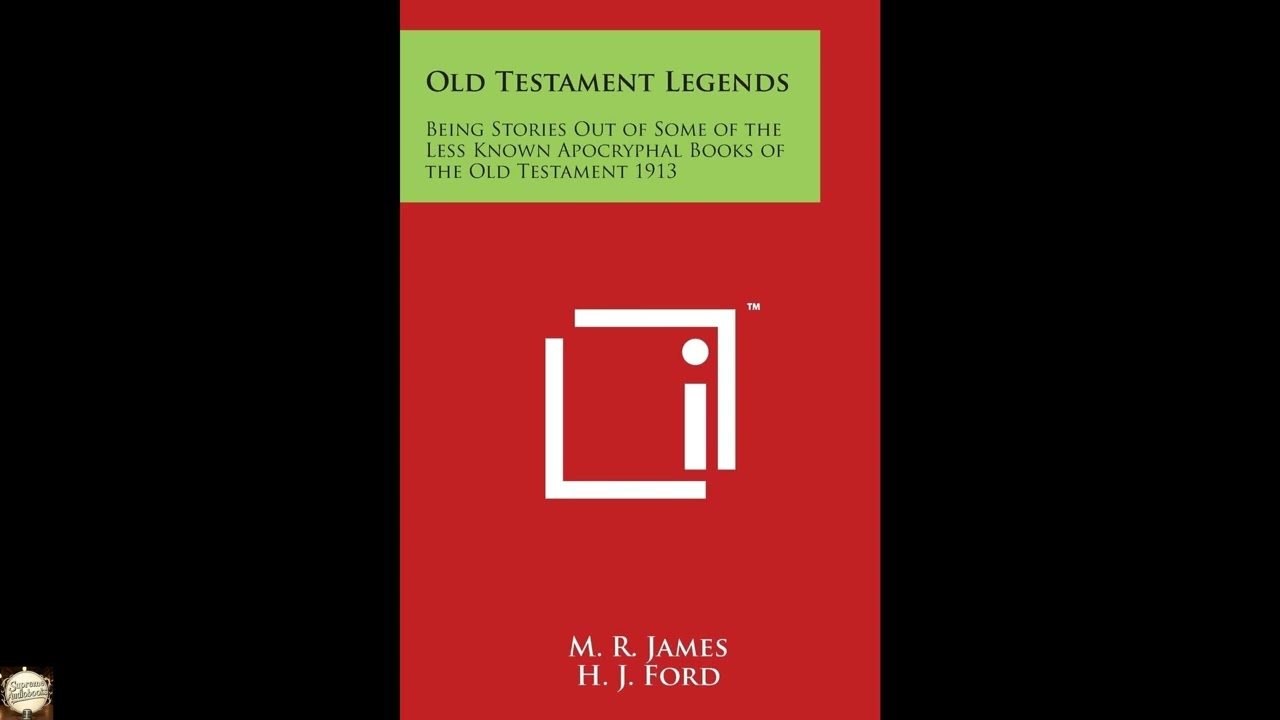
Old Testament Legends: Being Stories Out of Some of the Less Known Apocryphal Books
Step into a hidden chamber of ancient lore, where familiar biblical figures walk new paths and forgotten narratives illuminate the shadows of early religious thought. Old Testament Legends: Being Stories Out of Some of the Less Known Apocryphal Books invites listeners to rediscover a literary heritage often relegated to the margins of theological discourse. These are not merely curiosities; they are narratives that once shaped understanding, fueled debates, and provided profound moral instruction for generations. By presenting these lesser-known texts, this collection offers an unparalleled opportunity to grasp the expansive and often contested scope of what constituted sacred storytelling in the centuries before and after the turn of the common era, providing crucial context for the spiritual and cultural landscape from which Western civilization emerged. This compilation unveils a collection of narratives that extend and elaborate upon the foundational stories and characters found in the canonical Old Testament. Listeners will encounter figures like Adam and Eve wrestling with the consequences of their actions long after their expulsion from Eden, facing new temptations and divine pronouncements. Other tales follow the patriarchs and prophets through trials of faith and miraculous interventions, offering glimpses into their lives and teachings that provide a different texture than the more concise canonical accounts. Here, the world is often more overtly populated by angels and demons, divine judgments are meted out with striking specificity, and human piety is tested against overwhelming odds, emphasizing the constant interplay between the mundane and the miraculous. The stories frequently address questions left unanswered by the mainstream scriptures, filling in gaps and providing elaborate backstories for biblical events. From detailed accounts of prophetic visions that foretell apocalyptic futures to the sagas of righteous individuals confronting injustice within their communities, these legends often function as didactic parables, reinforcing moral precepts and theological beliefs through dramatic narrative. The arc of these stories typically moves from initial crisis or moral challenge toward a resolution often involving divine intervention, showcasing the rewards of faithfulness and the consequences of apostasy, all while painting a vivid picture of ancient Jewish life, its customs, and its deepest spiritual aspirations. The "author" of these ancient legends is not a single individual but a multitude of voices spanning centuries, reflecting the collective spiritual and intellectual efforts of diverse Jewish communities. The texts comprising the Apocrypha, from which these legends are drawn, were written primarily during the Hellenistic and Roman periods, roughly between the third century BCE and the first century CE. They represent a significant body of literature produced during the intertestamental period – a time of intense cultural exchange, political upheaval, and theological development in Jewish history. While often not accepted into the Protestant Old Testament canon, many of these books are considered canonical in the Catholic, Orthodox, and certain other Christian traditions, highlighting the complex and evolving nature of scriptural authority. These works emerged from various locations across the ancient Near East, including Palestine, Egypt, and Mesopotamia, and were originally composed in languages such as Hebrew, Aramaic, and Greek. They represent the diverse theological perspectives and literary styles prevalent during a formative era. The ongoing debates about their inclusion in various canons underscore their unique position: they are neither entirely mainstream nor entirely outside the spiritual heritage of Judeo-Christian thought, offering a valuable lens through which to understand the development of religious ideas and the process of canonization itself. Among the prominent themes woven through these ancient legends is the assertion of divine justice. Stories like that of Susanna, a virtuous woman falsely accused by lecherous elders, powerfully illustrate the conviction that God intervenes to protect the innocent and expose the wicked. Susanna's unwavering faith in the face of certain death, and her eventual vindication through the wisdom of Daniel, serves as a poignant example of righteousness rewarded. Another pervasive theme is the omnipresence of good and evil and the constant spiritual struggle confronting humanity. The Book of Enoch, for instance, dramatically expands on the genesis of evil through the narrative of the Watchers, fallen angels who corrupted humanity, offering an elaborate cosmological explanation for suffering and sin that resonated deeply with ancient audiences. Furthermore, the pursuit of wisdom and moral instruction is a core concern. Texts like the Wisdom of Solomon and Sirach, while not extensively featured in this Legends collection, inform the ethical framework of many apocryphal tales. The emphasis on filial piety, charity, and steadfast devotion to God’s law, often against significant temptation or persecution, demonstrates the profound importance of living a righteous life as a pathway to divine favor and ultimate salvation. These narratives continually return to the idea of covenant faithfulness, portraying how individuals and communities demonstrate their allegiance to God through their actions and how God, in turn, remains faithful to His promises, even when human beings falter. The emergence of these texts can be squarely placed within the tumultuous historical context of the intertestamental period. Jewish communities faced profound challenges during this time, grappling with the cultural influence of Hellenism following the conquests of Alexander the Great and later enduring Roman occupation. Politically, the struggle for self-determination against foreign empires was a constant undercurrent, fostering a sense of longing for messianic deliverance. Culturally, there was a fervent intellectual and spiritual activity, with various Jewish sects — Pharisees, Sadducees, Essenes — developing distinct interpretations of the Torah and competing visions for the future. These conditions provided fertile ground for the creation of new narratives that sought to interpret past events, explain present hardships, and offer hope for the future. These apocryphal writings served multiple purposes: they provided moral guidance in a complex world, offered theological explanations for phenomena not fully addressed in earlier scriptures, and often presented apocalyptic visions that promised divine intervention and the ultimate triumph of good over evil. They were a means of preserving identity, reinforcing communal values, and sustaining faith during periods of profound uncertainty and cultural pressure. The legends helped bridge the conceptual gap between the written law and the lived experience of the Jewish people, articulating a broader understanding of God's interaction with humanity and the divine plan for history. Listening to Old Testament Legends as an audiobook offers a singular opportunity to connect with these stories in a way that echoes their original reception. Many of these tales originated in an oral tradition, meant to be heard and recited, their impact heightened by the human voice. A skilled narrator can bring the ancient world to life, distinguishing characters like the wise Daniel, the steadfast Susanna, or the visionary Enoch with subtle shifts in tone and pacing. The approximately several-hour runtime allows for a sustained immersion into these distinct yet interconnected narratives, allowing listeners to absorb their profound moral and theological messages without interruption. Pay attention to how the narration conveys the gravitas of divine pronouncements, the intensity of human struggle, and the often-mystical atmosphere of these tales, transforming them from mere words on a page into an immediate, resonant experience.
Enjoyed Old Testament Legends: Being Stories Out of Some of the Less Known Apocryphal Books? A few ways to support us
Audible & Amazon links are affiliate; we may earn a small commission at no extra cost.
About this production
Human narration by a volunteer reader from LibriVox.org, the public-domain audiobook project. LibriVox volunteers record literary works whose copyright has expired in the United States, releasing the resulting recordings into the public domain.
Old Testament Legends: Being Stories Out of Some of the Less Known Apocryphal Books. The underlying text is in the U.S. public domain. We do not republish any modern copyrighted edition, translation, or commentary.
The 4K cinematic visuals accompanying this audiobook are generated by an AI image model from prompts derived from the source text. No copyrighted photos, paintings, or stock footage are used. AI generation is disclosed on every video on our YouTube channel as required by YouTube's altered/synthetic content policy.
English subtitles are transcribed from the LibriVox recording with OpenAI Whisper. Translations into the 11 other supported languages are produced by Meta's NLLB-200 neural translation model. No human translator's copyrighted translation is used.
Questions about sourcing or rights? See our DMCA & Sourcing policy or contact us.
Enjoyed this audiobook?
If you'd like to own a copy of Old Testament Legends: Being Stories Out of Some of the Less Known Apocryphal Books or hear a professionally produced edition, the links below help support free audiobook production at no extra cost to you.
As an Amazon Associate we earn from qualifying purchases. Audible / print links are affiliate.