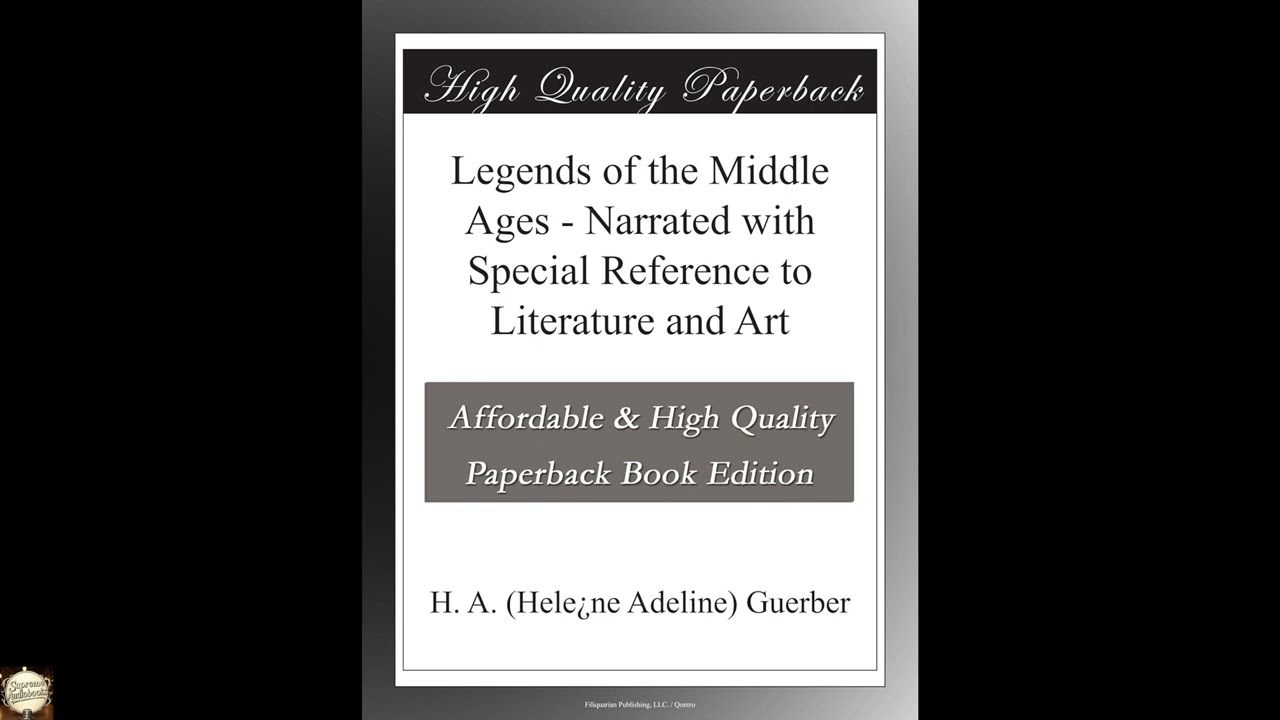
Legends of the Middle Ages - Narrated with Special Reference to Literature and Art
"Legends of the Middle Ages - Narrated with Special Reference to Literature and Art" offers more than a simple collection of ancient tales; it provides a comprehensive guide to the foundational narratives that shaped European imagination. This audio presentation invites listeners to a grand salon of historical storytelling, where the heroic exploits of knights, the miracles of saints, and the dramatic sagas of kings are not merely recounted, but illuminated by their enduring influence on subsequent generations of artists, poets, and writers. Understanding these stories means connecting with the roots of our shared narrative heritage, recognizing how motifs, character archetypes, and moral quandaries from the medieval world continue to echo today. From chivalric ideals to the stark heroism of the Nibelungenlied, these legends laid groundwork for much of what we consider classic, speaking directly to universal questions of faith, duty, love, and sacrifice. The content in "Legends of the Middle Ages" spans a wide array of narrative traditions, drawing from the breadth of European lore during its formative centuries. Listeners will encounter oral traditions gradually committed to parchment, giving rise to enduring epics and romances. The scope includes the celebrated cycles of Arthur and his Knights of the Round Table, detailing quests for honor and the Holy Grail, the poignant betrayals within their ranks, and the sorrowful dissolution of their fellowship. Figures like Sir Lancelot and Queen Guinevere reflect larger societal ideals and vulnerabilities. Beyond Camelot, narratives extend to Charlemagne's Frankish court, where the valiant Paladin Roland makes his legendary stand at Roncesvalles. This segment showcases intense loyalty and martial prowess, framed by conflicts between Christian Europe and its perceived threats. A distinct thread follows the tragic Germanic sagas, notably the tale of Siegfried, the dragon-slayer, and the Burgundian court, leading to the dramatic confrontations and fates depicted in the Nibelungenlied. These narratives foreground themes of vengeance, dynastic struggles, and the inexorable power of fate, presenting a starker vision of heroism. The presentation also embraces tales of early saints and martyrs, depicting lives of profound devotion and steadfast faith. These stories, often serving as moral exemplars, portray the spiritual dimension of medieval life, emphasizing virtues like humility and perseverance. Across these diverse accounts, a common thread emerges: the human struggle against adversaries, the search for meaning, and the persistent desire for order, justice, and spiritual grace. The authorship of "Legends of the Middle Ages - Narrated with Special Reference to Literature and Art" is not attributed to a single individual, reflecting the communal and evolving nature of the narratives it collects. This volume represents the culmination of countless generations of oral tradition, scribal transcription, and scholarly interpretation. The legends themselves originated from a largely anonymous medieval world, where poets, bards, and chroniclers contributed incrementally to a vast body of lore, often adapting stories to suit local customs or religious beliefs. Many foundational texts were composite creations, growing over centuries through the efforts of numerous, unnamed, contributors. The specific editorial approach—providing "Special Reference to Literature and Art"—points to a later era of academic and cultural revival, likely during the nineteenth or early twentieth century. This period saw a widespread renewed interest in the medieval past, not merely for its historical events, but for its artistic and literary output. Scholars and educators recognized the crucial role these ancient stories played in shaping later European culture, from Shakespeare to Romantic poetry, and from Pre-Raphaelite paintings to the very structure of fantasy literature. This work served as an invaluable guide for bridging historical sources and their subsequent artistic reinterpretations. The themes resonating throughout "Legends of the Middle Ages" are as varied as they are profound, offering a window into the core values of medieval society and explaining their lasting appeal. One prominent theme is heroism and chivalry, particularly as embodied by figures like King Arthur's knights or Charlemagne's paladins. These tales often present a clear moral code, demanding courage, loyalty, and a commitment to justice, even when facing overwhelming odds. Roland's final stand, for instance, is a profound illustration of unwavering duty and sacrifice, a narrative echoed in countless subsequent military histories and literary portrayals. Another central theme is faith and divine providence, which underpins many saintly legends and crusader narratives. These stories frequently depict the intervention of God in human affairs, illustrating the power of prayer and the ultimate triumph of spiritual truth. The quest for the Holy Grail, for example, is not merely a physical pursuit but a spiritual one, testing the moral fortitude of its seekers. Alongside these ideals, the tales also reckon with the complexities of love and betrayal. The tragic romance of Tristan and Iseult, or the infidelities within Arthur's court, showcase the destructive power of illicit passions and fractured loyalties. These dramatic human conflicts provided rich material for troubadours and poets of the age, and later inspired opera and drama, influencing courtly love tradition and psychological realism in subsequent literature. The legends themselves arose from a dynamic and often tumultuous period in European history, roughly spanning from the fall of the Roman Empire to the dawn of the Renaissance. This era was marked by the consolidation of Christian faith, the rise of feudal systems, and frequent conflicts between kingdoms. Oral traditions flourished alongside the slow emergence of written literature. The tales of Arthur, for example, gained prominence during Anglo-Saxon incursions, reflecting a yearning for heroic leadership, while Charlemagne sagas bolstered the legitimacy of his empire. A compilation like "Legends of the Middle Ages," with its explicit "Special Reference to Literature and Art," points to a later era of historical scholarship and cultural revival, likely in the nineteenth or early twentieth century. This period saw a profound fascination with the medieval past, recognizing these ancient legends' foundational influence on subsequent European culture, bridging two eras. Listening to "Legends of the Middle Ages - Narrated with Special Reference to Literature and Art" as an audiobook transforms a potentially academic text into a living experience. Hearing these stories allows for a direct connection to their oral origins. A skilled narrator can differentiate between the various cycles—the epic grandeur of Germanic sagas, the courtly elegance of Arthurian romances, or the reverent tone of saintly narratives—through nuanced vocal performance. The narrator's voice becomes a guiding presence, bringing clarity to the specific references to art and literature that give this work its unique perspective. With a run length of several hours, this audio production is perfectly suited for extended listening or revisiting individual segments, making it an ideal companion for thoughtful reflection.
Enjoyed Legends of the Middle Ages - Narrated with Special Reference to Literature and Art? A few ways to support us
Audible & Amazon links are affiliate; we may earn a small commission at no extra cost.
About this production
Human narration by a volunteer reader from LibriVox.org, the public-domain audiobook project. LibriVox volunteers record literary works whose copyright has expired in the United States, releasing the resulting recordings into the public domain.
Legends of the Middle Ages - Narrated with Special Reference to Literature and Art by Narrated with Special Reference to Literature and Art. The underlying text is in the U.S. public domain. We do not republish any modern copyrighted edition, translation, or commentary.
The 4K cinematic visuals accompanying this audiobook are generated by an AI image model from prompts derived from the source text. No copyrighted photos, paintings, or stock footage are used. AI generation is disclosed on every video on our YouTube channel as required by YouTube's altered/synthetic content policy.
English subtitles are transcribed from the LibriVox recording with OpenAI Whisper. Translations into the 11 other supported languages are produced by Meta's NLLB-200 neural translation model. No human translator's copyrighted translation is used.
Questions about sourcing or rights? See our DMCA & Sourcing policy or contact us.
Enjoyed this audiobook?
If you'd like to own a copy of Legends of the Middle Ages - Narrated with Special Reference to Literature and Art or hear a professionally produced edition, the links below help support free audiobook production at no extra cost to you.
As an Amazon Associate we earn from qualifying purchases. Audible / print links are affiliate.