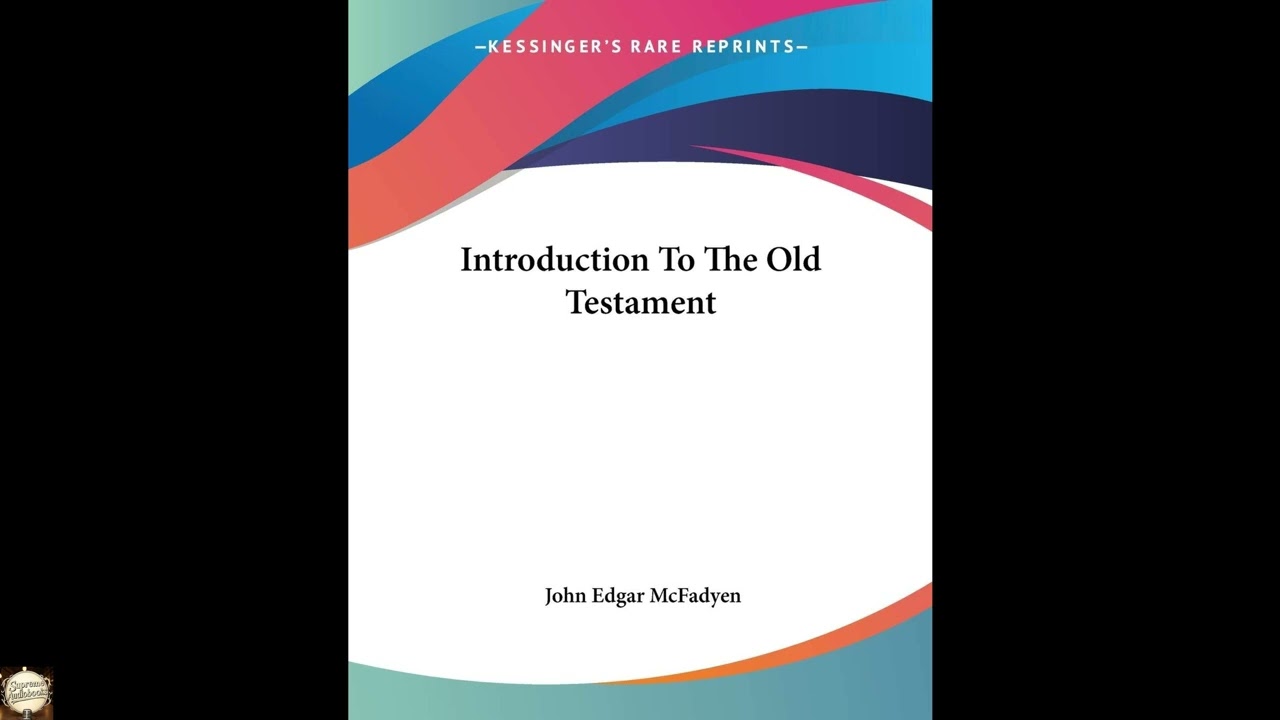
Introduction To The Old Testament
"Introduction To The Old Testament" by John Edgar McFadyen offers far more than a mere academic overview. It stands as a beacon for anyone seeking to understand the foundational texts of Western civilization—texts that have shaped cultures, laws, philosophies, and spiritual beliefs for millennia. This classic volume, authored by a leading scholar of his era, guides listeners through the ancient Hebrew scriptures with both rigorous intellect and profound reverence. It reveals how these disparate books, penned across centuries by diverse hands, coalesce into a powerful narrative of humanity's striving, its search for meaning, and its enduring relationship with the divine. Even today, McFadyen's clear-eyed analysis and his accessible presentation remain essential for students, theologians, and curious minds alike, providing a sturdy framework for approaching one of history's most influential collections of writings. McFadyen's "Introduction To The Old Testament" does not unfold a fictional narrative, but rather meticulously constructs an intellectual framework for understanding the complex literary and historical landscape of the Hebrew Bible. The author commences by orienting the listener within the world of ancient Near Eastern scholarship, setting the stage for an informed reading. He does this by first addressing the very nature of biblical study itself—the questions to ask, the historical contexts to consider, and the critical tools necessary to approach such ancient documents. McFadyen then proceeds systematically, moving through the various literary genres and historical periods represented in the Old Testament, from the earliest traditions of Genesis through the legal codes, the historical chronicles of Israel's kings and prophets, to the profound wisdom literature and poetic expressions of individual faith. The central intellectual arc of McFadyen's argument follows the chronological and thematic development of the Old Testament writings. He treats each section—the Pentateuch, the historical books, the prophetic literature, and the wisdom writings—not as isolated units, but as parts of an evolving theological and literary tradition. The underlying intellectual "conflict" he addresses is the challenge of making sense of seemingly disparate voices, anachronisms, and cultural shifts within the ancient texts. McFadyen endeavors to reconcile a critical, scholarly approach with an appreciation for the enduring spiritual and literary power of the scriptures, guiding his audience through historical discoveries and literary criticism without diminishing the texts' significance. He offers a coherent perspective on how these ancient records came together, what they meant to their original audiences, and what they continue to communicate. John Edgar McFadyen (1870–1933) was a distinguished Scottish Old Testament scholar whose academic career significantly influenced biblical studies in the early twentieth century. Born in Glasgow, McFadyen pursued his theological education at the University of Glasgow and then at the Free Church College, before undertaking further study in Germany, a hub of advanced biblical scholarship at the time. His intellectual rigor and profound understanding of ancient languages quickly established him as a leading voice. McFadyen served for many years as Professor of Old Testament Language, Literature, and Theology at the United Free Church College in Glasgow, a position from which he shaped generations of ministers and scholars. McFadyen distinguished himself by making sophisticated biblical scholarship accessible to a wider audience, moving beyond purely academic circles. He believed that the findings of historical criticism and literary analysis should not remain confined to specialists but ought to enrich the understanding of every thoughtful reader of the Bible. Among his other notable writings are "The Messages of the Prophetic and Priestly Historians," "The Historical Narrative of the Old Testament," and his insightful translation, "The Psalms in Modern Speech." McFadyen’s unique contribution lies in his ability to combine a thorough critical method with a deep appreciation for the spiritual and ethical messages embedded in the ancient texts, securing his place as a foundational figure in Protestant biblical scholarship. McFadyen's "Introduction To The Old Testament" enacts several key intellectual themes that elevate it beyond a mere survey. One central theme is the application of the historical-critical method. McFadyen meticulously demonstrates how understanding the historical context, authorship, and redactional processes behind each biblical book is crucial for accurate interpretation. For instance, he might discuss how the differing legal codes found in Exodus, Leviticus, and Deuteronomy reflect distinct historical periods or theological priorities, urging listeners to appreciate the development of thought rather than assuming a single, monolithic origin. This approach encourages a nuanced reading, moving past simplistic interpretations to reveal the layers of meaning within the scriptures. Another significant theme is the literary appreciation of the Old Testament. McFadyen consistently highlights the aesthetic and structural qualities of the texts, arguing that their power is not solely theological but also deeply artistic. He might draw attention to the sophisticated parallelism within the Psalms or the narrative techniques employed in the Books of Samuel, showing how literary form enhances meaning. This emphasis reveals the Old Testament as a collection of profound human literature—stories, poems, laws, and prophecies crafted with skill and intention—rather than simply a collection of doctrines. Furthermore, McFadyen often touches upon the developing theological and ethical dimensions within the Old Testament, tracing how concepts of justice, covenant, and divine nature mature across different books and eras. John Edgar McFadyen wrote "Introduction To The Old Testament" during a period of intense intellectual ferment in biblical studies, roughly the first third of the twentieth century. This era saw the full impact of nineteenth-century scientific discoveries and higher criticism reshaping theological discourse. Scholars were grappling with archaeological finds that shed new light on ancient Near Eastern cultures, and with linguistic advancements that refined textual analysis. McFadyen’s volume emerged at a time when traditional views of biblical inerrancy and single authorship were being rigorously questioned, particularly regarding the Pentateuch and prophetic books. He navigated a complex intellectual landscape, where conservative resistance clashed with progressive scholarship that sought to understand the Bible as a collection of historically conditioned human documents inspired by divine encounter. McFadyen's balanced approach, which embraced critical inquiry while upholding the spiritual authority of the texts, was particularly important, offering a path for those who wished to integrate modern scholarship with their faith. His scholarship became a cornerstone for a more reasoned and less dogmatic engagement with scripture. Listening to "Introduction To The Old Testament" as an audiobook offers a unique gateway into McFadyen's scholarship, transforming a potentially dense academic text into an engaging intellectual experience. The thoughtful narration brings clarity to complex historical arguments and literary analyses, making the progression of McFadyen's thought easily digestible. The run length, encompassing several hours, allows for sustained immersion, ideal for extended commutes, daily walks, or focused study sessions. A skilled narrator ensures that McFadyen's precise language and careful distinctions are articulated with the appropriate pacing, highlighting key concepts and guiding listeners through complex discussions of sources and interpretations. This spoken rendition cultivates an atmosphere of academic contemplation, allowing the listener to absorb the depth of McFadyen's insights and appreciate the literary and theological richness of the Old Testament through the ears.
Enjoyed Introduction To The Old Testament? A few ways to support us
Audible & Amazon links are affiliate; we may earn a small commission at no extra cost.
About this production
Human narration by a volunteer reader from LibriVox.org, the public-domain audiobook project. LibriVox volunteers record literary works whose copyright has expired in the United States, releasing the resulting recordings into the public domain.
Introduction To The Old Testament by John Edgar McFadyen. The underlying text is in the U.S. public domain. We do not republish any modern copyrighted edition, translation, or commentary.
The 4K cinematic visuals accompanying this audiobook are generated by an AI image model from prompts derived from the source text. No copyrighted photos, paintings, or stock footage are used. AI generation is disclosed on every video on our YouTube channel as required by YouTube's altered/synthetic content policy.
English subtitles are transcribed from the LibriVox recording with OpenAI Whisper. Translations into the 11 other supported languages are produced by Meta's NLLB-200 neural translation model. No human translator's copyrighted translation is used.
Questions about sourcing or rights? See our DMCA & Sourcing policy or contact us.
Enjoyed this audiobook?
If you'd like to own a copy of Introduction To The Old Testament or hear a professionally produced edition, the links below help support free audiobook production at no extra cost to you.
As an Amazon Associate we earn from qualifying purchases. Audible / print links are affiliate.