Mrs. Dud's Sister
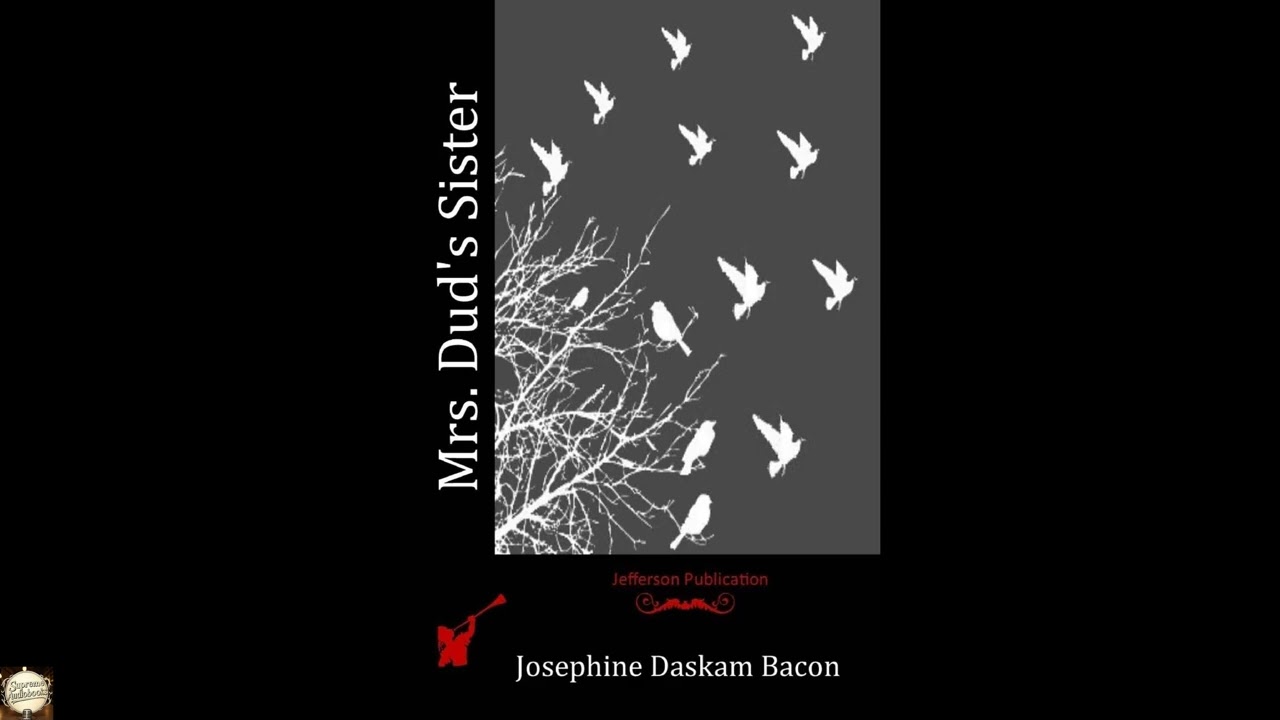
Step into the parlor of early twentieth-century American society with Josephine Daskam Bacon's delightful and incisive novel, "Mrs. Dud's Sister." This charming and often laugh-out-loud funny story peels back the layers of social expectation, revealing the enduring struggles of a spirited woman navigating a world designed to confine her. It is a sharp comedy of manners, yes, but beneath its witty surface lies a keen observation of identity, independence, and the subtle rebellions that ripple through the lives of women. For anyone who has ever felt the squeeze of convention or yearned for a life beyond the prescribed, "Mrs. Dud's Sister" offers both camaraderie and a refreshing perspective, proving that the battles for selfhood, even in the most polite of settings, remain remarkably relevant today. The story introduces us to the eponymous Mrs. Dud, Henrietta, a woman defined by her meticulous adherence to social norms, her well-ordered home, and her perfectly conventional husband. Her greatest concern, it seems, is the proper arrangement of her life and the lives of those around her. Into this meticulously constructed world steps her younger, unnamed sister—our protagonist—a woman of keen intellect, independent thought, and a decidedly less conventional spirit. She finds herself living with Henrietta, a situation that quickly becomes a source of both exasperation and comedic friction. Henrietta’s every pronouncement about etiquette, marriage, and a woman’s "proper" sphere serves as a gentle, yet firm, attempt to mold her sister into a more acceptable social being. The central conflict quickly emerges as the protagonist grapples with the expectations placed upon her by Henrietta and their shared social circle. Marriage, of course, is the ultimate goal for any eligible young woman of the era, and several suitors, each representing a different facet of societal desirability, present themselves. But our heroine is not easily swayed by superficial charm or financial security alone. She seeks intellectual companionship, genuine connection, and a life that offers more than the superficial rounds of calls and social engagements. The narrative follows her often-humorous attempts to find a path that honors her intelligence and desires, all while trying to avoid offending Henrietta’s delicate sensibilities or falling into the traps of conventional matrimony. Her quest for a satisfying existence, unconstrained by the dictates of turn-of-the-century decorum, forms the compelling arc of the story, leading her through a series of comical misunderstandings and insightful observations about human nature. Josephine Daskam Bacon, born in Stamford, Connecticut in 1876, was a prolific American author who penned numerous novels, short stories, and poems throughout her life, often under her maiden name, Josephine Daskam. A graduate of Smith College in 1898, Bacon was part of a generation of educated women who began to question and subtly critique the societal structures of their time through their writing. After her marriage to Selden Bacon, a prominent lawyer, she continued her literary career, demonstrating a sharp wit and a keen eye for social commentary that resonated deeply with readers. Bacon’s contributions to literature extend beyond "Mrs. Dud's Sister." Her earlier works, such as "The Madness of Philip" (1902), a collection of short stories, and "The Memoirs of a Baby" (1904), also showcase her talent for blending humor with insightful social observation. She was known for creating memorable characters and for her ability to craft narratives that, while seemingly lighthearted, offered a deeper look into the complexities of human relationships and societal pressures. Bacon remained a visible and respected figure in American letters until her passing in 1961, leaving behind a body of work that captures the essence of early twentieth-century American life and the evolving roles of women within it. "Mrs. Dud's Sister," published in 1904, masterfully enacts several key themes that continue to resonate. One prominent theme is the restrictive nature of social conventions and expectations for women. Henrietta, for instance, constantly reinforces what is "proper" for a young woman – her obsession with calling cards, appropriate conversation topics, and the decorum surrounding courtship serves as a constant, gentle pressure cooker for her sister. The protagonist’s internal struggle to maintain her intellectual integrity while navigating these rigid rules highlights the era's limitations on female expression. A second central theme is the search for female identity and independence. The unnamed sister consistently rejects suitors who offer only financial security or social standing, instead seeking a partner who values her mind and spirit. Her quiet defiance, her moments of witty sarcasm, and her refusal to simply conform illustrate her quest for a selfhood beyond the roles prescribed by society. Furthermore, the novel offers a delightful satire of genteel society. Bacon pokes gentle fun at the absurdities of polite conversation, the trivialities that often consumed the upper classes, and the emphasis on appearances over genuine connection. The various eccentric characters encountered throughout the story, from overly earnest intellectuals to superficial socialites, provide ample material for this humorous critique. Finally, a subtle theme of the contrast between appearance and reality weaves through the narrative. Characters often present a polished exterior, while their inner thoughts and motivations are far more complex and sometimes contradictory. The protagonist herself often maintains a façade of compliance while her mind actively rebels against the social dictates she is forced to endure, revealing the hidden depths beneath the surface of polite society. The turn of the twentieth century in America, when "Mrs. Dud's Sister" emerged, was a fascinating period of social and cultural transition. The "New Woman" phenomenon was gaining momentum, with increasing numbers of women pursuing higher education, entering professions, and advocating for suffrage. While the Victorian ideal of womanhood, centered on domesticity and moral purity, still held sway, it was being vigorously challenged by women seeking greater autonomy and public participation. Josephine Daskam Bacon's novel reflects these societal shifts by placing a spirited, intelligent woman at its heart, one who yearns for more than the traditional path laid out for her. The Progressive Era was in full swing, bringing with it a focus on social reform and a questioning of established norms. Authors like Bacon, often women themselves, contributed to this cultural conversation by writing about the evolving roles of women in marriage, education, and society. "Mrs. Dud's Sister" is a product of this ferment, using the accessible and engaging form of a comedy of manners to subtly interrogate the very real pressures and limited choices faced by women during a time of profound change. Its blend of humor and underlying seriousness helped readers grapple with these emerging ideas in a relatable and entertaining way. Listening to "Mrs. Dud's Sister" as an audiobook offers a singular experience, bringing Josephine Daskam Bacon's sparkling prose and witty dialogue to vivid life. A skilled narrator's performance allows the listener to truly savor the subtle humor in the protagonist's observations and the gentle absurdity of Henrietta's pronouncements. The interplay between the characters, especially the distinct personalities of the two sisters, shines through vocal nuance, making the social commentary feel immediate and engaging. The several hours of run time provide ample opportunity to become immersed in this turn-of-the-century world, letting the story’s gentle pacing unfold at a leisurely speed, perfect for relaxed evenings or thoughtful commutes. The carefully modulated voice work brings out the distinct atmosphere of polite society, with its hidden tensions and underlying aspirations, making the listener a privileged observer of this timeless quest for individuality.
Enjoyed Mrs. Dud's Sister? A few ways to support us
Audible & Amazon links are affiliate; we may earn a small commission at no extra cost.
About this production
Human narration by a volunteer reader from LibriVox.org, the public-domain audiobook project. LibriVox volunteers record literary works whose copyright has expired in the United States, releasing the resulting recordings into the public domain.
Mrs. Dud's Sister by Josephine Daskam Bacon. The underlying text is in the U.S. public domain. We do not republish any modern copyrighted edition, translation, or commentary.
The 4K cinematic visuals accompanying this audiobook are generated by an AI image model from prompts derived from the source text. No copyrighted photos, paintings, or stock footage are used. AI generation is disclosed on every video on our YouTube channel as required by YouTube's altered/synthetic content policy.
English subtitles are transcribed from the LibriVox recording with OpenAI Whisper. Translations into the 11 other supported languages are produced by Meta's NLLB-200 neural translation model. No human translator's copyrighted translation is used.
Questions about sourcing or rights? See our DMCA & Sourcing policy or contact us.
Enjoyed this audiobook?
If you'd like to own a copy of Mrs. Dud's Sister or hear a professionally produced edition, the links below help support free audiobook production at no extra cost to you.
As an Amazon Associate we earn from qualifying purchases. Audible / print links are affiliate.