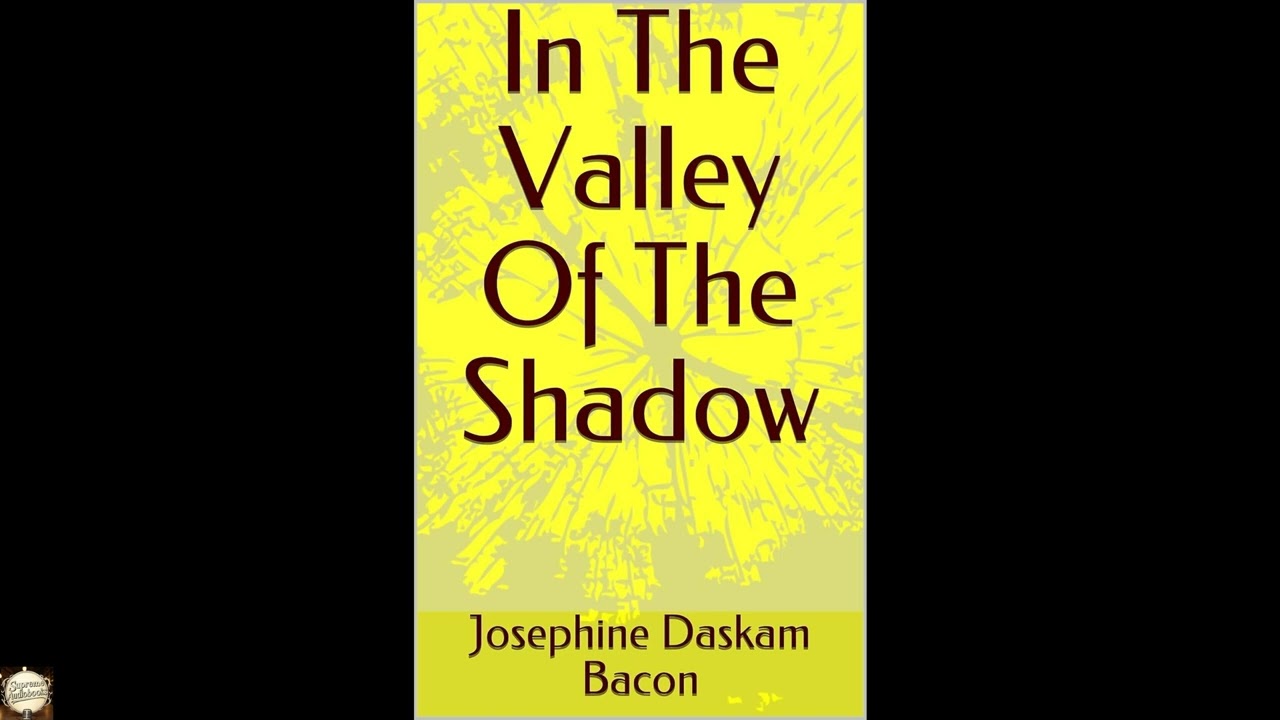
In The Valley Of The Shadow
In the shifting landscape of early twentieth-century American society, where the gilded age gave way to an insistent call for social change, Josephine Daskam Bacon’s "In The Valley Of The Shadow" stands as a resonant chronicle of personal awakening amidst profound societal upheaval. This compelling novel invites listeners to witness a young woman’s radical transformation, a journey not across continents, but across the stark divides of class and conscience within the burgeoning metropolis of New York City. Why should we care today? Because its central query – how does one live a life of meaning and purpose in the face of immense privilege and equally immense suffering – remains as urgent and relevant now as it was over a century ago. It’s a story that challenges perceptions, questions inherited values, and ultimately, affirms the human spirit's capacity for empathy and enduring change. The narrative introduces Margaret, a woman whose life is initially defined by the comfortable, circumscribed world of inherited wealth and social expectation in turn-of-the-century New York. Her days are filled with the gentle rhythms of debutante balls, polite society, and the promise of a conventional, advantageous marriage. However, an unexpected and shattering heartbreak leaves Margaret adrift, disillusioned with the superficiality of her carefully constructed existence. Rather than retreat into quiet despair or seek solace in the familiar comforts of her class, Margaret makes a drastic decision: she abandons her privileged life, sheds her former identity, and moves to the squalid, teeming tenements of the Lower East Side. Here, she assumes the role of a nurse, plunging headfirst into the grim realities of poverty, disease, and desperation that characterize the lives of the city's forgotten inhabitants. This dramatic shift forces Margaret to confront not only the abject misery of others but also the hollowness of her own past life. She grapples with the raw suffering she encounters daily, the resilience and degradation of her new neighbors, and the constant threat of illness and starvation. Her idealism is frequently tested by the intractable nature of poverty and the sheer scale of human need, yet her resolve is hardened, and her understanding of genuine compassion deepened. The story follows her as she learns to navigate this harsh new world, forging unexpected bonds and finding a profound sense of purpose that her former life could never offer. Her past, however, is not easily shed; fragments of her old life, in the form of acquaintances and former suitors, occasionally resurface, forcing her to reconcile the two disparate worlds she now inhabits and to firmly choose her path forward without revealing the final shape of her transformation. Josephine Dodge Daskam Bacon, born in 1876 in Stamford, Connecticut, was an author whose prolific output and sharp observations made her a significant voice in American literature during the first half of the twentieth century. A graduate of Vassar College in 1898, Daskam quickly established herself as a writer, publishing her first book, "Smith College Stories," in 1900. She married Selden Bacon in 1903 and continued to publish under both her maiden name and her married name throughout her career, which spanned over six decades. Her early work often focused on the lives of college women, reflecting the burgeoning educational opportunities and changing roles for women in that era. Bacon’s bibliography is remarkably diverse, encompassing novels, short story collections, poetry, and children's books. She contributed frequently to prominent magazines of her time, including McClure's Magazine, where "In The Valley Of The Shadow" first appeared. Her writing often grappled with themes of social class, gender roles, and the individual's search for identity and meaning, placing her alongside authors who were keenly observing the rapid social changes of the Progressive Era. While perhaps not as universally recognized in the literary canon as some of her contemporaries like Edith Wharton or Willa Cather, Bacon's body of work provides a valuable lens through which to understand the cultural and social anxieties and aspirations of an America in flux. She died in 1961, leaving behind a substantial literary legacy that continues to shed light on the complexities of human experience in a changing world. Among the salient themes that "In The Valley Of The Shadow" illuminates is the profound disparity of social class and privilege. The novel masterfully contrasts the frivolous concerns of Margaret's upper-class upbringing—represented by her initial engagement to a wealthy but uninspired suitor, and the endless rounds of social calls and entertainments—with the grim realities of daily survival in the slums. For instance, the descriptions of Margaret’s elegant drawing-room, filled with art and light, stand in stark opposition to the dark, airless tenement rooms where families often shared a single faucet and struggled with rampant disease. This juxtaposition highlights the moral blindness that privilege can foster and the urgent need for a more equitable society. The book also compellingly renders the theme of personal transformation and the search for authentic purpose. Margaret’s decision to become a nurse is not merely an escape from heartbreak but a deliberate attempt to forge a life of genuine utility. Her initial awkwardness and naiveté in the tenements slowly give way to competence and deep empathy, exemplified by her tireless care for sick children and her ability to comfort grieving mothers. Her work forces her to shed superficiality and discover an inner strength and compassion she never knew she possessed. The novel further explores the theme of the changing role of women in society during the early 20th century. Margaret’s rejection of a conventional marriage and her embrace of a demanding, unconventional profession challenges the prevailing expectations for women of her social standing. She chooses a path of self-reliance and public service over the prescribed domesticity and ornamental existence, embodying a nascent spirit of female independence and agency that was stirring across America. Additionally, the book touches on disillusionment with the superficial versus an embracing of altruism. Margaret’s heartbreak serves as a catalyst, tearing down the illusions of her former world and opening her eyes to a broader, more authentic sense of human connection and moral responsibility. Her initial, almost idealistic, plunge into service is tested by harsh realities, but ultimately her commitment to altruism becomes a bedrock of her new identity, suggesting that true meaning is found not in personal comfort, but in connection to the suffering of others. "In The Valley Of The Shadow" emerged during the height of the Progressive Era in the United States, a period roughly from the 1890s to the 1920s, marked by widespread social activism and political reform. The nation was grappling with the massive social consequences of rapid industrialization, urbanization, and immigration. Cities like New York swelled with new arrivals, leading to overcrowding, poverty, and unsanitary conditions, particularly in immigrant-dense neighborhoods. Journalists, often dubbed "muckrakers," were exposing corruption and social ills, and social reformers were actively campaigning for improved housing, public health, and labor laws. The settlement house movement, exemplified by Jane Addams’s Hull House, provided community services and education in impoverished areas, embodying the spirit of practical altruism that Margaret's character embraces. The novel, therefore, reflects a societal consciousness grappling with its own moral obligations, urging readers to look beyond the surface prosperity and acknowledge the profound suffering that existed within its very fabric. It was a time when the "New Woman" was also gaining prominence, seeking greater independence and opportunities beyond the traditional domestic sphere, making Margaret’s journey particularly resonant with the cultural shifts of her time. As an audiobook, "In The Valley Of The Shadow" offers a singularly immersive experience. The narrator's voice becomes crucial in conveying Margaret's evolving internal landscape, moving from the initial detachment and sorrow of her privileged life to the profound empathy and resilience she develops in the tenements. Listeners can savor the subtle inflections in dialogue, distinguishing the clipped, formal speech of society figures from the raw, unvarnished voices of the working-class and immigrant families. The run length of several hours makes this a perfect companion for long walks, commutes, or focused periods of quiet reflection, allowing ample time to sink into the turn-of-the-century atmosphere of New York City. The pacing allows for contemplation of Margaret’s challenges and triumphs, as the spoken word brings to life the stark contrasts between the opulence and squalor, the moments of despair and the glimmers of human kindness, painting a vivid soundscape of a transformative period in American history.
Enjoyed In The Valley Of The Shadow? A few ways to support us
Audible & Amazon links are affiliate; we may earn a small commission at no extra cost.
About this production
Human narration by a volunteer reader from LibriVox.org, the public-domain audiobook project. LibriVox volunteers record literary works whose copyright has expired in the United States, releasing the resulting recordings into the public domain.
In The Valley Of The Shadow by Josephine Daskam Bacon. The underlying text is in the U.S. public domain. We do not republish any modern copyrighted edition, translation, or commentary.
The 4K cinematic visuals accompanying this audiobook are generated by an AI image model from prompts derived from the source text. No copyrighted photos, paintings, or stock footage are used. AI generation is disclosed on every video on our YouTube channel as required by YouTube's altered/synthetic content policy.
English subtitles are transcribed from the LibriVox recording with OpenAI Whisper. Translations into the 11 other supported languages are produced by Meta's NLLB-200 neural translation model. No human translator's copyrighted translation is used.
Questions about sourcing or rights? See our DMCA & Sourcing policy or contact us.
View 10 famous quotes from this book →
Enjoyed this audiobook?
If you'd like to own a copy of In The Valley Of The Shadow or hear a professionally produced edition, the links below help support free audiobook production at no extra cost to you.
As an Amazon Associate we earn from qualifying purchases. Audible / print links are affiliate.