Mont-Saint-Michel and Chartres
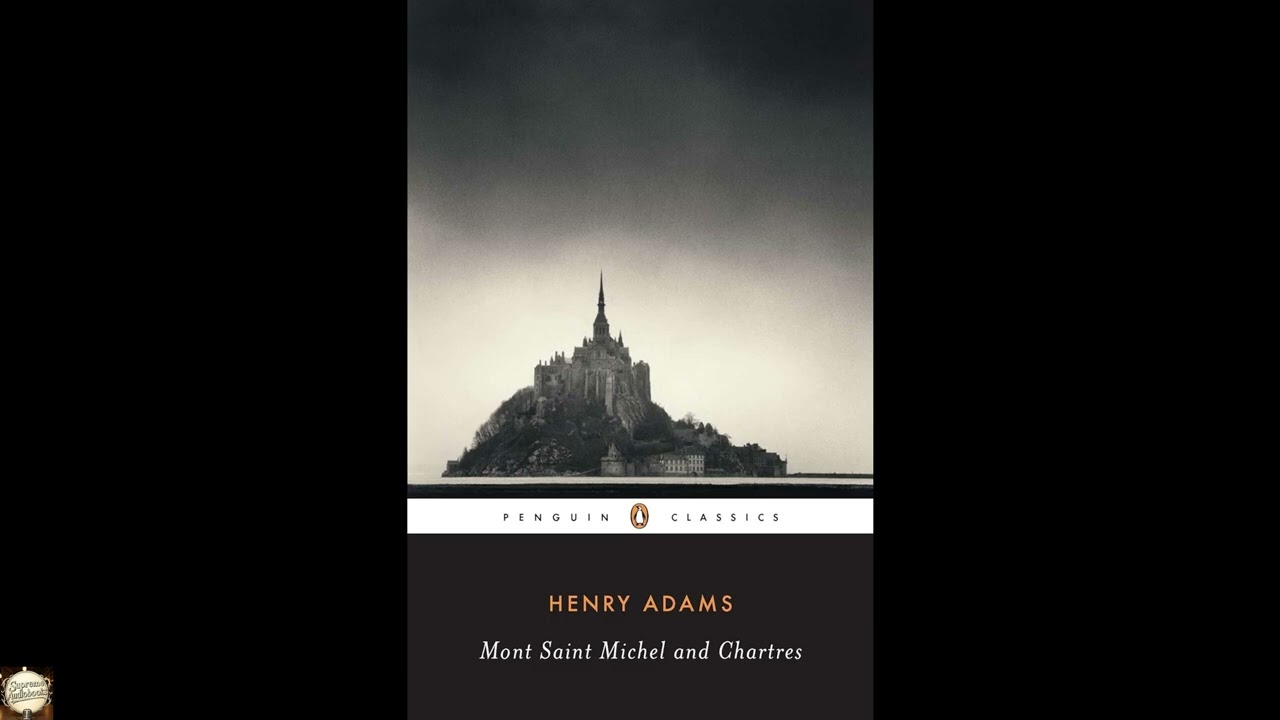
Henry Adams’s Mont-Saint-Michel and Chartres is not a conventional story, but an extraordinary intellectual enterprise, a profound meditation on the medieval mind and its monumental achievements. Rather than recounting events, Adams invites listeners into a sustained inquiry, a quest to understand the spirit that built the towering cathedrals of France. Why should the modern listener care about this historical and philosophical excursion today? Because Adams grapples with questions that remain acutely relevant: how societies find coherence, how belief shapes art, and how meaning might be constructed in a world that often feels fractured and adrift. It is an invitation to consider an age that, in its own way, possessed a unifying force arguably missing from our own, offering both a balm and a challenge to contemporary thought. The book acts as a guided tour, almost a dream-like progression through the eleventh, twelfth, and thirteenth centuries of France. Our guide is a persona Adams crafts, a modern American "nephew" accompanying a group of friends through Normandy and the Ile-de-France. The settings are, above all, the two eponymous architectural marvels: the fortress-abbey of Mont-Saint-Michel, rising like a stark sentinel from the sea, and the sublime cathedral of Chartres, a beacon of Gothic art on the plains. Adams’s narrative opens in the eleventh century with the stern, masculine power of Mont-Saint-Michel, a stronghold dedicated to the Archangel Michael, embodying the raw, martial energy of the Normans and the rigid theological structures of the early Middle Ages. This era, in Adams’s view, is defined by force, by the will of princes and the uncompromising dictates of a paternalistic God. As the text unfolds, Adams subtly shifts the scene and focus, moving from the formidable Mont-Saint-Michel to the more nuanced and expansive thirteenth century, culminating in the transcendent beauty of Chartres. Here, the dominant energy transforms from masculine force to feminine grace, specifically the pervasive and profoundly influential cult of the Virgin Mary. Chartres, for Adams, represents the peak of medieval aspiration, a structure dedicated to the Mother of God, whose perceived power and intercession infused every aspect of life, art, and theology. The "arc" of the story isn't a conventional plot, but a gradual unfolding of Adams’s understanding—or his modern persona’s attempt to understand—how such a society could cohere, how anonymous artisans could create such beauty, and how an entire civilization could organize itself around a spiritual ideal. The central conflict is, in essence, the modern, fragmented mind attempting to grasp the unifying, almost gravitational pull of medieval faith, without spoiling the ultimate success or failure of Adams’s character in fully reconciling these two worlds. Henry Brooks Adams, born in Boston in 1838, was a scion of one of America’s most distinguished political families. His great-grandfather was John Adams, second President of the United States, and his grandfather was John Quincy Adams, the sixth. This lineage placed him at the heart of American intellectual and political life, though he often felt a sense of alienation from the trajectories of his own time. Adams’s early life included a grand tour of Europe, a period as a journalist covering the American Civil War in London, and later a professorship of medieval history at Harvard University. However, he eventually grew disillusioned with formal academia and dedicated himself to independent scholarship and writing. His life was marked by both privilege and profound personal sorrow. The suicide of his beloved wife, Marian "Clover" Hooper Adams, in 1885 left him emotionally devastated and profoundly affected his outlook. This tragedy, coupled with his innate skepticism and keen observation of the rapid changes wrought by industrialization and scientific advancement, led him to question the foundational assumptions of his era. Adams is also well-known for his autobiographical work, The Education of Henry Adams, which won a Pulitzer Prize posthumously and provides a powerful counterpoint to Mont-Saint-Michel and Chartres. He became a pivotal figure in American letters, often associated with a pessimistic yet deeply analytical view of history and modernity, seeking patterns and explanations for the decline of traditional values and the rise of a new, unsettling, scientific age. One of the central themes Adams considers is the profound contrast between unity and multiplicity. He portrays the medieval world, especially as embodied in Chartres, as a society unified by a singular, pervasive belief system centered on the Virgin Mary. Every detail—from the soaring arches to the stained-glass windows depicting the lives of saints and kings, all under the benevolent gaze of the Madonna—contributes to a coherent, integrated vision. He marvels at how this unity could produce such harmonious and awe-inspiring art. In contrast, Adams implicitly (and sometimes explicitly) juxtaposes this with his own late nineteenth-century world, which he saw as increasingly fragmented by scientific specialization, industrial expansion, and the decline of traditional faith, leading to a loss of a central organizing principle. Another powerful theme Adams brings forth is the transformative power of the feminine. He presents the Virgin Mary not merely as a religious figure, but as the supreme organizing "force" of the thirteenth century. Adams observes that medieval men, otherwise stern and often brutal, found a uniquely powerful channel for their deepest aspirations and artistic expressions through devotion to Mary. He demonstrates this through specific examples: the countless statues of the Virgin throughout the cathedrals, the prominence of Marian narratives in the stained glass, and even the architectural innovations designed to maximize light and space, creating a fitting celestial dwelling for her. Adams suggests that the reverence for the Virgin channeled immense energy, not just spiritually but also culturally and artistically, leading to the construction of these immense monuments and a flourishing of intellectual inquiry in her service, establishing her as an almost cosmic administrative force. When Mont-Saint-Michel and Chartres was first circulated privately in 1904 and then published publicly in 1913, it emerged from a specific moment of profound change and anxiety. The late nineteenth and early twentieth centuries were characterized by the accelerating pace of the Industrial Revolution, the rise of scientific determinism (epitomized by Darwin’s theories), and the burgeoning field of physics that was beginning to dismantle Newtonian certainties. Politically, the world was on the cusp of cataclysm, with World War I just around the corner. Adams, a keen observer of these shifts, was deeply concerned about the implications for human culture and the loss of traditional coherence. He witnessed a world increasingly driven by impersonal forces—mechanization, scientific abstraction—and felt an urgent need to understand how previous ages had managed to create meaning and order. This work was, in many ways, his attempt to find a historical counterpoint, to identify the "force" that animated a seemingly more unified era, and perhaps to offer a silent lament for a lost sense of purpose in his own rapidly modernizing society. Listening to Mont-Saint-Michel and Chartres as an audiobook offers a unique engagement with Adams’s reflective prose. The several hours of narration provide ample time to absorb the intricate details of his observations and his philosophical musings. A good narration allows Adams's distinct voice—his subtle irony, his deep admiration for the medieval spirit, and his underlying melancholy—to come through with clarity. Listeners will appreciate the measured pacing, which enables a thoughtful appreciation of the architectural descriptions and historical context. The auditory experience can transport one directly into Adams's mind as he walks through these ancient stones, allowing the listener to perceive the grandeur of the cathedrals, the luminosity of the stained glass, and the profound intellectual struggle of a modern man attempting to bridge the chasm between his world and a distant, yet eternally resonant, past.
Enjoyed Mont-Saint-Michel and Chartres? A few ways to support us
Audible & Amazon links are affiliate; we may earn a small commission at no extra cost.
About this production
Human narration by a volunteer reader from LibriVox.org, the public-domain audiobook project. LibriVox volunteers record literary works whose copyright has expired in the United States, releasing the resulting recordings into the public domain.
Mont-Saint-Michel and Chartres by Henry Adams. The underlying text is in the U.S. public domain. We do not republish any modern copyrighted edition, translation, or commentary.
The 4K cinematic visuals accompanying this audiobook are generated by an AI image model from prompts derived from the source text. No copyrighted photos, paintings, or stock footage are used. AI generation is disclosed on every video on our YouTube channel as required by YouTube's altered/synthetic content policy.
English subtitles are transcribed from the LibriVox recording with OpenAI Whisper. Translations into the 11 other supported languages are produced by Meta's NLLB-200 neural translation model. No human translator's copyrighted translation is used.
Questions about sourcing or rights? See our DMCA & Sourcing policy or contact us.
Enjoyed this audiobook?
If you'd like to own a copy of Mont-Saint-Michel and Chartres or hear a professionally produced edition, the links below help support free audiobook production at no extra cost to you.
As an Amazon Associate we earn from qualifying purchases. Audible / print links are affiliate.