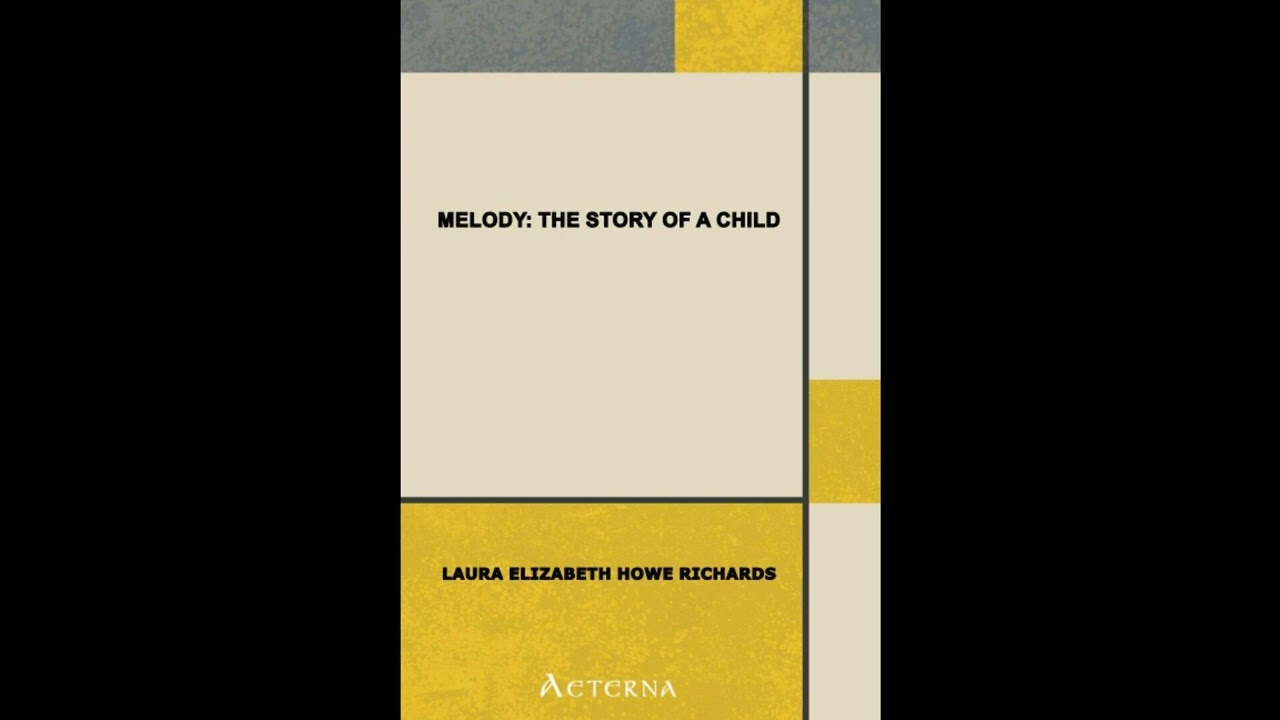
Melody : The Story of a Child
"Melody: The Story of a Child" offers listeners a tender, insightful look into the heart of a young girl whose spirit shines brightly despite profound challenges. This classic tale, penned by Laura Elizabeth Richards, introduces a remarkable child who navigates the world not through sight, but through sound and an extraordinary capacity for love. In an age often preoccupied with external appearances, Melody's story serves as a gentle yet powerful reminder of the profound impact one individual, with an open heart and innate talent, can have on an entire community. It prompts us to consider what true "vision" entails and how kindness can overcome prejudice, ensuring its continued relevance today. The narrative unfolds in the quiet, somewhat insular village of Mapledale, a picturesque New England community where routines are cherished and newcomers observed with cautious curiosity. Here, ten-year-old Melody arrives, a child unlike any the villagers have encountered. Orphaned and blind, Melody is placed in the care of Mrs. Slocum, a woman known more for her practicality than her tenderness. Her initial reluctance quickly thaws under Melody's gentle influence. Other residents, from stern church elders to gossiping neighbors, form a colorful backdrop, revealing a community grappling with its own biases. Melody's arrival disrupts Mapledale's static order, stirring both compassion and discomfort. Her blindness, for some, is a source of pity; for others, a mark of otherness breeding suspicion. Yet, Melody possesses a miraculous gift: a voice of pure, ethereal beauty and a deep, intuitive understanding of music. She sings with an innocence and profound emotion that slowly begins to soften the villagers' hardened edges. The central struggle becomes Mapledale's adaptation to Melody. Her simple presence and unwavering sweetness challenge ingrained prejudices, forcing the community to look beyond the visible to unseen depths of character. The story traces the gradual transformation of attitudes, showing how a child's hope and talent illuminate shadowed corners of human nature. Laura Elizabeth Richards, born in Boston in 1850, was a writer whose life was deeply intertwined with American literary and social reform movements. She was the daughter of two remarkable figures: Julia Ward Howe, author of "The Battle Hymn of the Republic" and a prominent advocate for women's suffrage; and Samuel Gridley Howe, a pioneering educator famous for his work with the blind and deaf, including Laura Bridgman. Growing up in such an intellectually stimulating and socially conscious household, Richards was exposed to a world where humanitarianism and creative expression went hand-in-hand. This familial legacy undeniably shaped her writing, particularly her recurring themes of compassion, education, and the triumph of the human spirit over adversity, all clearly evident in "Melody." Richards embarked on her own prolific writing career, eventually publishing over ninety books during her lifetime. After her marriage to Henry Richards in 1871, she moved to Gardiner, Maine, where she raised their seven children and maintained a disciplined writing schedule. Her output spanned various genres, including popular children's poetry, notably in collections like Tirra Lirra, biographies of historical figures such as Florence Nightingale, and numerous novels for both young people and adults. Her narrative style was characterized by clear, accessible prose and a gentle moral sensibility, often imbued with humor and warmth. Laura Elizabeth Richards carved a significant place in American children's literature, not only for her volume of work but for her consistent ability to craft stories that entertained, instructed, and uplifted her readers, leaving an indelible mark. One core theme of "Melody" is the transformative power of music. Melody's blindness means her world is primarily auditory, expressed and understood through song. Her voice is not merely a pleasant sound; it is an instrument of grace that can disarm suspicion, melt cold hearts, and bridge divides. This is enacted vividly when Melody sings in church, her pure notes cutting through preconceptions and reminding congregants of a higher beauty. Her music becomes a shared experience, transcending social barriers, offering solace and connection. Another significant theme is the sharp contrast between outward appearance and inner worth, often distinguishing physical sight from true perception. Melody, though physically blind, possesses an exceptional clarity of spirit and an intuitive grasp of human kindness. The sighted villagers, by contrast, are initially "blind" in their prejudice, unable to see past Melody's disability to her extraordinary character. Through the unfolding story, Richards subtly illustrates how genuine vision lies not in the eyes, but in the heart's capacity for empathy and acceptance. The book also highlights resilience and the quiet strength of innocence, demonstrating how a child can inspire profound change by being true to herself. "Melody: The Story of a Child" was published in 1893, a period often referred to as the Gilded Age in America. This era, following the Civil War, was marked by rapid industrialization, wealth disparities, and significant social shifts. While scientific advancement and material progress gained emphasis, a prevailing desire existed for moral instruction and sentimental uplift in literature, particularly for younger readers. The Victorian ideals of childhood innocence, piety, and the domestic sphere still held considerable sway. Authors like Richards often wrote stories that reinforced these values, providing comforting narratives that offered moral lessons and celebrated virtues like patience, kindness, and faith. The late nineteenth-century literary landscape also saw the development of a distinct American voice in children's literature. While earlier works often borrowed heavily from European traditions, American authors began to produce tales rooted in domestic life and American settings. Richards' work fits comfortably within this tradition, alongside authors like Louisa May Alcott and Frances Hodgson Burnett, crafting narratives that were both entertaining and gently didactic. "Melody" emerged as a tender exploration of childhood and community, designed to touch the heart and inspire reflection on human values, reflecting the era's fascination with how individuals, particularly the vulnerable, shaped and were shaped by their social surroundings. Listening to "Melody: The Story of a Child" as an audiobook offers an especially intimate and affecting experience. The narrator's voice becomes crucial in bringing Melody's innocent perspective to life, allowing the listener to truly "hear" the world as she does. Imagine the nuances in the narrator's pacing, carefully building the atmosphere of Mapledale, giving each village character a distinct voice – from the gruff but ultimately caring Mrs. Slocum to the various townsfolk who evolve in their understanding of Melody. The emotional depth of the story, particularly the descriptions of Melody's singing, gains immense power when conveyed through skilled vocal performance, transforming the written words into an immersive soundscape that resonates deeply. This allows for a sustained, contemplative engagement with the story's gentle wisdom and charm.
Enjoyed Melody : The Story of a Child? A few ways to support us
Audible & Amazon links are affiliate; we may earn a small commission at no extra cost.
About this production
Human narration by a volunteer reader from LibriVox.org, the public-domain audiobook project. LibriVox volunteers record literary works whose copyright has expired in the United States, releasing the resulting recordings into the public domain.
Melody : The Story of a Child by Laura Elizabeth Richards. The underlying text is in the U.S. public domain. We do not republish any modern copyrighted edition, translation, or commentary.
The 4K cinematic visuals accompanying this audiobook are generated by an AI image model from prompts derived from the source text. No copyrighted photos, paintings, or stock footage are used. AI generation is disclosed on every video on our YouTube channel as required by YouTube's altered/synthetic content policy.
English subtitles are transcribed from the LibriVox recording with OpenAI Whisper. Translations into the 11 other supported languages are produced by Meta's NLLB-200 neural translation model. No human translator's copyrighted translation is used.
Questions about sourcing or rights? See our DMCA & Sourcing policy or contact us.
Enjoyed this audiobook?
If you'd like to own a copy of Melody : The Story of a Child or hear a professionally produced edition, the links below help support free audiobook production at no extra cost to you.
As an Amazon Associate we earn from qualifying purchases. Audible / print links are affiliate.
![by Margaret [Harriet Margaret Stone Lothrop]. Sidney by Unknown — free full audiobook](https://img.youtube.com/vi/k_Gr_WSxsPA/maxresdefault.jpg)