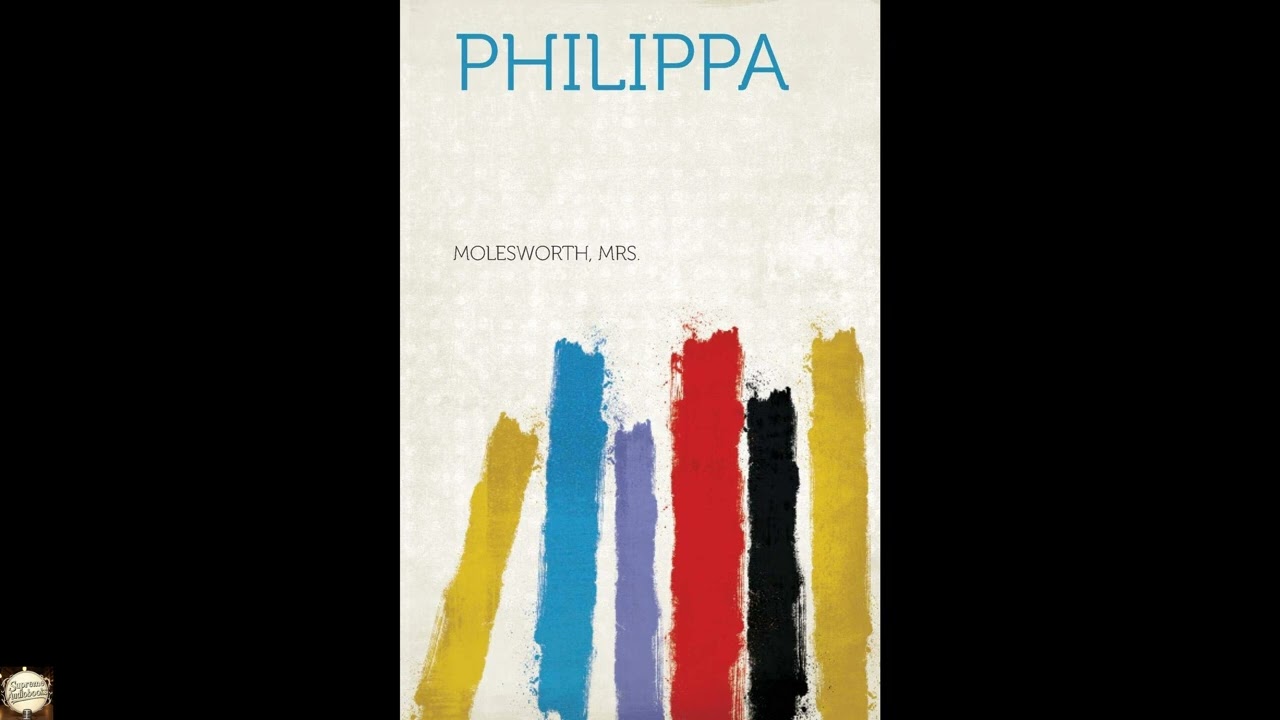
Philippa
Step into a world where the earnest heart of a young girl meets the firm hand of Victorian societal expectations, where personal spirit is quietly tested against the rigid backdrop of a bygone era. Mrs. Molesworth's Philippa invites listeners into an intimate portrait of growth and self-discovery, a classic narrative that continues to resonate with anyone who has navigated the subtle complexities of finding their own place. This isn't merely a quaint story of girlhood from a previous century; it is a thoughtful exploration of inner strength, the nuances of duty, and the quiet rebellions of a developing mind, making its observations on character and conviction remarkably poignant for listeners today. Our story centers on Philippa, a spirited and imaginative girl whose life takes an unexpected turn when circumstances oblige her to leave her familiar, somewhat unconventional upbringing. She finds herself placed under the guardianship of more distant, traditional relatives in a stately country house – a place where order, decorum, and strict adherence to social proprieties are the rule of the day. Philippa, accustomed to a freer existence and possessed of a keen sense of justice, struggles to reconcile her lively inner world with the demanding external standards imposed upon her. The house, with its imposing routines and unspoken rules, feels less like a home and more like a gilded cage. Central to Philippa's conflict is her relationship with her formidable Aunt Mildred, a woman of unyielding principles who believes firmly in shaping young minds through rigorous discipline and proper instruction. Philippa finds herself caught between the desire to please and a persistent, almost defiant, longing to remain true to her own nature. She grapples with lessons in etiquette, needlework, and other "accomplishments" deemed essential for a young lady, often yearning for the intellectual stimulation or simple outdoor adventures she once knew. As the story unfolds, Philippa learns to navigate this new environment, making tentative friendships and encountering individuals who challenge her perceptions, gradually teaching her the value of quiet observation and the power of resilience. Her internal struggles and small victories paint a vivid picture of a young soul striving for authenticity amidst pressures to conform. Mrs. Molesworth, born Mary Louisa Stewart in 1839 in Rotterdam, emerged as one of the most beloved and prolific writers of children's fiction during the Victorian and early Edwardian periods. Though her early life saw her living in Scotland and England, it was her marriage to Major Richard Molesworth of the Royal Dragoons that gave her the name she would carry into literary fame. Her writing career began with adult novels, often published under the pseudonym "Ennis Graham," but it was her pivot to stories for young readers that cemented her legacy. She wrote over 100 books, capturing the imaginations of generations of children with her blend of realism, domestic detail, and occasional, gentle touches of fantasy. Her most famous works, such as The Cuckoo Clock (1877), Carrots: Just a Little Boy (1876), and Rosy (1882), often featured sensitive, introspective child protagonists navigating the complexities of family life and moral dilemmas. Molesworth was adept at portraying the inner lives of children, understanding their fears, joys, and moral struggles with a depth rare for her time. She is often grouped with other distinguished children's authors like Frances Hodgson Burnett and Juliana Horatia Ewing, recognized for shaping the genre by treating childhood not merely as a prelude to adulthood, but as a significant and complex stage of life worthy of serious literary attention. She died in 1921, leaving behind a profound body of work that continues to charm and instruct. At its heart, Philippa grapples with the enduring theme of identity versus societal expectation. Philippa's personal quest to maintain her unique spirit while adapting to the demands of her new life serves as a central example. We see this enacted in her private moments of spirited defiance – perhaps a secretly kept drawing or an imaginative tale spun in solitude – contrasted with her outwardly compliant behavior in the drawing-room. Another key theme is the subtle tension between appearance and reality. The rigid politeness of Victorian society, which often valued outward show over genuine feeling, is gently critiqued through Philippa's innocent yet insightful observations. For instance, she might notice that a seemingly stern relative possesses a hidden kindness, or that superficial rules sometimes obscure deeper truths about human connection. The novel also thoughtfully addresses the theme of empathy and understanding. As Philippa matures, she begins to look beyond the surface of her guardians' strictness, discerning the motivations or anxieties that drive their behavior. A specific scene might show her encountering a servant or another child who is overlooked, prompting her to extend compassion and see the world from a different perspective, thereby broadening her own moral outlook. This slow development of understanding, both of herself and of others, forms the arc of her emotional and moral education. The period in which Mrs. Molesworth wrote Philippa was a fascinating epoch for children's literature. The late nineteenth century witnessed a significant shift in how childhood was perceived, moving away from purely didactic or allegorical narratives towards stories that recognized children as distinct individuals with their own emotional landscapes. This era saw the rise of the "golden age" of children's literature, with authors consciously creating works specifically for young readers, aiming not just to instruct but also to entertain and nurture imagination. Culturally, there was a strong emphasis on domesticity, moral instruction, and the proper upbringing of children, particularly girls, who were expected to embody virtues of modesty, obedience, and gentleness. Molesworth's work emerged from this environment, offering stories that gently reinforced these societal values while simultaneously providing characters with enough internal life and agency to make them relatable and enduring. Her narratives, including Philippa, often reflect the prevailing social norms regarding class, gender roles, and family structure, even as they hint at the burgeoning psychological complexity beginning to appear in literature for all ages. They serve as a wonderful lens through which to observe the cultural conversations about what it meant to be a child, and particularly a young girl, during this transformative period. Listening to Philippa as an audiobook offers a unique gateway into its quiet charm and profound observations. The narrator's voice becomes the conduit for Philippa's earnestness and her youthful perceptions, allowing the listener to experience her world directly through her developing sensibility. Pay attention to how the voice brings to life the diverse cast of characters—the stern authority of Aunt Mildred, the gentle wisdom of a kind mentor, or the spirited exchanges with friends—each persona distinct and memorable. The pacing of the narration will likely mirror the measured rhythms of life in a Victorian country house, giving ample space for Molesworth's detailed descriptions and her thoughtful reflections on character. This format allows the prose to wash over you, emphasizing the subtle wit in the dialogue and the rich atmosphere of the settings, inviting a deeper connection with Philippa's journey of heart and mind.
Enjoyed Philippa? A few ways to support us
Audible & Amazon links are affiliate; we may earn a small commission at no extra cost.
About this production
Human narration by a volunteer reader from LibriVox.org, the public-domain audiobook project. LibriVox volunteers record literary works whose copyright has expired in the United States, releasing the resulting recordings into the public domain.
Philippa by Molesworth Mrs. The underlying text is in the U.S. public domain. We do not republish any modern copyrighted edition, translation, or commentary.
The 4K cinematic visuals accompanying this audiobook are generated by an AI image model from prompts derived from the source text. No copyrighted photos, paintings, or stock footage are used. AI generation is disclosed on every video on our YouTube channel as required by YouTube's altered/synthetic content policy.
English subtitles are transcribed from the LibriVox recording with OpenAI Whisper. Translations into the 11 other supported languages are produced by Meta's NLLB-200 neural translation model. No human translator's copyrighted translation is used.
Questions about sourcing or rights? See our DMCA & Sourcing policy or contact us.
Enjoyed this audiobook?
If you'd like to own a copy of Philippa or hear a professionally produced edition, the links below help support free audiobook production at no extra cost to you.
As an Amazon Associate we earn from qualifying purchases. Audible / print links are affiliate.
![by Margaret [Harriet Margaret Stone Lothrop]. Sidney by Unknown — free full audiobook](https://img.youtube.com/vi/k_Gr_WSxsPA/maxresdefault.jpg)
![Children's Classics in Dramatic Form, Book Two. [1909] by Augusta Stevenson — free full audiobook](https://img.youtube.com/vi/h4bTKUeuO7U/maxresdefault.jpg)