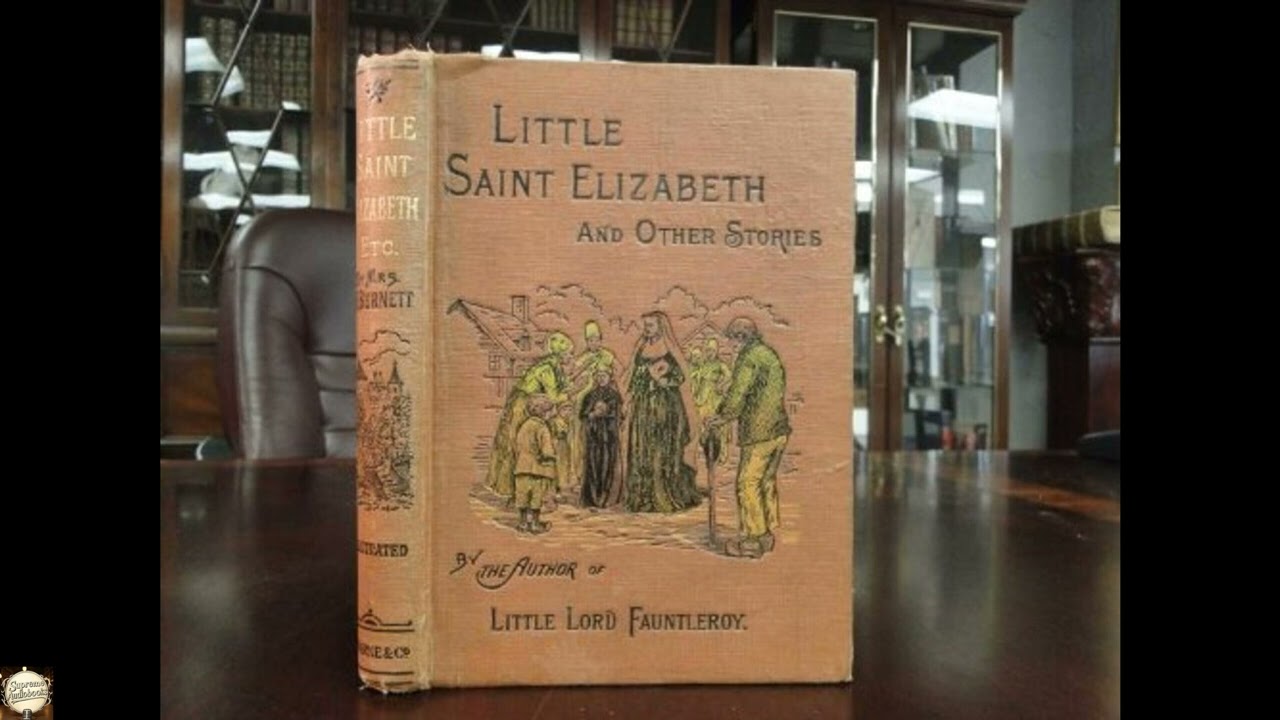
Little Saint Elizabeth: And other stories
Frances Hodgson Burnett’s Little Saint Elizabeth: And other stories offers a rare window into the moral imagination of childhood, filtered through the enduring sensibilities of a writer who understood both the joy and the earnest struggles of young hearts. This collection is more than just a gathering of tales; it presents an opportunity to revisit a literary landscape where innocence is profound, kindness is a potent force, and the complexities of human nature are often revealed in the smallest acts. For listeners today, these narratives provide not only a comforting sense of nostalgia but also a gentle provocation to consider the simple virtues that too often become obscured in modern life. They remind us that the seeds of character are sown early, and that even the purest intentions can sometimes require the gentle guidance of wisdom and understanding. The titular story, "Little Saint Elizabeth," introduces us to a young French girl named Elizabeth, whose world is centered around a grand, old chateau and the devout teachings of her loving, albeit somewhat strict, parents. From a very early age, Elizabeth is steeped in the lives of saints, their self-sacrifice and unwavering faith becoming the very fabric of her nascent understanding of goodness. With a literal-mindedness typical of childhood, she interprets these stories not as allegories or distant ideals, but as blueprints for her own life. She attempts to emulate their acts of charity and self-denial, giving away her most cherished possessions, embracing austere routines, and seeking out opportunities to alleviate suffering, often in ways that are both touchingly earnest and comically impractical. Her innocent zeal creates a quiet tension within the chateau, as her family grapples with how to nurture her spiritual fervor without letting it lead her astray from the practicalities of life. Her journey is one of learning that true saintliness might not always lie in grand, dramatic gestures of martyrdom, but in the everyday expressions of love, compassion, and understanding. The narrative follows her as she confronts the limits of her youthful idealism, encountering situations where her rigid interpretations of piety clash with the nuances of human need. Through these experiences, often mediated by the gentle wisdom of her family and the world outside her sheltered home, Elizabeth slowly begins to grasp a broader, more compassionate definition of goodness. The other stories in the collection, while varying in setting and character, often echo these central themes, presenting similar portraits of children navigating their moral compasses, grappling with the dynamics of family and society, and discovering the transformative power of empathy and resilience. Frances Hodgson Burnett, born in Manchester, England, in 1849, experienced a childhood marked by both early prosperity and subsequent hardship. Following the death of her father and the financial ruin of her family, she immigrated to Knoxville, Tennessee, with her mother and siblings at the age of sixteen. It was this stark change in circumstances that propelled her into writing as a means of supporting her family, publishing her first story at nineteen. Her talent for crafting compelling narratives, particularly those centered on children facing adversity and ultimately triumphing, quickly brought her widespread recognition. Burnett became an incredibly prolific and successful author, her most celebrated works including Little Lord Fauntleroy (1886), which created a lasting cultural phenomenon with its velvet suits and innocent charm, A Little Princess (1905), a poignant tale of resilience and imagination against hardship, and her enduring masterpiece, The Secret Garden (1911), a story that continues to resonate with its exploration of healing, nature, and the power of positive thought. She passed away in 1924, leaving behind a remarkable literary legacy. Burnett’s place in the literary canon is secured by her profound influence on children's literature, though her novels for adults were also widely read in her time. She was adept at blending elements of Victorian sentimentality with a keen psychological understanding of her characters, creating stories that were both emotionally resonant and morally instructive without being overtly preachy. Her works often showcased the resilience of the human spirit, the redemptive power of love and kindness, and the importance of imagination. Throughout her varied works, she consistently returned to themes of social class distinctions and the hidden potential within individuals, regardless of their station. Within Little Saint Elizabeth: And other stories, Burnett vividly enacts several key themes. One prominent thread is the innocence and literalism of childhood faith. Elizabeth's unwavering belief in the saintly examples, leading her to literally embrace sacrifice by giving away her dolls or seeking discomfort, exemplifies how a child’s pure heart can interpret complex spiritual ideals with unvarnished directness. This purity is shown to be both admirable and sometimes in need of gentle tempering by worldly wisdom. Another central theme is the redefinition of true goodness and selflessness. As Elizabeth grows, her understanding matures; she learns that while outward acts of sacrifice are commendable, genuine virtue often manifests in quiet compassion, understanding others' needs, and finding joy in shared experience rather than solely in denial. For instance, a scene where she attempts to give her comfort to someone who truly needs it, only to find her effort clumsy, forces her to consider the practical impact of her idealism. This highlights a progression from rigid piety to a more nuanced, empathetic form of benevolence, demonstrating that love and effective help are often more important than ascetic discipline. These stories emerged during the late nineteenth century, a period often characterized by strong moralistic undertones in literature, particularly for young readers. The Victorian era placed a high value on piety, duty, and the cultivation of character, and children's literature frequently served as a vehicle for transmitting these societal values. Authors like Burnett were writing in a time when the role of children in society was evolving, moving from being seen as miniature adults to beings deserving of their own distinct literary narratives that respected their developing sensibilities. The growth of Sunday schools and increasing literacy also fueled a demand for stories that blended entertainment with edification. Burnett's ability to create narratives that were both deeply emotional and subtly instructive allowed her to thrive in this environment, offering tales that resonated with parents and children alike, reflecting cultural anxieties about moral decay while simultaneously celebrating the potential for individual goodness and redemption. To experience Little Saint Elizabeth: And other stories as an audiobook is to grant these tales a new breath of life, allowing the listener to sink into their gentle rhythms without distraction. The "several hours" run length makes it an ideal companion for quiet evenings, long drives, or moments when one seeks a thoughtful escape. A skilled narrator will undoubtedly capture the delicate balance of earnestness and subtle humor in Burnett’s prose, bringing Elizabeth’s youthful conviction to vivid expression and differentiating the voices of the various characters with warmth and precision. Listen for the narrator’s pacing, how it allows the descriptions of the French countryside or the intimate moments of reflection to fully unfold, building an atmosphere that is both serene and deeply felt. The nuanced delivery of dialogue can unveil the underlying affection and concern within Elizabeth’s family, making the progression of her understanding even more poignant and meaningful. Hearing these stories aloud underscores their enduring charm and their quiet power to move and inspire.
Enjoyed Little Saint Elizabeth: And other stories? A few ways to support us
Audible & Amazon links are affiliate; we may earn a small commission at no extra cost.
About this production
Human narration by a volunteer reader from LibriVox.org, the public-domain audiobook project. LibriVox volunteers record literary works whose copyright has expired in the United States, releasing the resulting recordings into the public domain.
Little Saint Elizabeth: And other stories by Frances Hodgson Burnett. The underlying text is in the U.S. public domain. We do not republish any modern copyrighted edition, translation, or commentary.
The 4K cinematic visuals accompanying this audiobook are generated by an AI image model from prompts derived from the source text. No copyrighted photos, paintings, or stock footage are used. AI generation is disclosed on every video on our YouTube channel as required by YouTube's altered/synthetic content policy.
English subtitles are transcribed from the LibriVox recording with OpenAI Whisper. Translations into the 11 other supported languages are produced by Meta's NLLB-200 neural translation model. No human translator's copyrighted translation is used.
Questions about sourcing or rights? See our DMCA & Sourcing policy or contact us.
Enjoyed this audiobook?
If you'd like to own a copy of Little Saint Elizabeth: And other stories or hear a professionally produced edition, the links below help support free audiobook production at no extra cost to you.
As an Amazon Associate we earn from qualifying purchases. Audible / print links are affiliate.

![by Margaret [Harriet Margaret Stone Lothrop]. Sidney by Unknown — free full audiobook](https://img.youtube.com/vi/k_Gr_WSxsPA/maxresdefault.jpg)