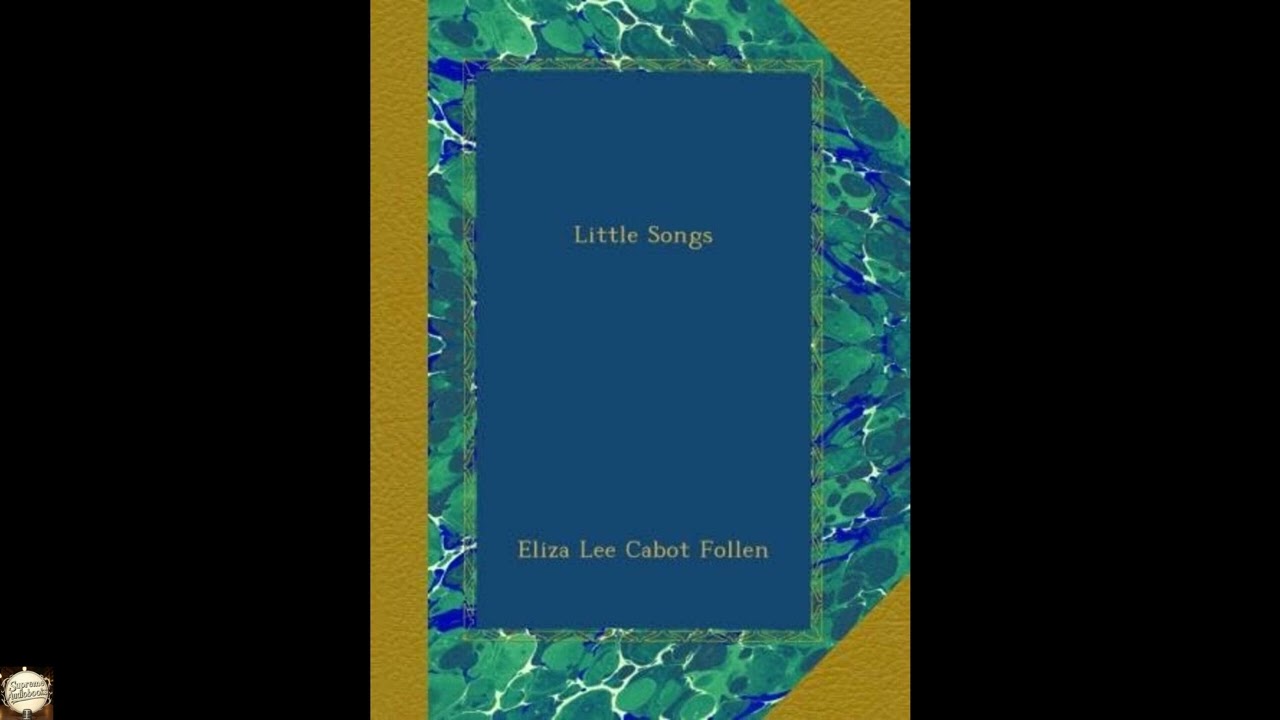
Little Songs
Step into a world of gentle verse and timeless wisdom with Eliza Lee Cabot Follen's Little Songs, a collection that has quietly shaped generations of young hearts and minds since its initial publication. Far from a mere historical curiosity, these unassuming pieces of poetry and prose offer a soothing balm in our hurried modern age, providing a window into the simple joys and profound lessons of nineteenth-century childhood. As an enduring classic of children's literature, Little Songs remains relevant today for its clear-eyed appreciation of nature, its tender guidance on moral virtues, and its ability to remind listeners, young and old, of the beauty found in everyday moments. It's a work that encourages reflection, instills a sense of wonder, and speaks to the universal experience of growing up and learning about the world. This beloved collection invites listeners into a tranquil sphere where the smallest details of life take on significant meaning. We wander through domestic scenes, observing children engaged in play, conversation, and quiet contemplation within the secure bounds of home and family. The narrative—or rather, the unfolding experience—is not a single story with a central conflict, but rather a series of delightful vignettes. Listeners meet a range of characters: curious young children asking innocent questions, watchful parents offering gentle advice, and the numerous creatures of the natural world, from busy bees collecting honey to a robin building its nest. The verses frequently turn to the seasons, describing the crisp arrival of autumn, the quiet beauty of winter snow, the fresh green of spring, and the warm languor of summer. Each song or short story provides a glimpse into a moral truth or a natural phenomenon, designed to foster a child's understanding of kindness, diligence, and reverence for creation. There is no looming dramatic arc, but rather a progression through the daily rhythms and incremental understandings of a child's awakening consciousness. The central "arc" is one of gentle instruction and discovery, where the wisdom imparted is always paired with a sense of wonder. Young minds are encouraged to observe the world around them with care—to notice the dewdrop on a leaf, the pattern of a spider's web, or the joy of sharing. The simple language and clear imagery paint vivid pictures, making abstract concepts like generosity or perseverance concrete and relatable. Whether a child is learning about the importance of telling the truth through a short fable, or understanding the interconnectedness of nature through a poem about the sun and the flowers, the material is always presented with warmth and an underlying current of optimistic engagement with the world. This collection creates a wholesome and nurturing environment, a literary garden where young minds can blossom. Eliza Lee Cabot Follen (1787-1860) was a remarkable figure whose life was deeply intertwined with the social and literary currents of her time. Born in Boston, Massachusetts, into a prominent family, she grew up in an intellectual environment. Her marriage to Charles Follen, a German radical who became a professor at Harvard and an ardent abolitionist, further cemented her commitment to social reform. Eliza Follen was not just a writer of children's verse; she was an active participant in the significant humanitarian movements of the nineteenth century, including abolitionism, temperance, and peace. She lent her voice and pen to causes that championed human dignity and justice, often editing publications like The Child's Friend to promote her ideals. Follen’s literary output extended beyond Little Songs. She penned numerous poems for adults, contributed to various periodicals, and authored other children's books such as The Well-Spent Hour and Hymns, Songs, and Stories for Children. Her work is situated within the early American Romantic movement, often aligning with the Unitarian and nascent Transcendentalist ideals that emphasized individual moral development, the inherent goodness of nature, and the importance of education. The tragic death of her husband in the steamboat Lexington disaster in 1840 profoundly affected her, compelling her to become an even more prolific writer to support herself. Through her unwavering dedication to both literature and social causes, Eliza Lee Cabot Follen secured her place as a significant pioneer in the development of American children's literature, distinguishing herself by creating works that were both morally instructive and genuinely appealing to young readers. Little Songs acts out several fundamental themes. One prominent idea is the innocence and joy of childhood. The verses frequently capture the unadulterated delight children find in simple things, such as watching a bird fly or playing with a pet. For instance, poems about little hands eager to help or eyes wide with wonder at the moon above evoke this purity. Another significant theme is moral instruction through gentle example. Follen imparts lessons on kindness, obedience, and truthfulness not through stern admonition, but by showing children acting virtuously or illustrating the consequences of small missteps. A story about sharing toys without squabbling, for example, quietly encourages generosity and cooperation. Furthermore, the collection champions the appreciation of nature. Many pieces are dedicated to observing the natural world, from the changing seasons to the habits of animals and plants. A description of tiny seeds growing into flowers, or the busy activity of an ant hill, encourages young listeners to look closely at their environment and recognize its beauty and order. Lastly, the theme of domestic comfort and security runs through many of the songs. The warmth of a mother’s embrace, the safety of a home, and the routines of daily life—like bedtime prayers or meals with family—are often depicted, reinforcing a sense of belonging and love. These recurring ideas provide a stable, comforting framework for the educational and imaginative content, making the collection both instructive and emotionally resonant. Little Songs emerged during a pivotal era in American history, the early to mid-nineteenth century, a period marked by significant cultural and social shifts. The United States was still defining its national identity, and intellectual movements like Unitarianism and Transcendentalism were gaining traction, promoting a focus on individual spiritual growth, self-reliance, and the intrinsic connection between humanity and nature. This period also saw a growing recognition of childhood as a distinct and important stage of life, separate from adulthood, necessitating literature specifically tailored to young sensibilities. Prior to this, much of children's reading material was overtly religious, didactic, or simply abridged adult texts. Eliza Follen's work was part of a broader movement to create literature that was morally uplifting but also imaginative and engaging, moving away from the more rigid, fear-based religious instruction that had often dominated children's books. Her involvement in abolitionism and other social reforms of the era imbued her writing with a progressive spirit, advocating for virtues like compassion and justice from an early age. The cultural emphasis on domesticity and the moral education of children within the home also provided a fertile ground for works like Little Songs, which sought to nurture wholesome character and a love of learning in a gentle, accessible manner. This collection, therefore, reflects and helped to shape the evolving understanding of childhood and the role of literature in moral development during a time of great change. Listening to Little Songs as an audiobook offers a unique and deeply affecting experience. The collection’s modest length, measured in several hours, makes it an ideal companion for quiet moments, for listening during a drive, or as a calming presence at bedtime. A skilled narrator brings Eliza Follen's gentle verses to life, allowing the rhythmic qualities and simple melodies of her language to truly sing. Listeners will notice the unhurried pacing, giving each observation and moral lesson space to settle in the mind. The voice embodies a warmth and clarity, capturing the innocence of a child's perspective in some pieces, and the tender wisdom of a guiding parent in others. The spoken word enhances the atmospheric quality, creating a sense of peace and contemplative wonder that is perfectly suited to Follen's vision of childhood. This auditory presentation allows the enduring charm and soothing wisdom of these classic verses to wash over you, providing a comforting and reflective escape into a purer, simpler world.
Enjoyed Little Songs? A few ways to support us
Audible & Amazon links are affiliate; we may earn a small commission at no extra cost.
About this production
Human narration by a volunteer reader from LibriVox.org, the public-domain audiobook project. LibriVox volunteers record literary works whose copyright has expired in the United States, releasing the resulting recordings into the public domain.
Little Songs by Eliza Lee Cabot Follen. The underlying text is in the U.S. public domain. We do not republish any modern copyrighted edition, translation, or commentary.
The 4K cinematic visuals accompanying this audiobook are generated by an AI image model from prompts derived from the source text. No copyrighted photos, paintings, or stock footage are used. AI generation is disclosed on every video on our YouTube channel as required by YouTube's altered/synthetic content policy.
English subtitles are transcribed from the LibriVox recording with OpenAI Whisper. Translations into the 11 other supported languages are produced by Meta's NLLB-200 neural translation model. No human translator's copyrighted translation is used.
Questions about sourcing or rights? See our DMCA & Sourcing policy or contact us.
Enjoyed this audiobook?
If you'd like to own a copy of Little Songs or hear a professionally produced edition, the links below help support free audiobook production at no extra cost to you.
As an Amazon Associate we earn from qualifying purchases. Audible / print links are affiliate.