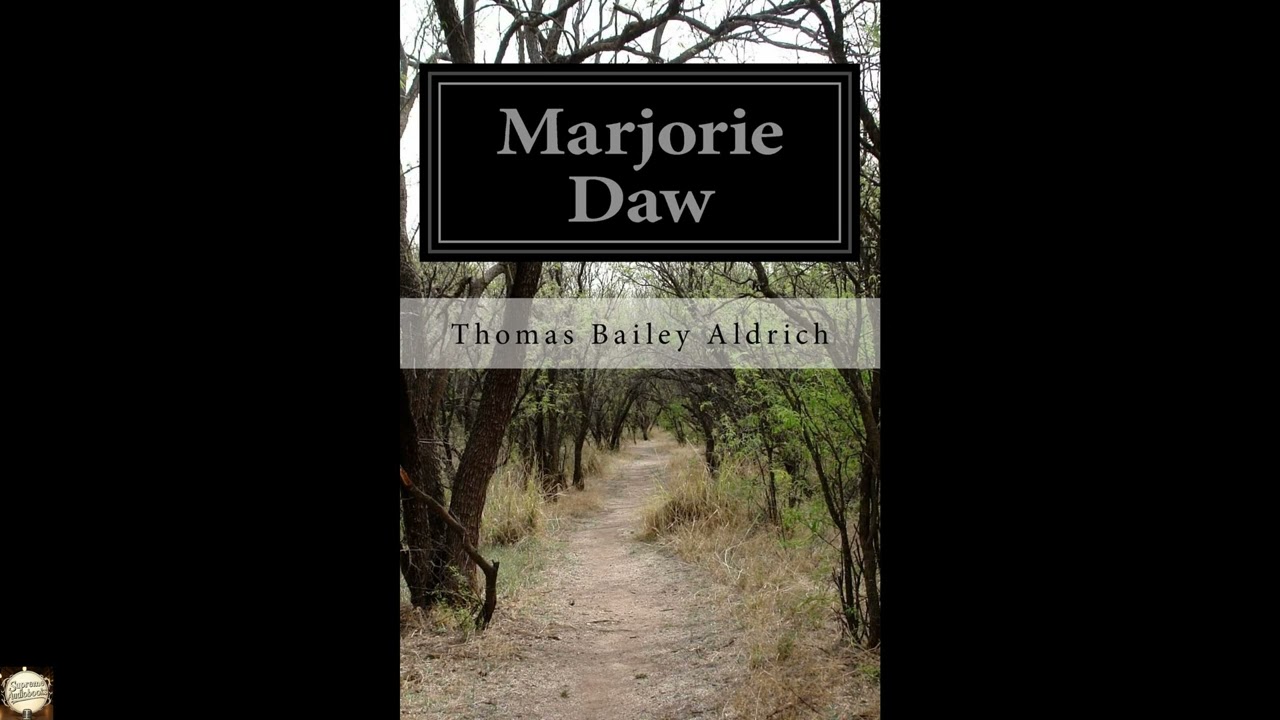
Marjorie Daw
Imagine a story so artfully constructed it questions the very nature of reality, all contained within a series of lively, witty letters. Thomas Bailey Aldrich's "Marjorie Daw," first published in 1873, remains a literary marvel for its innovative structure and its famous, surprising conclusion. This novella-length short story isn't just a clever puzzle; it's a profound observation on the human need for escape, the power of narrative, and the fine line between what is imagined and what is real, offering a refreshing perspective that feels surprisingly current even today. Its enduring popularity speaks to our fascination with storytelling itself and how easily we can be drawn into worlds that exist only on the page. The narrative unfolds through a series of letters exchanged between John Flemming, a dashing bachelor enjoying a summer in the countryside, and his ailing friend, Edward Delaney, confined to a dreary room in the city. Flemming, eager to lift his friend's spirits, begins to relay charming anecdotes about the social scene, focusing increasingly on the bewitching Marjorie Daw, the beautiful daughter of a neighboring family. He paints a picture of a young woman of uncommon grace and spirit, detailing her looks, her personality, and her innocent flirtations, all with an irresistible wit that captivates Delaney and the reader alike. As the correspondence continues, Flemming's descriptions grow more vivid, crafting a complete and utterly convincing portrait of Marjorie. He recounts her escapades, her interactions with other admirers, and the quaint beauty of her surroundings, making her feel incredibly present despite her absence. Delaney, confined by illness and boredom, becomes utterly absorbed in this unfolding drama. He finds himself falling in love with the woman described in the letters, his recovery seemingly intertwined with the fortunes of the fictional Marjorie Daw. Flemming, perhaps sensing the growing intensity of his friend’s attachment, issues gentle warnings, reminding Delaney that the young woman is, after all, merely a subject for correspondence, and that an actual meeting might prove quite different from his imagined encounters. Despite these caveats, Delaney's affections deepen, culminating in a firm resolve: he plans to travel to the countryside and ask for Marjorie Daw's hand in marriage. Thomas Bailey Aldrich (1836-1907) was a prominent figure in American letters during the late 19th and early 20th centuries. Born in Portsmouth, New Hampshire, Aldrich moved to New York City at the age of sixteen, entering the world of publishing as a clerk. This early exposure to the literary scene quickly led him to journalism, poetry, and fiction writing, allowing him to cultivate the refined style and sharp wit for which he became known. He served as editor of several magazines, most notably The Atlantic Monthly from 1881 to 1890, a prestigious position that placed him at the heart of American literary culture, where he fostered the talents of many emerging writers. Aldrich's work often showcased his mastery of short prose, characterized by a delicate precision and a keen eye for character. Beyond "Marjorie Daw," he is widely remembered for The Story of a Bad Boy (1870), a semi-autobiographical novel that broke new ground in children's literature by presenting a realistic, rather than idealized, portrayal of boyhood. Other notable works include his poetry collections, which were praised for their lyricism and craftsmanship, and other short stories such as "Père Antoine's Date-Palm." Aldrich's place in the canon is that of a bridge figure, incorporating elements of both the declining Romantic tradition and the emerging Realism that would dominate American fiction in the decades to come. He valued concision and elegance, crafting narratives that were both entertaining and thought-provoking. One of the central ideas animating "Marjorie Daw" is the elusive boundary between reality and imagination. As Flemming meticulously constructs the world of Marjorie Daw through his correspondence, Delaney, physically cut off from the outside world, finds his own reality increasingly superseded by this fabricated narrative. The story presents a potent commentary on the human inclination to seek solace or excitement in invented worlds, particularly when one's immediate circumstances are bleak. For instance, Delaney’s physical recovery seems directly tied to his mental immersion in the drama unfolding in Flemming’s letters, underscoring fiction’s therapeutic potential. A related theme is the power of narrative and deception. Flemming’s letters are not merely updates; they are carefully curated performances, designed to achieve a specific effect on his friend. The reader, too, becomes entangled in this act of storytelling, just as Delaney does. The narrative structure, delivered entirely through letters, highlights how communication shapes perception, controls information, and ultimately, can manipulate belief. The story encourages listeners to question the authenticity of what they receive, whether through written word or spoken anecdote, revealing the subjective nature of truth itself. The year 1873, when "Marjorie Daw" first appeared, placed it firmly within a transformative period for American literature. The nation was grappling with the aftermath of the Civil War, and a growing emphasis on realism began to challenge the prevailing romanticism of earlier eras. Aldrich, while often appreciated for his refined style and occasional touches of sentiment, was also a shrewd observer of human nature and capable of considerable wit, traits that aligned him with the burgeoning realist movement. Magazines like The Atlantic Monthly, where Aldrich eventually served as editor, were instrumental in popularizing the short story as a distinct and respected literary form, providing a platform for authors to experiment with structure and subject matter. "Marjorie Daw" emerged from this fertile ground, a distinct and original piece in a literary landscape eager for fresh narratives. Its clever use of the epistolary format and its famous twist delighted audiences, making it a benchmark for short story craftsmanship. It spoke to a public increasingly accustomed to consuming serialized fiction and appreciated ingenuity in storytelling, offering a sophisticated game of literary smoke and mirrors that captivated its readership and established its author as a master of the form. The unique, epistolary format of "Marjorie Daw" makes it a particularly compelling listening experience. Hearing the letters read aloud allows the listener to fully appreciate the developing intimacy between the two correspondents and the careful, almost theatrical, construction of Flemming's descriptions. A skilled narrator can bring out the subtle humor and the growing tension in each dispatch, enhancing the sense of a story unfolding directly for you. The deliberate pacing of the prose, with its measured unveiling of detail and character, is perfectly suited for audio, allowing the listener to absorb the intricate wordplay and the building emotional stakes without the distraction of a page turn. Listen for the distinct voices given to Flemming’s enthusiastic prose and Delaney’s eager responses, and immerse yourself in the rich atmosphere that Aldrich creates through the sheer power of his language.
Enjoyed Marjorie Daw? A few ways to support us
Audible & Amazon links are affiliate; we may earn a small commission at no extra cost.
About this production
Human narration by a volunteer reader from LibriVox.org, the public-domain audiobook project. LibriVox volunteers record literary works whose copyright has expired in the United States, releasing the resulting recordings into the public domain.
Marjorie Daw by Thomas Bailey Aldrich. The underlying text is in the U.S. public domain. We do not republish any modern copyrighted edition, translation, or commentary.
The 4K cinematic visuals accompanying this audiobook are generated by an AI image model from prompts derived from the source text. No copyrighted photos, paintings, or stock footage are used. AI generation is disclosed on every video on our YouTube channel as required by YouTube's altered/synthetic content policy.
English subtitles are transcribed from the LibriVox recording with OpenAI Whisper. Translations into the 11 other supported languages are produced by Meta's NLLB-200 neural translation model. No human translator's copyrighted translation is used.
Questions about sourcing or rights? See our DMCA & Sourcing policy or contact us.
Enjoyed this audiobook?
If you'd like to own a copy of Marjorie Daw or hear a professionally produced edition, the links below help support free audiobook production at no extra cost to you.
As an Amazon Associate we earn from qualifying purchases. Audible / print links are affiliate.