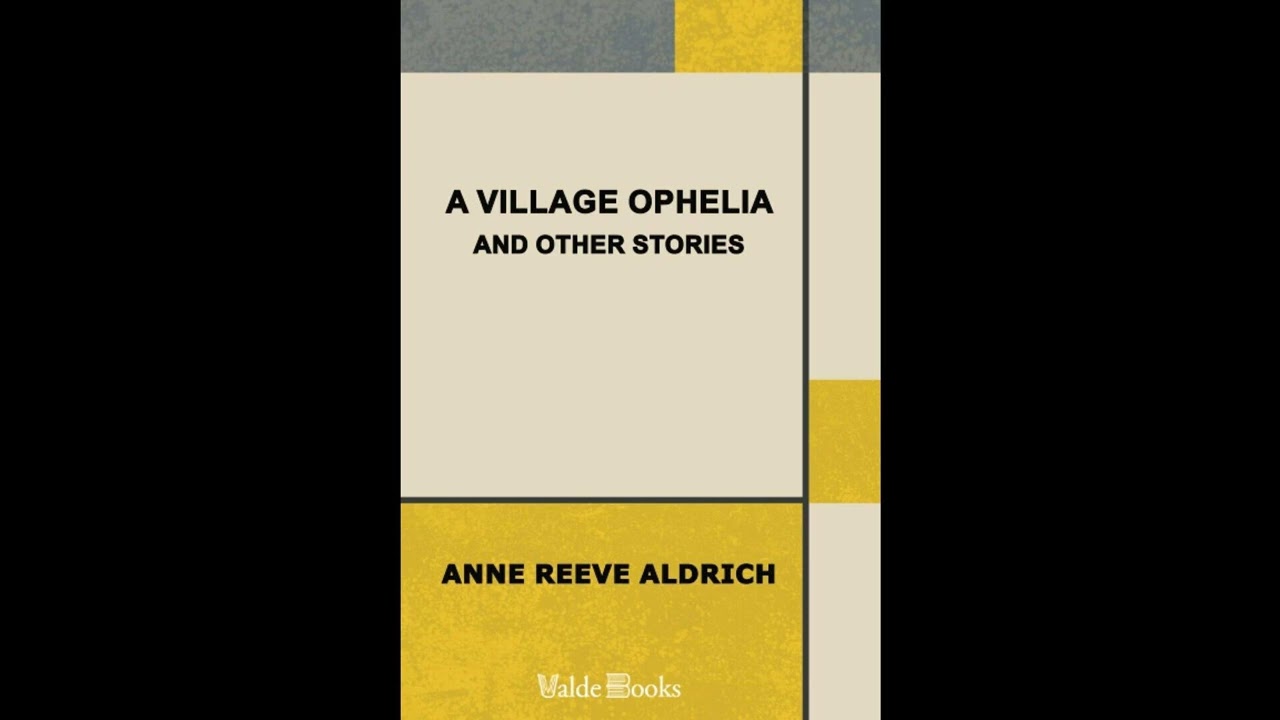
A Village Ophelia and Other Stories
"A Village Ophelia and Other Stories" offers a rare glimpse into the delicate yet often stifling inner worlds of women in late nineteenth-century America. It is a collection that speaks directly to the enduring struggle of the individual spirit against the tide of societal expectation, of dreams confronted by the often-harsh realities of small-town life. Anne Reeve Aldrich's prose, keenly observed and deeply felt, resurrects a particular sensibility—one marked by a poignant melancholy and an unblinking awareness of life's fleeting nature—making these stories resonate with anyone who has ever yearned for more than their immediate circumstances allowed. This isn't merely historical fiction; it is a profound emotional document, offering both solace in shared human experience and a stark mirror to the psychological pressures that persist, albeit in different guises, even today. The titular story, "A Village Ophelia," introduces us to Alice, a young woman living a life of quiet desperation in a seemingly idyllic rural setting. Alice possesses an uncommon sensitivity, an artistic temperament ill-suited to her village's practical demands and limited horizons, setting her apart. She dreams of beauty, poetry, and a love that transcends the ordinary, often losing herself in literature's romantic narratives. Her existence is largely defined by the gap between these ethereal aspirations and the mundane realities surrounding her. Alice's longing eventually crystallizes around an idealized perception of a young man, onto whom she projects all the qualities of her literary heroes, constructing a romance more real to her imagination than to actuality. This intensity, while providing ecstatic joy, also leaves her vulnerable to the inevitable disappointments of human interaction. Her story follows her attempts to reconcile her rich inner landscape with the uninspired actions and limited understanding of those around her. The "Other Stories" in the collection broaden this scope, examining human frailty, unspoken tragedies, and the psychological impact of societal roles, particularly on women. Anne Reeve Aldrich, born in 1866, was a figure of remarkable literary promise whose life was cut tragically short at the age of twenty-six in 1892. Despite her brief time, she left behind a body of work—primarily poetry and short fiction—that distinguished her among her contemporaries for its psychological depth and unvarnished realism. Raised in a cultured New York City household, Aldrich received a private education, which likely fostered her keen intellect and literary sensibilities. Her early death, attributed to illness, makes her output all the more poignant, suggesting a talent still blossoming, yet already mature enough for lasting impact. Her writing often displayed a fascination with the darker currents of human emotion, an interest in the subconscious, and a willingness to portray the less romantic aspects of human nature. Her position in the American literary canon is often viewed as that of a significant transitional figure, bridging the sentimentalism of earlier Victorian literature with the emerging psychological realism of the turn of the century. She shared stylistic and thematic affinities with writers who explored the constraints on women's lives and the often-unseen struggles of the individual against an indifferent or oppressive society. "A Village Ophelia and Other Stories" emerged during the dynamic late nineteenth century, a period of rapid social change and intellectual ferment in America. Culturally, the Victorian era's emphasis on propriety and rigid gender roles was still dominant, yet simultaneously challenged by nascent movements advocating for women's independence. Literary trends reflected this societal shift, moving from purely romantic ideals towards greater realism and naturalism, portraying life with all its complexities. Aldrich's collection fits this transition. While retaining emotional depth, her unflinching gaze at psychological struggle and societal hypocrisy aligns her with the burgeoning realist movement. Her focus on individual psychology and the often-stifling atmosphere of small-town America echoes the "local color" writers, but with a sharper, more introspective edge. Central themes include the clash between idealism and reality, exemplified by Alice's attempts to live out grand passions from books against a prosaic world. Aldrich also examines societal constraints on women, portraying characters often hemmed in by convention, where intelligence or artistic inclination becomes a burden, leading to isolation or resignation. Finally, the nature of melancholy and psychological introspection permeates the collection; Aldrich's characters grapple with deep sadness and longing, rendered with remarkable subtlety, anticipating later psychological fiction. Listening to "A Village Ophelia and Other Stories" as an audiobook offers a uniquely intimate encounter with Anne Reeve Aldrich's delicate yet potent prose. The carefully chosen narrator's voice becomes the conduit for Alice's quiet yearnings and the other characters' unspoken heartaches, breathing new life into the often-subtle shifts in mood and tone. The several hours of listening time provide ample opportunity to sink into these finely wrought narratives, allowing the pacing to underscore the melancholic beauty of Aldrich's observations. Pay close attention to the nuanced inflections that reveal a character's true feelings beneath polite dialogue, and the atmospheric descriptions that paint vivid mental pictures of a bygone era. The spoken word amplifies the emotional resonance of Aldrich's keen psychological insights, transforming each story into a personal meditation on the human condition.
Enjoyed A Village Ophelia and Other Stories? A few ways to support us
Audible & Amazon links are affiliate; we may earn a small commission at no extra cost.
About this production
Human narration by a volunteer reader from LibriVox.org, the public-domain audiobook project. LibriVox volunteers record literary works whose copyright has expired in the United States, releasing the resulting recordings into the public domain.
A Village Ophelia and Other Stories by Anne Reeve Aldrich. The underlying text is in the U.S. public domain. We do not republish any modern copyrighted edition, translation, or commentary.
The 4K cinematic visuals accompanying this audiobook are generated by an AI image model from prompts derived from the source text. No copyrighted photos, paintings, or stock footage are used. AI generation is disclosed on every video on our YouTube channel as required by YouTube's altered/synthetic content policy.
English subtitles are transcribed from the LibriVox recording with OpenAI Whisper. Translations into the 11 other supported languages are produced by Meta's NLLB-200 neural translation model. No human translator's copyrighted translation is used.
Questions about sourcing or rights? See our DMCA & Sourcing policy or contact us.
Enjoyed this audiobook?
If you'd like to own a copy of A Village Ophelia and Other Stories or hear a professionally produced edition, the links below help support free audiobook production at no extra cost to you.
As an Amazon Associate we earn from qualifying purchases. Audible / print links are affiliate.