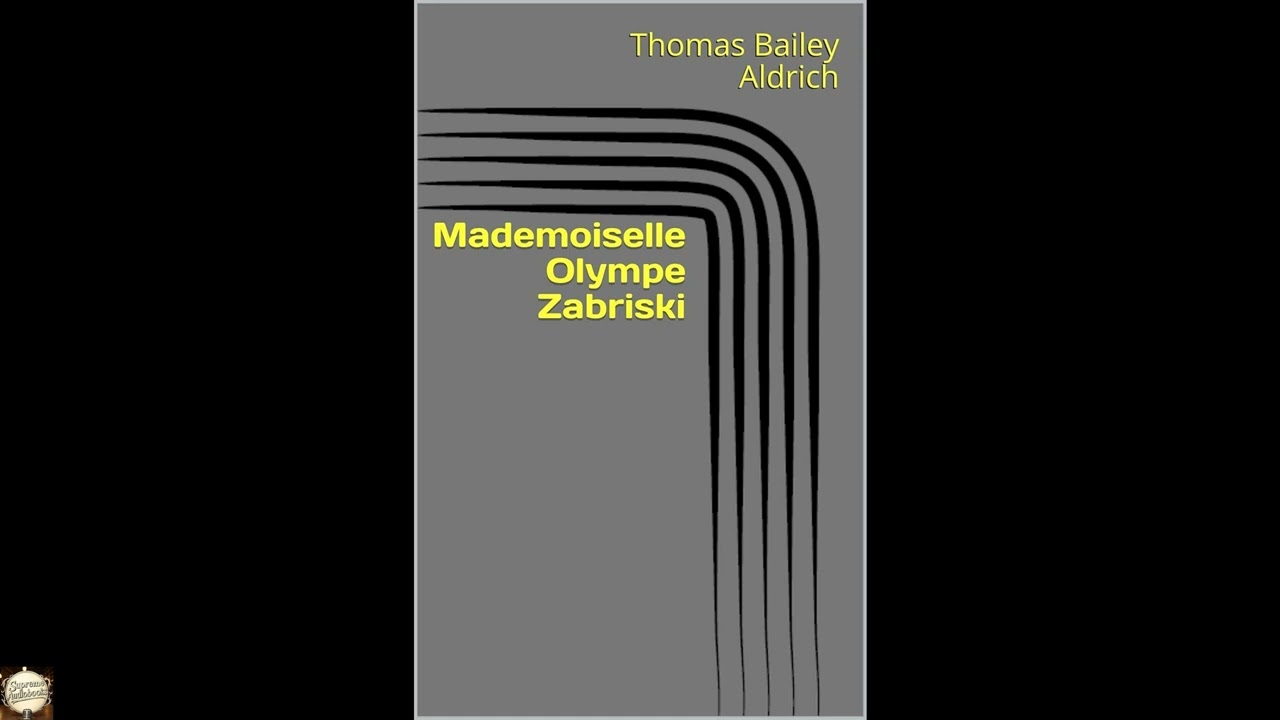
Mademoiselle Olympe Zabriski
Step into the whimsical world of Thomas Bailey Aldrich's Mademoiselle Olympe Zabriski, a sparkling novella that remains as fresh and funny today as it was when it first delighted readers in the late nineteenth century. This story offers a charming escape, a clever narrative filled with mistaken identities, theatrical hijinks, and the gentle satire of human vanity. Aldrich, a master of elegant prose and subtle humor, invites us into a meticulously crafted comedic setup, prompting us to consider the line between truth and illusion, especially when art and ambition collide. For anyone seeking an antidote to the complexities of modern life, or simply a dose of classic literary wit, this tale promises several hours of pure, unadulterated pleasure. The story introduces us to a world of genteel leisure, where two friends, the unnamed narrator and the delightfully earnest Mr. Wibird, find themselves in a picturesque country retreat. Both possess a keen, if somewhat misguided, passion for amateur dramatics. The narrator, a man of quiet observation, and Wibird, a figure of dramatic pronouncements and an almost boundless enthusiasm, conceive an ambitious plan: to stage a grand outdoor theatrical performance for the amusement of their companions, particularly the narrator's charming young niece. Their chosen play, a suitably dramatic piece, requires a leading lady of considerable talent and presence. It is into this meticulously planned, yet inevitably chaotic, scenario that Mademoiselle Olympe Zabriski makes her dramatic entrance. Mademoiselle Zabriski is presented as a renowned French actress, seemingly fallen on hard times, who agrees to grace their amateur production with her professional skill. Her arrival instantly elevates the stakes and injects a sense of genuine theatrical glamour—or at least, the illusion of it—into their rustic endeavors. The friends are utterly charmed and somewhat awestruck by her exotic mannerisms, her supposed Parisian theatrical lineage, and her seemingly profound understanding of dramatic art. As rehearsals commence, the narrator and Mr. Wibird find themselves caught in a whirlwind of artistic temperament, leading ladies' demands, and the inherent challenges of transforming a group of well-meaning amateurs into a cohesive dramatic troupe, all under the guiding, often inscrutable, hand of the enigmatic Mademoiselle Zabriski. The narrative skillfully builds the anticipation for the grand performance, all while subtly hinting at deeper currents beneath the surface of this seemingly straightforward comedy of errors. Thomas Bailey Aldrich, born in Portsmouth, New Hampshire, in 1836, carved out a significant, if sometimes understated, niche in American letters. His early life was marked by moves between his native New England and New Orleans, experiences that would later lend a rich sense of regional detail to his writings. He began his career in New York City as a journalist and editor, immersing himself in the bustling literary scene of the mid-nineteenth century. This period saw him rubbing shoulders with luminaries and honing his craft, particularly his capacity for concise prose and lyrical expression. Aldrich eventually settled in Boston, becoming a central figure in what was known as the "Boston literary establishment." He served with distinction as editor of the influential Atlantic Monthly from 1881 to 1890, a position that placed him at the heart of American literary taste-making. His most famous work, The Story of a Bad Boy (1870), is widely considered a foundational text in American juvenile literature, a charmingly autobiographical account of boyhood that predates and perhaps even influenced Mark Twain's more famous tales. Aldrich’s diverse output included poetry, novels like The Stillwater Tragedy, and numerous short stories collected in volumes such as Marjorie Daw and Other People, which includes "Mademoiselle Olympe Zabriski." Throughout his life, Aldrich was admired for his polished style, his gentle humor, and his keen observation of human nature, making him a transitional figure between the genteel literary traditions of the past and the emerging realism of his era. He passed away in 1907. At the heart of Mademoiselle Olympe Zabriski lies the fundamental theme of appearance versus reality. Aldrich masterfully constructs an elaborate facade, inviting the listener to revel in the humor of misperception. The very premise of the story—a supposed French actress gracing an amateur stage—is built upon a delicate balance of illusion, and the delight for the audience lies in watching characters navigate this carefully constructed world. The narrator and Mr. Wibird are so eager for the glamour of a professional presence that they readily accept what they are presented with, their own aspirations shaping their perceptions. Closely related to this is the theme of the nature of performance and the allure of theatrical art. The novella is a playful examination of the passion for the stage, whether in the grand theaters of Paris or on a makeshift outdoor stage in the American countryside. Aldrich celebrates the dedication, the earnestness, and the sometimes-comical struggles inherent in bringing a story to life. The characters' commitment to their roles, both on and off the "stage," highlights the power of storytelling and the human desire to create and experience drama, even when the production is anything but professional. Aldrich’s wit in depicting their efforts, from the choice of play to the practicalities of staging, underscores the humor found in human endeavors, especially those driven by enthusiasm and a touch of vanity. This novella emerged during a fascinating period in American history, the years following the Civil War. It was a time of rebuilding and rapid social change, but also of increasing leisure and a burgeoning interest in cultural pursuits among the growing middle class. The rise of popular magazines and literary journals provided a widespread platform for authors like Aldrich, who specialized in polished, entertaining narratives that offered a respite from the era's industrial expansion and political turmoil. Amateur theatricals, much like the one depicted in the story, were a popular form of entertainment in homes and communities across the country, reflecting a widespread desire for self-made amusement before the advent of motion pictures or widespread radio. Aldrich’s work, with its emphasis on elegant prose and character-driven humor, reflects the "genteel tradition" in American letters, a style that valued refinement, wit, and moral clarity, often as a gentle counterpoint to the more gritty realism that was simultaneously beginning to take hold in literature. Listening to Mademoiselle Olympe Zabriski as an audiobook brings Aldrich's charming prose and sharp dialogue to vivid life. The several-hour runtime is ideal, allowing the listener to settle into the leisurely pace of the narrative, perfect for a commute, an afternoon stroll, or simply relaxing at home. A skilled narrator can expertly differentiate between the characters' voices—the narrator's calm observations, Mr. Wibird's flamboyant theatricality, and Mademoiselle Zabriski's distinctive "French" inflections—enhancing the comedic timing and the subtle nuances of Aldrich's writing. The spoken word allows the listener to fully appreciate the author's meticulous sentence structure and word choice, which are integral to both the story's humor and its atmospheric setting. Experience the delightful unfoldment of this classic tale, where every carefully chosen phrase adds another layer to a truly memorable and highly entertaining performance.
Enjoyed Mademoiselle Olympe Zabriski? A few ways to support us
Audible & Amazon links are affiliate; we may earn a small commission at no extra cost.
About this production
Human narration by a volunteer reader from LibriVox.org, the public-domain audiobook project. LibriVox volunteers record literary works whose copyright has expired in the United States, releasing the resulting recordings into the public domain.
Mademoiselle Olympe Zabriski by Thomas Bailey Aldrich. The underlying text is in the U.S. public domain. We do not republish any modern copyrighted edition, translation, or commentary.
The 4K cinematic visuals accompanying this audiobook are generated by an AI image model from prompts derived from the source text. No copyrighted photos, paintings, or stock footage are used. AI generation is disclosed on every video on our YouTube channel as required by YouTube's altered/synthetic content policy.
English subtitles are transcribed from the LibriVox recording with OpenAI Whisper. Translations into the 11 other supported languages are produced by Meta's NLLB-200 neural translation model. No human translator's copyrighted translation is used.
Questions about sourcing or rights? See our DMCA & Sourcing policy or contact us.
Enjoyed this audiobook?
If you'd like to own a copy of Mademoiselle Olympe Zabriski or hear a professionally produced edition, the links below help support free audiobook production at no extra cost to you.
As an Amazon Associate we earn from qualifying purchases. Audible / print links are affiliate.