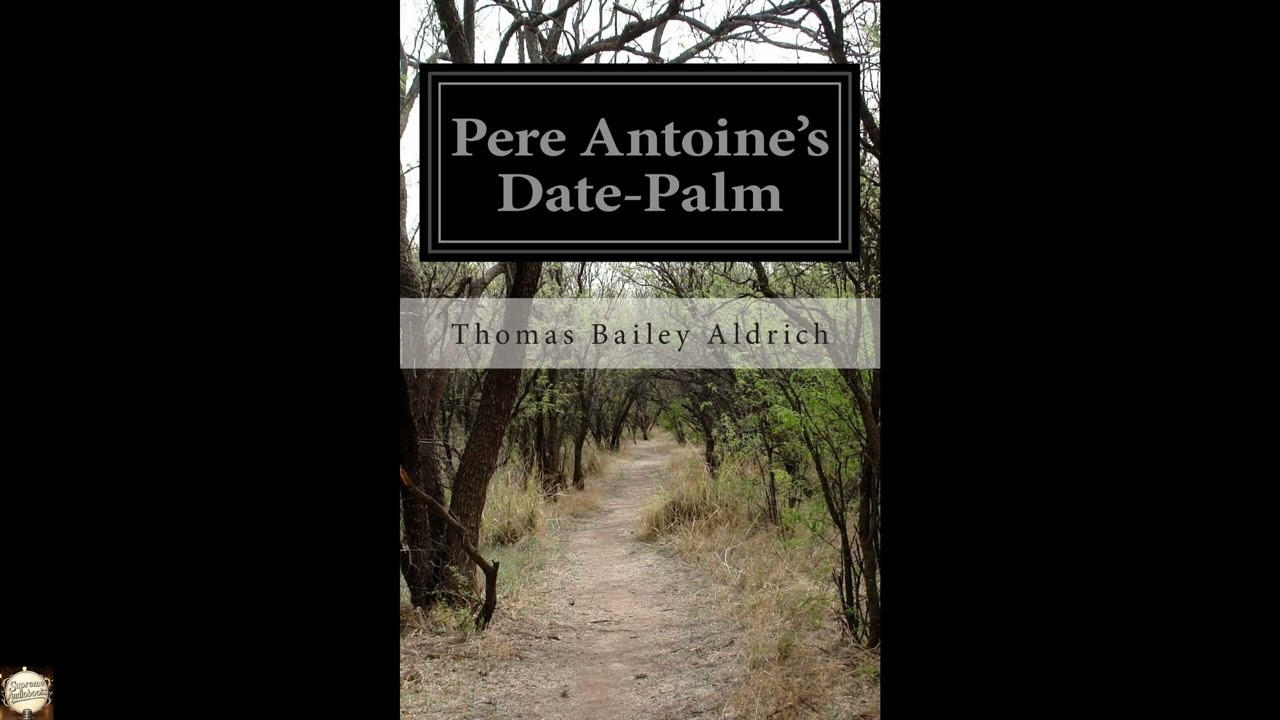
Pere Antoine's Date-Palm
Step into the sun-drenched, time-worn streets of old New Orleans and discover a quiet story that resonates with gentle humor and profound humanity. Thomas Bailey Aldrich's "Pere Antoine's Date-Palm" introduces listeners to a world where devotion to a single, unlikely plant can become the very axis of a man's life and a community's shared wonder. This short, elegant tale, first published in an era of rapid change, offers a peaceful counterpoint, inviting us to consider the enduring power of small acts of faith, the passage of time, and the deep, often unspoken, connections between people, places, and even plants. It is a narrative that speaks to the patience required for genuine growth, whether in a person's character or in the soil of a bustling city, making its contemplative pace a welcome reprieve in our fast-paced modern world. Our story unfolds in the historic French Quarter, a place steeped in tradition and European charm. Here we meet Pere Antoine, a kindly and somewhat eccentric Catholic priest, whose days are filled with the usual duties of his parish, punctuated by moments of quiet contemplation. One day, a small, unremarkable package arrives, holding a seemingly ordinary date-palm seed, a gift sent from the Holy Land. For Pere Antoine, this is no mere botanical curiosity; it is a sacred relic, a tangible link to ancient faith and a personal challenge to bring life from an arid land to the humid delta. With meticulous care and a gardener's patient hand, he plants the seed in the courtyard of his presbytery, nurturing it with a dedication that borders on obsession. The growing palm, slow and deliberate, becomes a quiet central figure in the priest's life and a subtle point of interest for the surrounding community. Neighbors and parishioners watch its progress, offering a mix of skepticism, amusement, and eventually, a shared sense of hope. The small sprout transforms into a sapling, then a young tree, mirroring the quiet years that pass for Pere Antoine himself. He tends to it through New Orleans' unpredictable weather, protects it from curious children and foraging animals, and speaks to it as if it were a cherished companion. The tree’s very presence embodies his steadfast commitment, a symbol of perseverance against the odds, its growth a measure of both his enduring hope and the relentless march of time, bringing unforeseen challenges and unexpected developments to both priest and plant. Thomas Bailey Aldrich, the author of this charming novella, was a prominent American literary figure during the latter half of the nineteenth century. Born in Portsmouth, New Hampshire, in 1836, Aldrich’s early life was marked by moves to New Orleans and eventually to New York, where he began his career in journalism and publishing. This varied early experience undoubtedly informed his later writings, giving him a keen eye for regional detail and character. He quickly established himself as a poet of refined sensibility, often associated with the "genteel tradition" in American letters, a style characterized by its elegance, decorum, and careful craftsmanship. Aldrich’s professional life reached its zenith when he became the editor of The Atlantic Monthly, a prestigious literary magazine, in 1881, a position he held for nearly a decade. During his tenure, he championed new voices and maintained the magazine’s high literary standards, influencing the tastes and directions of American literature. While "Pere Antoine's Date-Palm" showcases his skill in short fiction, he is perhaps best known for his semi-autobiographical novel The Story of a Bad Boy (1870), a pioneering work in juvenile fiction that influenced later writers like Mark Twain and is often considered a precursor to modern realistic children's literature. He also published several volumes of poetry, which, though less widely read today, were highly regarded in his time for their lyrical beauty and formal precision. He passed away in 1907, leaving behind a body of work that bridged the gap between the Romanticism of earlier American authors and the emerging realism of his contemporaries. At its core, "Pere Antoine's Date-Palm" gently illuminates the themes of faith and perseverance. Pere Antoine's unwavering dedication to a single, foreign seed, against the backdrop of a city not naturally suited for its growth, serves as a powerful metaphor for quiet, steadfast belief. His daily rituals of watering, tending, and protecting the young palm demonstrate a profound, almost spiritual, patience, showing how enduring commitment to a small, personal endeavor can imbue a life with purpose. This patient nurturing echoes a broader message about the enduring power of faith, not necessarily in a grand, public display, but in the private, consistent actions that shape a person's existence. Another significant theme woven throughout the narrative is the passage of time and its inevitable changes. The slow, visible growth of the date-palm stands in stark contrast to the human lifespan, prompting reflection on mortality and legacy. As the tree matures over the years, so too does Pere Antoine age, his physical strength waning while his devotion to the palm remains resolute. The community's evolving relationship with the tree—from curiosity to shared affection—also highlights how collective memory and shared experiences can develop over time, binding individuals together through a common, quiet narrative. The palm itself becomes a living chronicle, marking the years and the subtle shifts in the lives of those who witness its existence. Culturally and politically, the late nineteenth century in America, when Aldrich was most active, was a period of significant transition. The nation was grappling with the aftermath of the Civil War, industrialization, rapid urbanization, and an influx of immigration, all of which led to profound social changes. Amidst this upheaval, there was often a nostalgic yearning for simpler times and a greater appreciation for distinct regional identities. This longing fueled the popularity of the "local color" movement in literature, which sought to capture the unique customs, dialects, and landscapes of specific American regions. "Pere Antoine's Date-Palm" fits squarely within this literary current, offering a nostalgic, perhaps idealized, glimpse into the unique character of New Orleans' French Quarter. Aldrich, though not a native of the city, skillfully evokes its atmosphere and the charm of its Franco-Catholic heritage, presenting a quaint, self-contained community seemingly untouched by the broader national anxieties. The story emerged during a time when authors were increasingly looking beyond the purely romantic or transcendental, beginning to ground their narratives in observable reality, even if still filtered through a lens of genteel sentiment. Aldrich's refined prose, while not as starkly realistic as some of his contemporaries, nevertheless offers a grounded portrayal of character and setting. Listening to "Pere Antoine's Date-Palm" as an audiobook allows the inherent charm and reflective pace of Aldrich's prose to truly come alive. The narrator's voice becomes crucial in conveying the gentle humor and underlying pathos of Pere Antoine's quiet life. Imagine the careful cadence as the story describes the priest's meticulous tending of the seed, or the subtle shifts in tone as the community's perspective on the growing palm evolves. The several-hour length makes this an ideal listen for moments of quiet contemplation—perhaps on a relaxed afternoon or during a leisurely commute—allowing the listener to fully immerse themselves in the bygone atmosphere of old New Orleans. Pay attention to how the narration delineates the varying moods, from the initial anticipation to the long, patient years, and how the dialogue, though sparse, reveals the distinct personalities of the characters and the unique rhythms of their lives. The spoken word can transport you directly to the presbytery courtyard, feeling the humid air and witnessing the slow, steadfast growth of a most remarkable tree.
Enjoyed Pere Antoine's Date-Palm? A few ways to support us
Audible & Amazon links are affiliate; we may earn a small commission at no extra cost.
About this production
Human narration by a volunteer reader from LibriVox.org, the public-domain audiobook project. LibriVox volunteers record literary works whose copyright has expired in the United States, releasing the resulting recordings into the public domain.
Pere Antoine's Date-Palm by Thomas Bailey Aldrich. The underlying text is in the U.S. public domain. We do not republish any modern copyrighted edition, translation, or commentary.
The 4K cinematic visuals accompanying this audiobook are generated by an AI image model from prompts derived from the source text. No copyrighted photos, paintings, or stock footage are used. AI generation is disclosed on every video on our YouTube channel as required by YouTube's altered/synthetic content policy.
English subtitles are transcribed from the LibriVox recording with OpenAI Whisper. Translations into the 11 other supported languages are produced by Meta's NLLB-200 neural translation model. No human translator's copyrighted translation is used.
Questions about sourcing or rights? See our DMCA & Sourcing policy or contact us.
Enjoyed this audiobook?
If you'd like to own a copy of Pere Antoine's Date-Palm or hear a professionally produced edition, the links below help support free audiobook production at no extra cost to you.
As an Amazon Associate we earn from qualifying purchases. Audible / print links are affiliate.