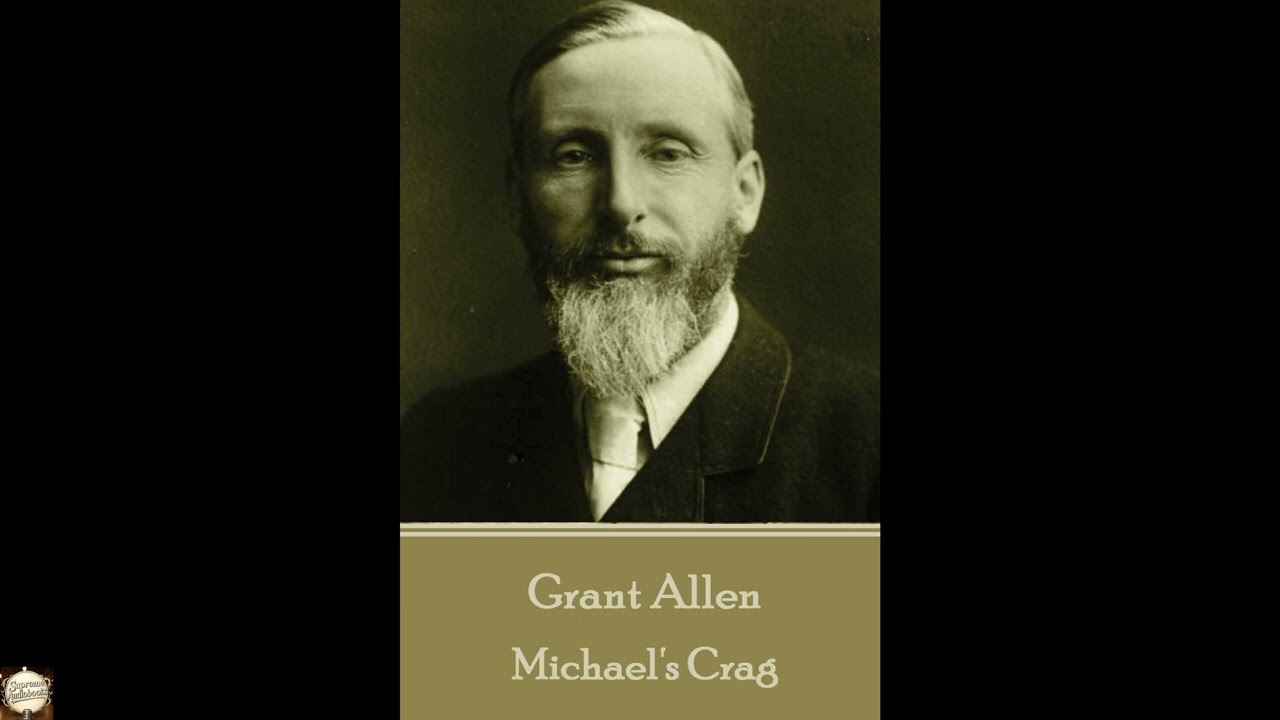
Michael's Crag
Step onto the windswept Cornish coast, where ancient granite cliffs meet the restless sea, and discover "Michael's Crag," a lesser-known but compelling work from the prolific pen of Grant Allen. This classic piece of literature, though perhaps overshadowed by some of its author's more overtly controversial novels, offers a potent blend of atmospheric mystery, social observation, and a profound examination of human nature against the backdrop of an unforgiving landscape. Listeners today will find its questions about tradition versus progress, the pull of the wild, and the cost of secrets resonating with unexpected power, providing a window into Victorian intellectual currents that remain surprisingly relevant. It is a story that probes the depths of individual conscience when confronted by the immensity of nature and the weight of community expectation. The narrative unfolds in the isolated village of Porth Gweal, a place where the lives of its inhabitants are inextricably bound to the sea and the imposing promontory known locally as Michael's Crag. Here, we meet Edward Morton, a young academic from London, seeking respite from the rigors of intellectual life and drawn by the region's ancient geology and folklore. Edward is an outsider, an observer whose scientific curiosity soon clashes with the deeply ingrained superstitions and guarded customs of the villagers. He finds himself particularly intrigued by the enigmatic figure of Morwenna, a young woman whose existence seems as wild and untamed as the Crag itself, and whose family holds a secretive connection to the landmark's shadowy past. The central conflict arises when Edward's research into the Crag's geological formations unearths hints of a long-buried tragedy—a crime or a terrible accident—that the villagers seem determined to keep hidden. As Edward presses his inquiries, he inadvertently stirs up old animosities and fear. His logical, scientific approach is met with evasive answers and outright hostility, forcing him to confront the limits of his own rationalism in a world still governed by ancient fears and closely held secrets. The Crag itself becomes a silent, formidable character in the story, its jagged peaks and treacherous paths mirroring the psychological landscape of the characters. The mounting tension builds as Edward gets closer to the truth, leading him to question not only the past events surrounding the Crag but also his own moral compass and commitment to objective truth, especially when it threatens the peace of those he has grown to care for. The story moves with a steady, almost inexorable pace toward a climactic revelation that forces choices with irreversible consequences. Grant Allen (1848–1899) was a remarkably versatile and often provocative writer of the late Victorian era. Born in Kingston, Canada West (now Ontario), he was educated at Oxford University and spent some time teaching in Jamaica before dedicating himself entirely to writing. A close associate of the philosopher Herbert Spencer, Allen was a committed proponent of evolutionary theory and a popularizer of scientific ideas, often weaving them into his fiction. He wrote extensively across various genres, including science fiction, detective stories, and what were then termed "social problem novels." His most famous, or perhaps infamous, novel, "The Woman Who Did" (1895), created a sensation with its controversial portrayal of a woman who rejects marriage and conventional morality, solidifying Allen's reputation as a progressive thinker who challenged the strictures of Victorian society. Other notable works include "Babylon," a novel about an artist's struggles, and "The British Barbarians," which continued his critiques of English social norms. Allen's place in the literary canon is that of an important transitional figure, bridging the gap between scientific thought and popular fiction. He used his novels not merely for entertainment but also as platforms to discuss contemporary scientific discoveries, philosophical concepts, and social issues, including women's rights, atheism, and the impact of industrialization. His writing, though sometimes polemical, was always grounded in a keen observation of human behavior and a deep interest in the natural world. He stands as a clear example of how Victorian literature often grappled directly with the intellectual upheavals of its time. "Michael's Crag" brings several core themes to the forefront, demonstrating Allen's enduring preoccupations. One central theme is the clash between rationality and superstition, or scientific inquiry versus deeply ingrained local belief. Edward Morton, with his academic background, represents the former, steadily chipping away at the villagers' legends and evasions surrounding the Crag. For instance, when Edward attempts to explain a geological fault line, a local elder dismisses it as the lingering power of ancient spirits, vividly illustrating the chasm between their worldviews. Another significant theme is the power of natural landscapes to shape human destiny and character. The Crag itself is not just a setting; it is an active force, its isolation and dangers influencing the villagers' insularity and the tragic events that define their past. The relentless sea and the sheer, unyielding rock face mirror the emotional ruggedness and stoicism of the inhabitants. Additionally, the book examines the burden of secrets and the ethics of their revelation. The tightly knit community of Porth Gweal has carefully guarded a particular incident for generations, believing they are protecting their own. Edward’s arrival forces a re-evaluation of this silent pact, raising questions about whether truth, however painful, should always prevail over communal peace. This plays out in scenes where Edward must weigh the potential harm of exposing an old wound against his personal commitment to unearthing what really happened. A fourth theme considers the tension between individual liberty and societal constraint. Morwenna, the wild beauty of the Crag, embodies a spirit of independence that chafes against the village's expectations, echoing Allen's broader interest in figures who defy conventional roles. Her struggles highlight the difficulty of forging one's own path in a community resistant to change. "Michael's Crag" emerged during a period of significant intellectual and social ferment in late Victorian Britain. The late nineteenth century saw rapid scientific advancements, particularly in geology and evolutionary biology, which often challenged traditional religious beliefs and cultural certainties. Grant Allen, as a popularizer of Darwinian thought and a friend of Herbert Spencer, was deeply immersed in these discussions. Culturally, this was an era grappling with the implications of industrialization, the changing roles of women, and increasing skepticism towards Victorian moral codes. Politically, the British Empire was at its zenith, yet internal social issues and demands for reform were growing. Writers of the time frequently turned to realism and naturalism, attempting to depict society and individuals with stark honesty, often highlighting social problems. "Michael's Crag" fits squarely within this context, using its remote, almost primal setting to distill and examine these larger societal anxieties about progress, morality, and humanity's place in a world increasingly understood through a scientific lens. It is a product of an age questioning its own foundations. Listening to "Michael's Crag" as an audiobook allows the inherent drama and atmosphere of Allen's prose to truly come alive. A skilled narrator can perfectly convey the stark beauty and brooding menace of the Cornish landscape, making the Crag itself a palpable presence that looms over every scene. The several hours of listening time offer an opportunity to fully immerse oneself in the slow-burn mystery and the psychological tensions that build gradually. Pay attention to how the narrator modulates their voice to distinguish between the protagonist's rational, educated tones and the more reserved or superstitious cadences of the villagers. The pacing of the narration is crucial here, particularly in the descriptive passages that establish the isolation and the sense of foreboding, and in the careful unfolding of dialogue where much is left unsaid. The auditory experience enhances the story’s deep sense of place and its sustained mood, pulling listeners into a Victorian world where ancient secrets still hold sway over human lives.
Enjoyed Michael's Crag? A few ways to support us
Audible & Amazon links are affiliate; we may earn a small commission at no extra cost.
About this production
Human narration by a volunteer reader from LibriVox.org, the public-domain audiobook project. LibriVox volunteers record literary works whose copyright has expired in the United States, releasing the resulting recordings into the public domain.
Michael's Crag by Grant Allen. The underlying text is in the U.S. public domain. We do not republish any modern copyrighted edition, translation, or commentary.
The 4K cinematic visuals accompanying this audiobook are generated by an AI image model from prompts derived from the source text. No copyrighted photos, paintings, or stock footage are used. AI generation is disclosed on every video on our YouTube channel as required by YouTube's altered/synthetic content policy.
English subtitles are transcribed from the LibriVox recording with OpenAI Whisper. Translations into the 11 other supported languages are produced by Meta's NLLB-200 neural translation model. No human translator's copyrighted translation is used.
Questions about sourcing or rights? See our DMCA & Sourcing policy or contact us.
Enjoyed this audiobook?
If you'd like to own a copy of Michael's Crag or hear a professionally produced edition, the links below help support free audiobook production at no extra cost to you.
As an Amazon Associate we earn from qualifying purchases. Audible / print links are affiliate.