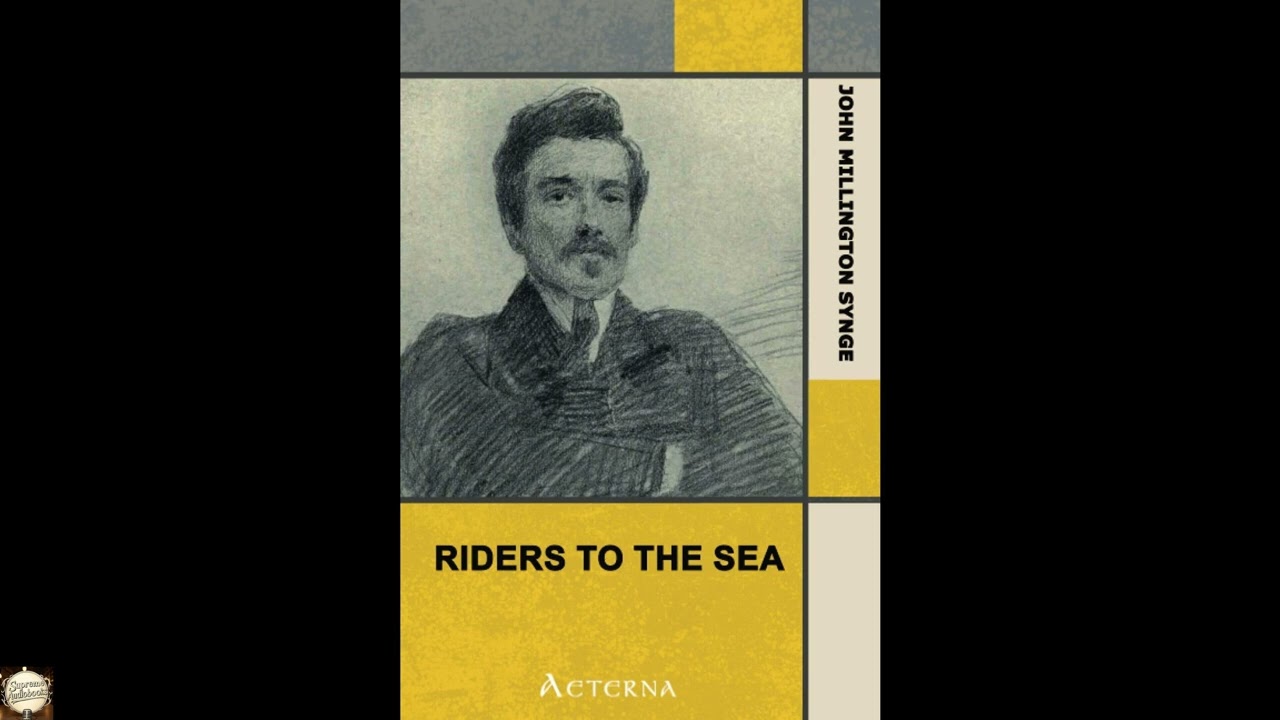
Riders to the Sea
On a remote and unforgiving sliver of land off the west coast of Ireland, life hangs by a thread as thin and frayed as an old fishing net. John Millington Synge’s Riders to the Sea is not merely a play; it is a profound lament, a raw, concentrated distillation of human sorrow and the relentless power of nature. This short, shattering drama, acclaimed for its stark beauty and its piercing insight into the human spirit, speaks to anyone who has grappled with loss, faced an unyielding fate, or felt the weight of tradition bearing down on their shoulders. It offers a glimpse into a world where survival is a daily prayer and grief an ever-present companion, a world that, despite its specific setting, echoes the universal struggle against forces beyond our control. Listening to this lyrical yet devastating story today provides not only a historical appreciation for Irish drama but also a resonant emotional experience, reminding us of the enduring strength and fragility of life. The setting is a humble cottage on one of the Aran Islands, a place perpetually buffeted by the Atlantic winds and waves. The air inside is heavy with the scent of turf smoke and the unspoken dread that clings to families living by the sea. Maurya, the aged matriarch of the house, has seen her life slowly but surely stripped away by the ocean. Her husband and several of her sons have already been claimed by the churning waters, leaving her with an almost unbearable burden of grief. Her surviving daughters, Cathleen and Nora, hover around her, their quiet conversations punctuated by the sounds of the wind and the sea outside. The play opens with the sisters hiding a bundle of clothes—a shirt and a pair of stockings—that they believe belonged to Michael, another of Maurya’s sons, who has been missing for days. Their hushed tones and furtive actions underscore the constant fear that permeates their lives. Soon, the news arrives, confirming their worst fears and adding another layer of despair to Maurya’s already beleaguered heart. As the family grapples with this fresh sorrow, Maurya's youngest and last surviving son, Bartley, prepares to go to the mainland to sell horses. His decision to sail in such treacherous conditions ignites a fresh wave of fear in Maurya, who has already endured too much. The conflict pivots on Bartley's resolute determination to face the sea, despite his mother's anguished pleas and premonitions, setting the stage for an inevitable confrontation with the elements. The story’s arc details the slow, agonizing process of a mother’s resignation to a fate she cannot escape, building a palpable sense of foreboding that hovers over every word. John Millington Synge, born near Dublin in 1871, was a central figure in the Irish Literary Revival. His early life was marked by frequent illness, which often left him feeling an outsider, a sensibility that may have shaped his profound empathy for marginalized figures. Educated at Trinity College Dublin, he initially pursued music before turning to literature, studying languages and traveling extensively in Europe. A pivotal meeting with the poet W.B. Yeats in Paris in 1898 changed the course of his life. Yeats famously urged Synge to abandon his Parisian intellectual pursuits and instead immerse himself in the lives of the people on the Aran Islands, believing he would find there a unique, unspoiled culture and a vibrant, poetic language. Synge took Yeats’s advice, spending several summers living among the islanders, learning their Gaelic dialect, observing their customs, and absorbing their worldview. This period proved transformative, providing the direct inspiration and authentic voice for his most celebrated plays. His other notable contributions to Irish drama include The Well of the Saints and his most controversial work, The Playboy of the Western World, which caused riots upon its Dublin premiere for its perceived unflattering portrayal of rural Irish life. Synge’s distinctive use of "peasant dialect," infused with the rhythms and cadences of Irish Gaelic, elevated everyday speech to a poetic art form, making him a groundbreaking playwright whose work remains a cornerstone of modern Irish literature until his untimely death from Hodgkin's lymphoma in 1909. At its core, Riders to the Sea enacts a stark confrontation between humanity and nature. The sea is not merely a backdrop but an active, malevolent character, personified by Maurya’s laments about its insatiable hunger. Every whisper of the wind, every mention of the 'red mare' that carries the doomed rider, reinforces the ocean's implacable power. The constant threat it poses shapes every aspect of the islanders' existence, dictating their livelihoods and, ultimately, their lives. This relentless struggle also brings to the forefront the theme of grief and loss. Maurya's memories of her lost sons and husband are not abstract; they are vivid, painful recollections that compound with each new tragedy. The quiet sorrow of Cathleen and Nora as they prepare the last rites for Michael, and their hesitant attempts to comfort their mother, illustrate the crushing weight of cumulative bereavement that has become a way of life. The play showcases a world where the future is merely a continuation of past sorrows. A further powerful theme is that of fate and resignation. From the outset, there is a pervasive sense that the characters are powerless against a predetermined destiny. Maurya's premonitions, the almost ritualistic way her sons are lost to the sea, and her final pronouncements all contribute to an atmosphere of inescapable tragedy. The islanders live in a universe where the forces of nature and perhaps a higher power have already written their story, leaving them only the option of acceptance. Synge’s work also acts as a profound comment on Irish identity and the unique challenges of rural life at the turn of the century. It presents a world where tradition, superstition, and a deeply rooted connection to the land and sea define existence, offering an authentic, if bleak, portrayal of a community fighting for survival on the very edge of the world. Riders to the Sea emerged during a crucial period for Irish culture, specifically the early years of the Irish Literary Revival. The play was first staged in 1904, the same year that the Abbey Theatre, Ireland's national theatre, was founded by Yeats, Lady Augusta Gregory, and Synge himself. This movement sought to create a distinct Irish national literature, one that would reflect the country’s unique identity, history, and linguistic heritage, moving away from English cultural dominance. There was a strong desire to find artistic expression in the lives of ordinary Irish people, particularly those in rural areas, whose dialects and traditions were seen as embodying a pure, untainted Irish spirit. Synge's immersion in the Aran Islands directly informed this goal, allowing him to capture the authentic voice and tragic beauty of a people deeply tied to their environment. The play, with its sparse dialogue, poetic realism, and exploration of ancient themes within a contemporary Irish setting, perfectly exemplified the aims of the Revival, securing its place as a seminal work of modern Irish drama. Hearing Riders to the Sea as an audiobook offers an intensely intimate and powerful experience. The carefully chosen words, imbued with the cadences of west Irish speech, come alive through skilled narration, allowing listeners to fully appreciate Synge's unparalleled poetic prose. The run length, which is several hours, is perfectly suited to the concentrated emotional intensity of the play, allowing for repeated listening to fully absorb the nuances of character and language. Listen for the deliberate, almost mournful pacing that reflects the characters’ weariness and the slow, inevitable creep of fate. Pay close attention to the voices—the resigned authority of Maurya, the fearful whispers of her daughters, the determined tone of Bartley—each adding layers of meaning to the spare dialogue. The narration creates a vivid soundscape of the cottage, the wind, and the unseen, ever-present sea, drawing you into the heart of this poignant and unforgettable drama.
Enjoyed Riders to the Sea? A few ways to support us
Audible & Amazon links are affiliate; we may earn a small commission at no extra cost.
About this production
Human narration by a volunteer reader from LibriVox.org, the public-domain audiobook project. LibriVox volunteers record literary works whose copyright has expired in the United States, releasing the resulting recordings into the public domain.
Riders to the Sea by John Millington Synge. The underlying text is in the U.S. public domain. We do not republish any modern copyrighted edition, translation, or commentary.
The 4K cinematic visuals accompanying this audiobook are generated by an AI image model from prompts derived from the source text. No copyrighted photos, paintings, or stock footage are used. AI generation is disclosed on every video on our YouTube channel as required by YouTube's altered/synthetic content policy.
English subtitles are transcribed from the LibriVox recording with OpenAI Whisper. Translations into the 11 other supported languages are produced by Meta's NLLB-200 neural translation model. No human translator's copyrighted translation is used.
Questions about sourcing or rights? See our DMCA & Sourcing policy or contact us.
Enjoyed this audiobook?
If you'd like to own a copy of Riders to the Sea or hear a professionally produced edition, the links below help support free audiobook production at no extra cost to you.
As an Amazon Associate we earn from qualifying purchases. Audible / print links are affiliate.